Futures:Reimagined - Futures Literacy Labs on Democracy and Citizens
An open lab series, one evening in Copenhagen and one afternoon online, where around 40 people worked on what democracy and citizenship could become by 2048.
Challenge
Most futures work happens behind closed doors, inside organisations that can pay for it, about questions their leadership has already chosen. Democracy and citizenship belong to a wider group than that. They also suffer from a particular kind of imagination problem: when people discuss the future of democracy, the conversation tends to land quickly on the institutions we already have, either defending them or despairing of them.
We wanted to open the work up. That meant designing something that welcomed people with no foresight background, kept the price out of the way, and still went somewhere substantial in a couple of hours. And it meant finding a way past the familiar debate, into the assumptions underneath: what we take for granted about participation, belonging, power and who counts.
Approach
We built :ReImagined as a series of Futures Literacy Labs, where participants take centre stage and the facilitation holds the structure. Around 40 people joined across the two labs, one in a room and one online, co-hosted between Mathias Behn Bjørnhof, Søs Christine Hejselbæk and Finn Ehrenberg.
1) Democracy Reimagined, in person for World Futures Day
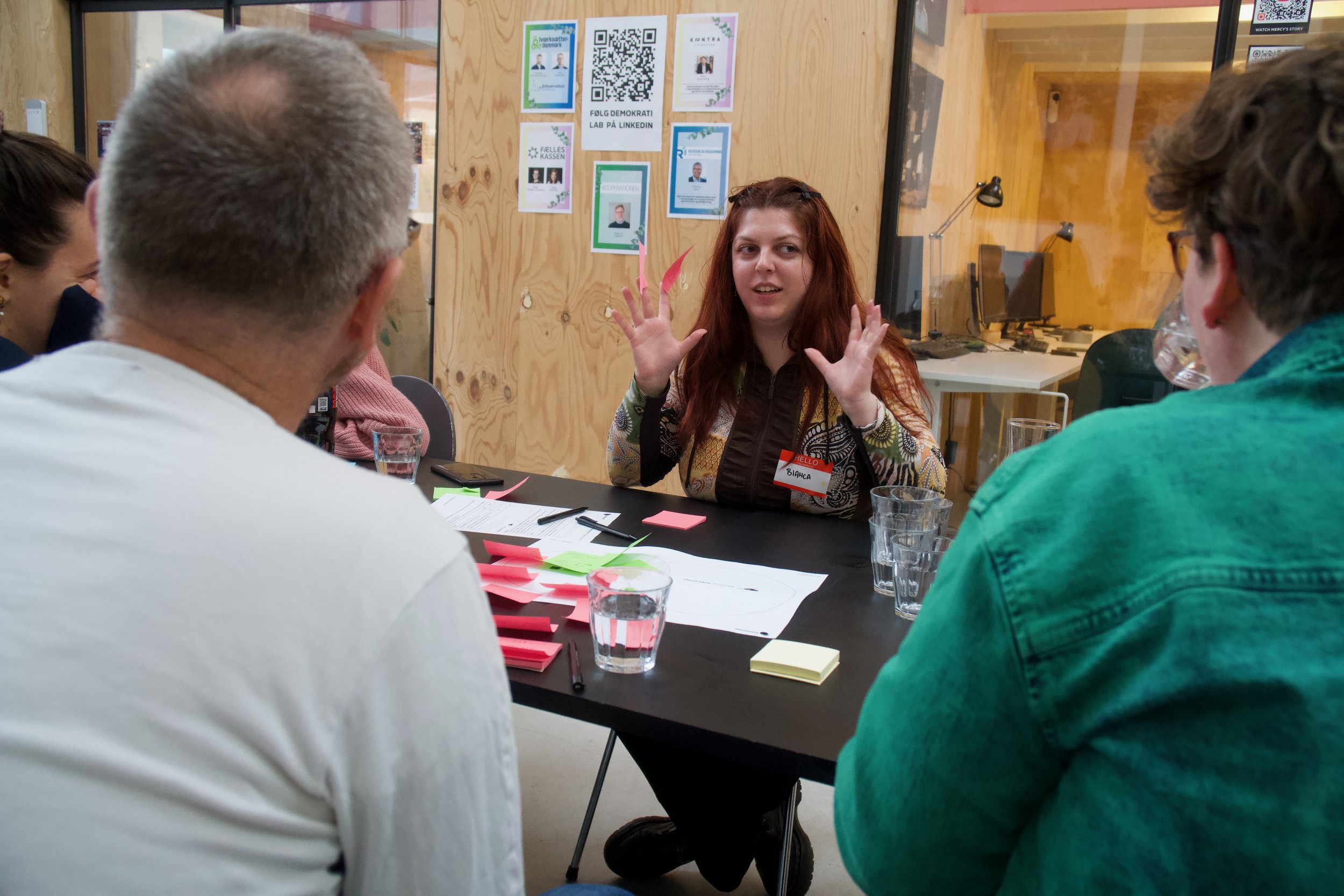
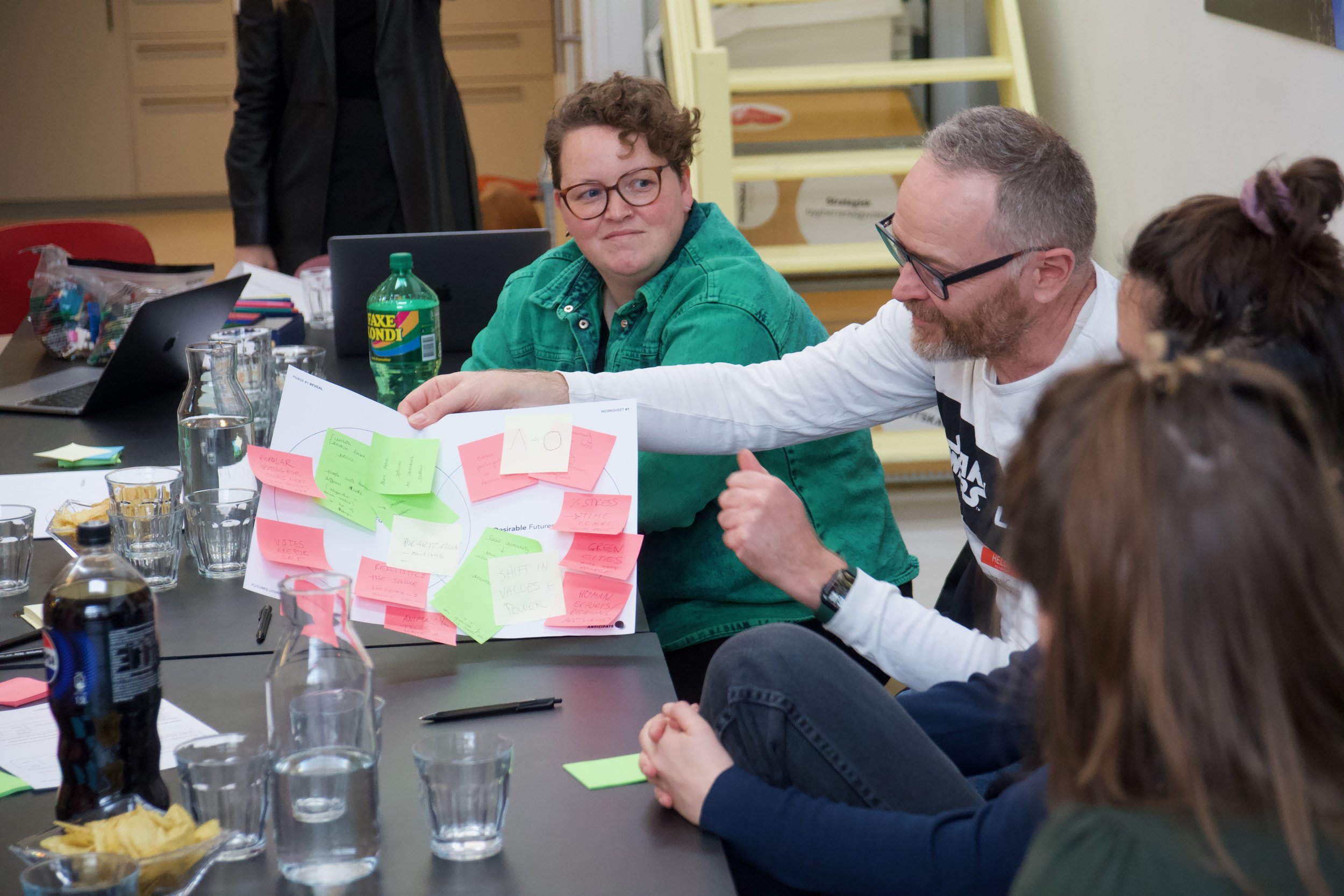
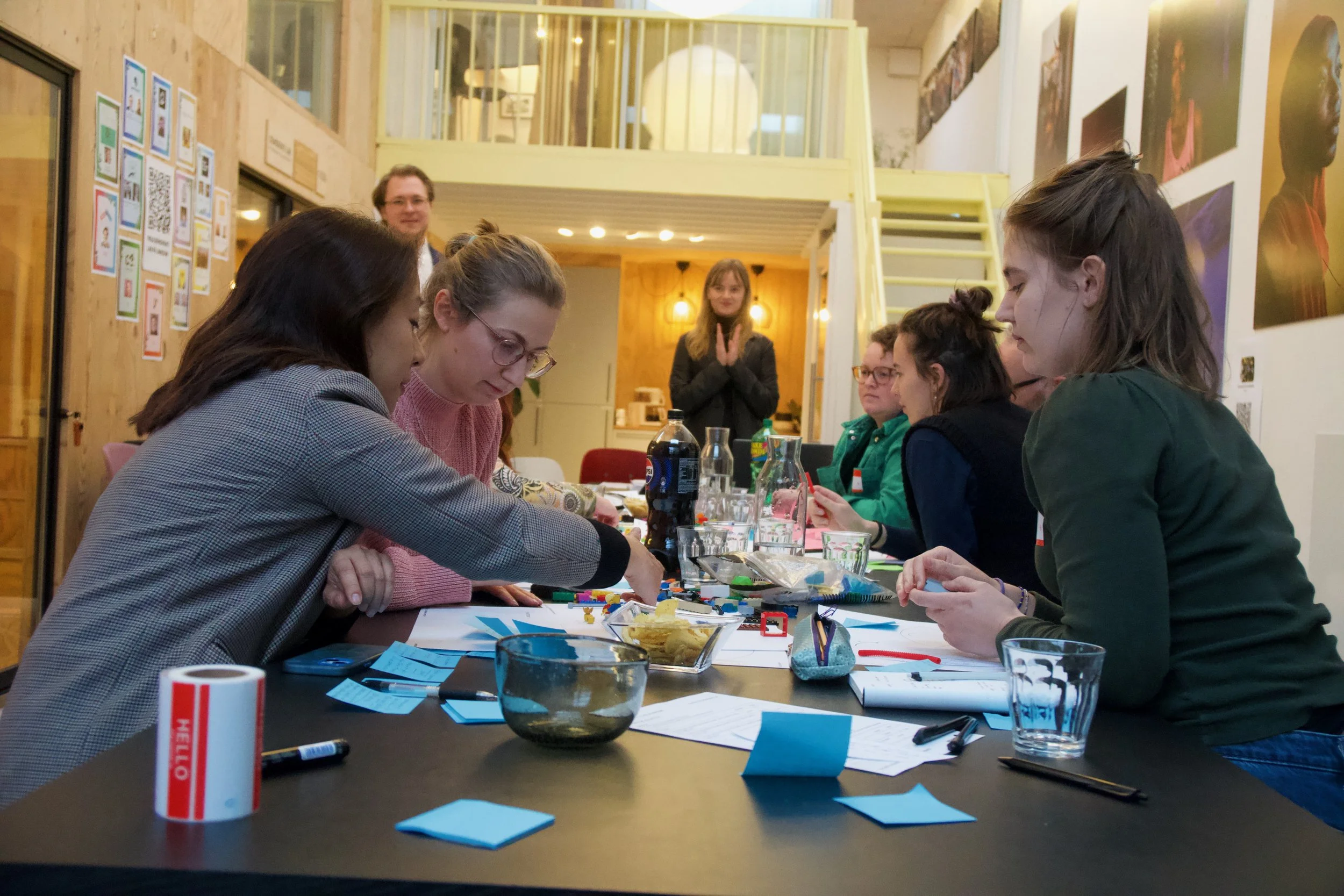
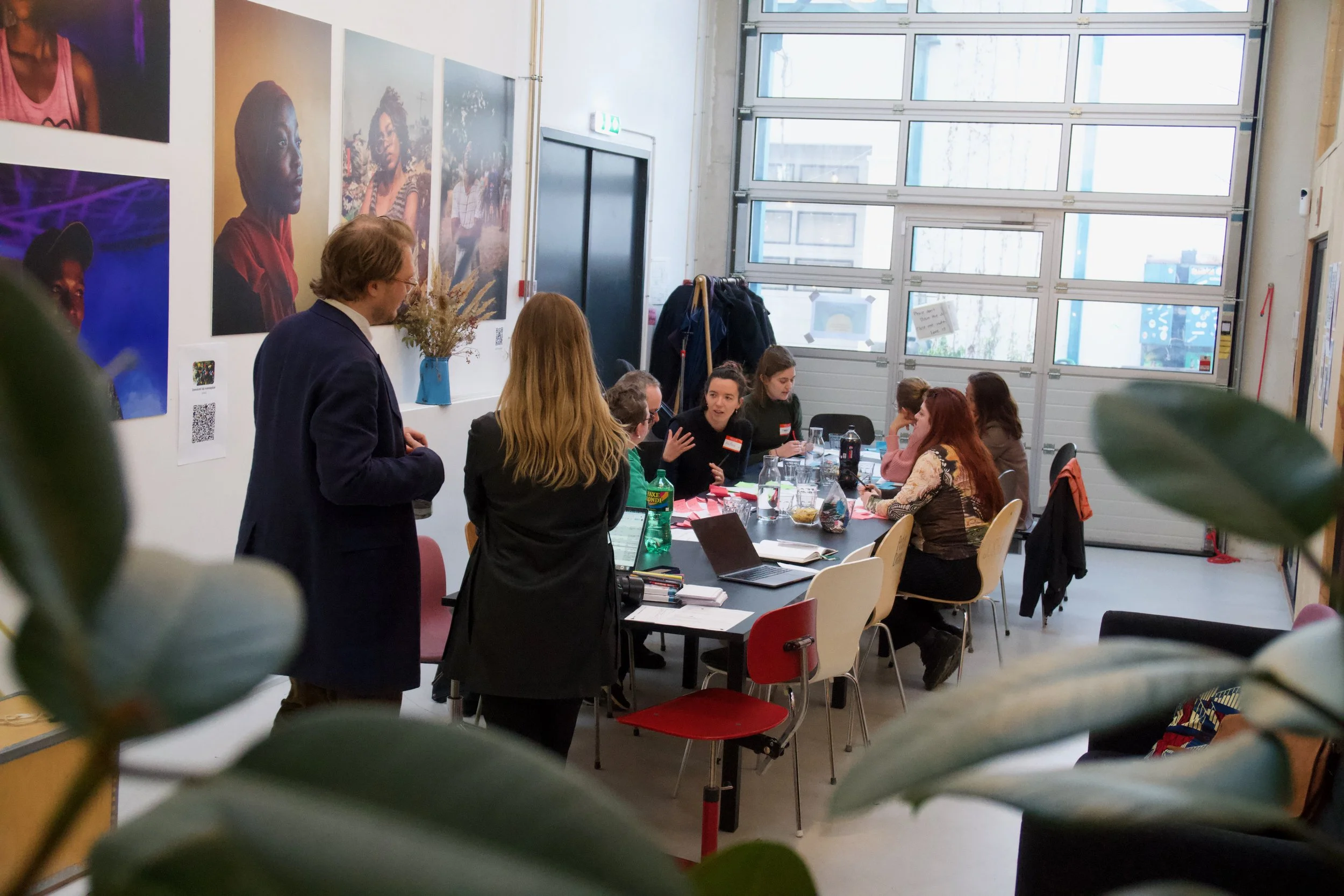
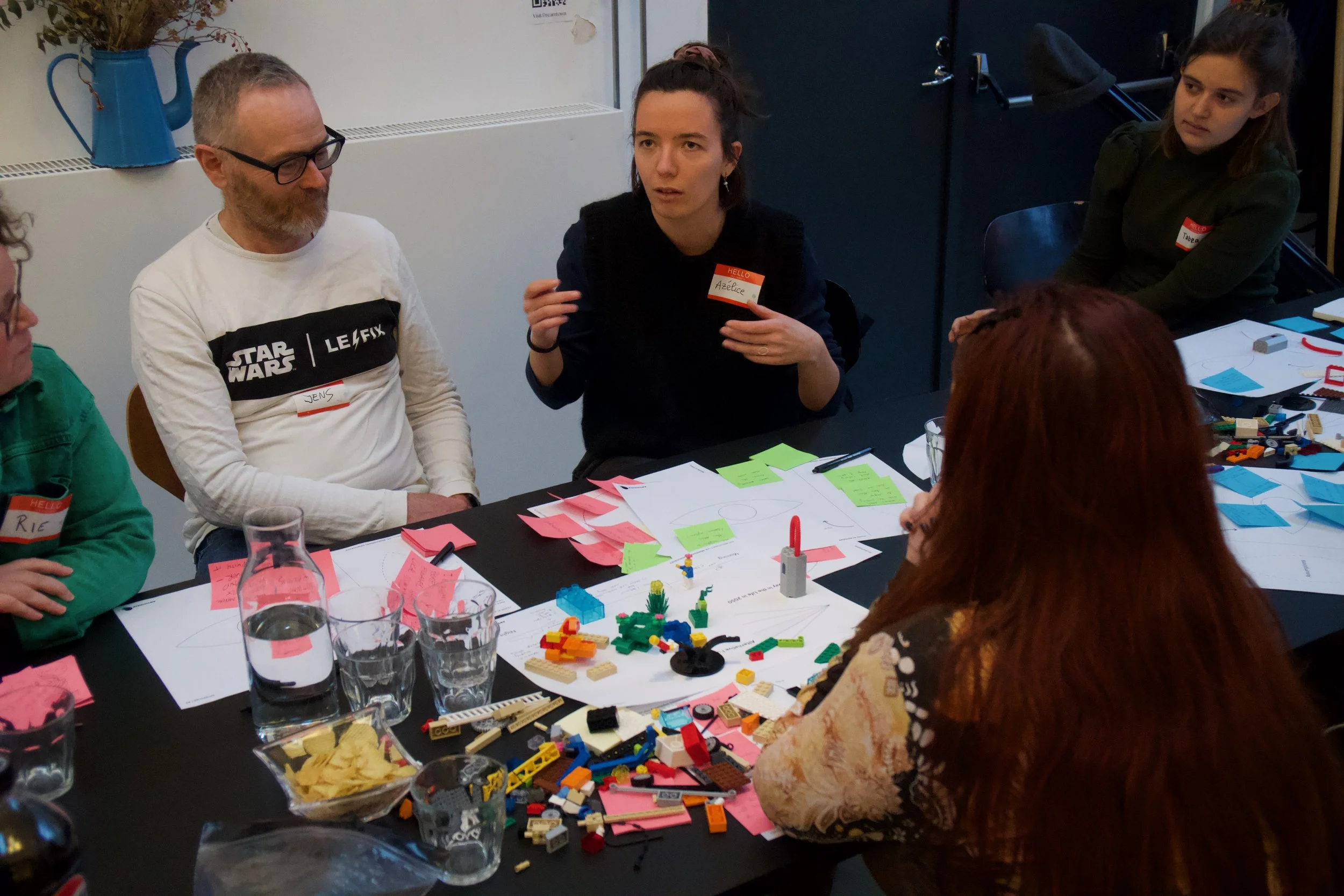
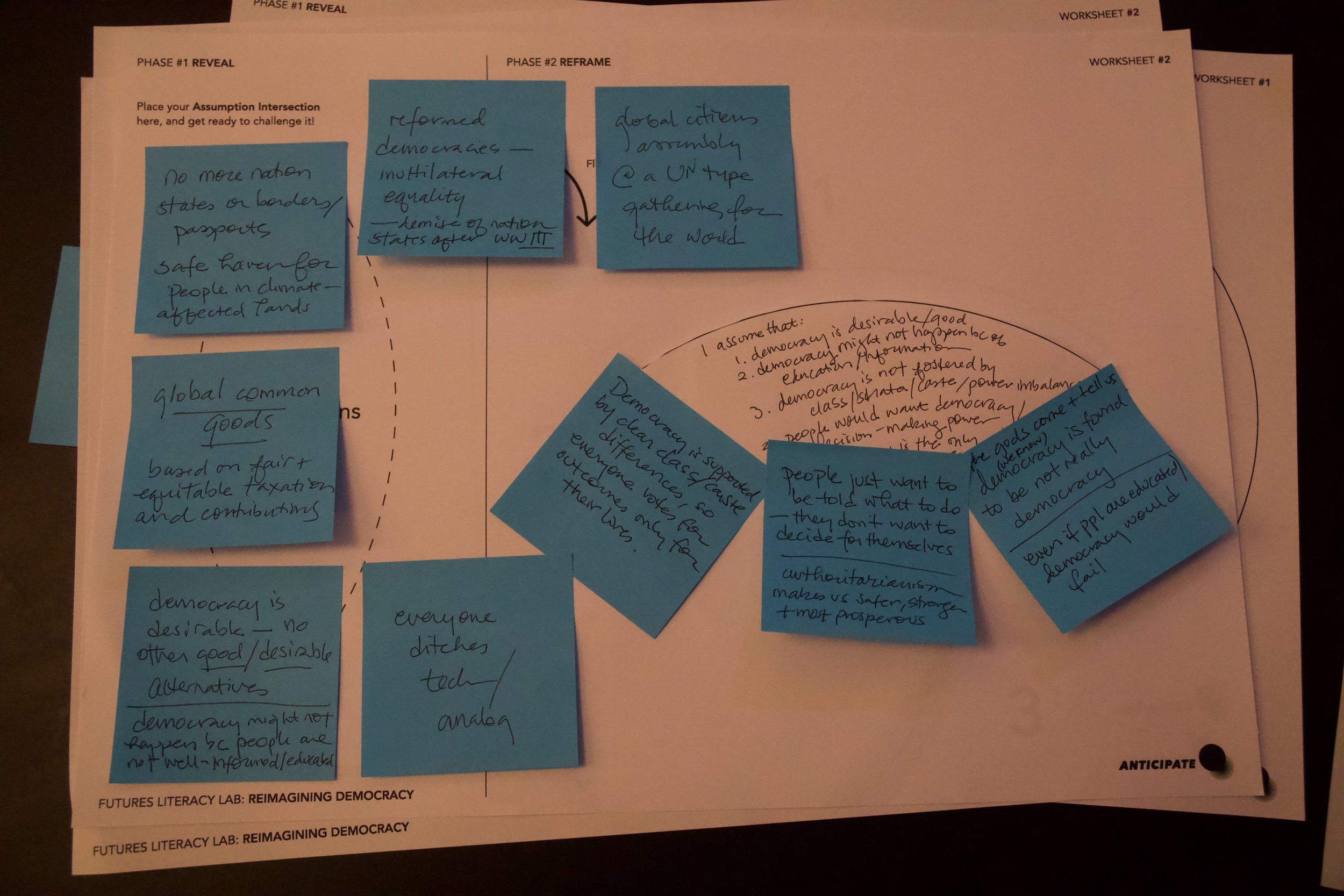
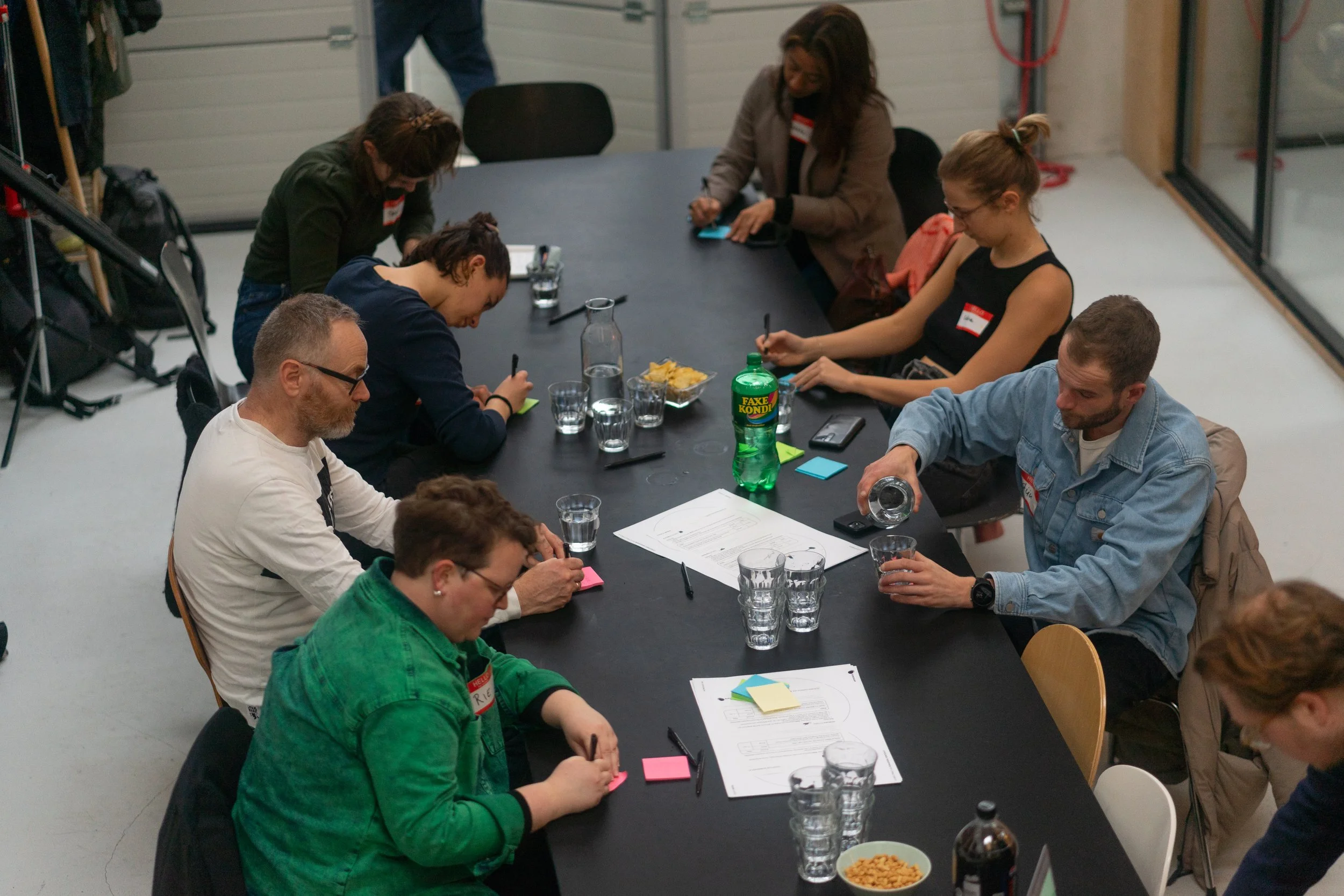
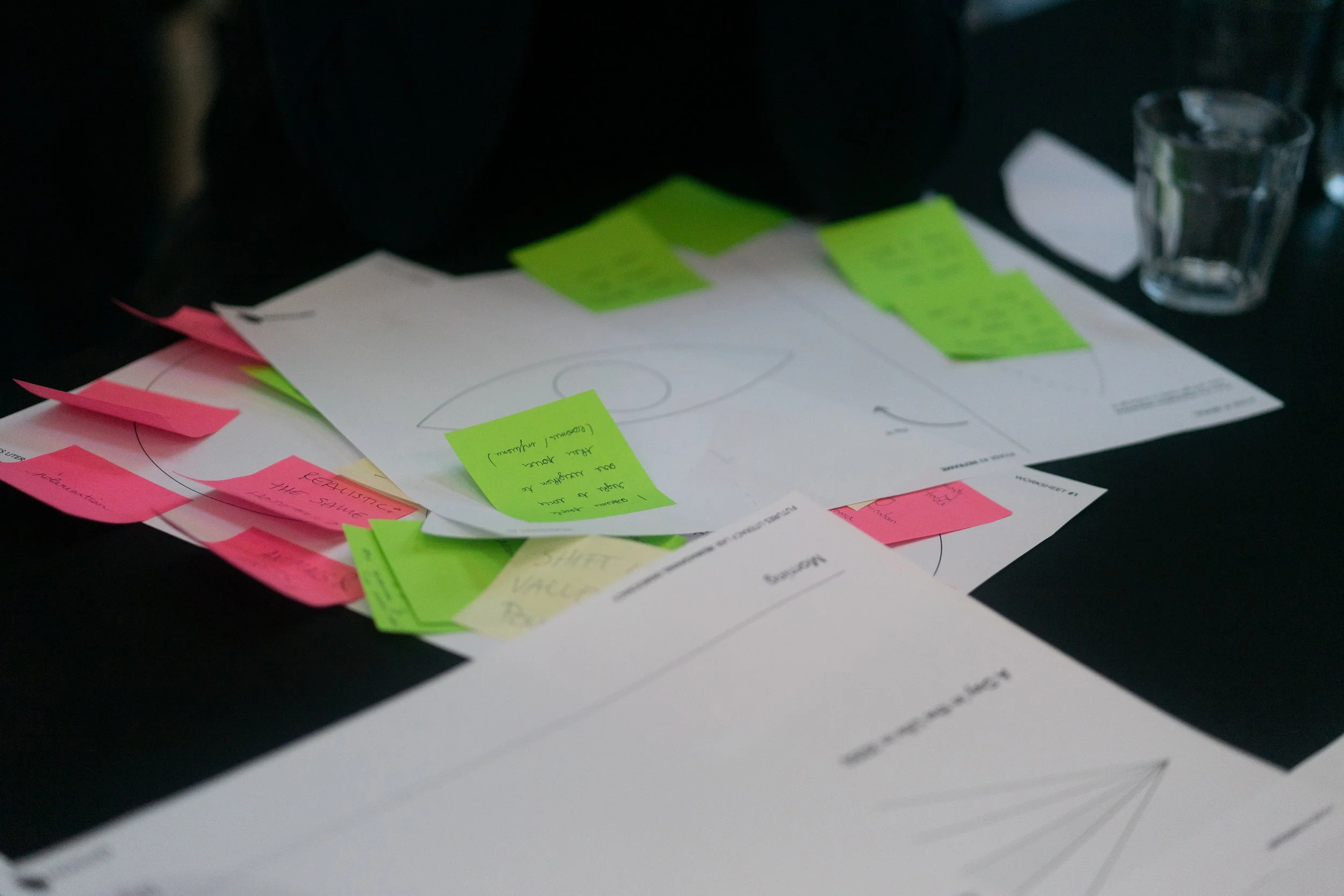
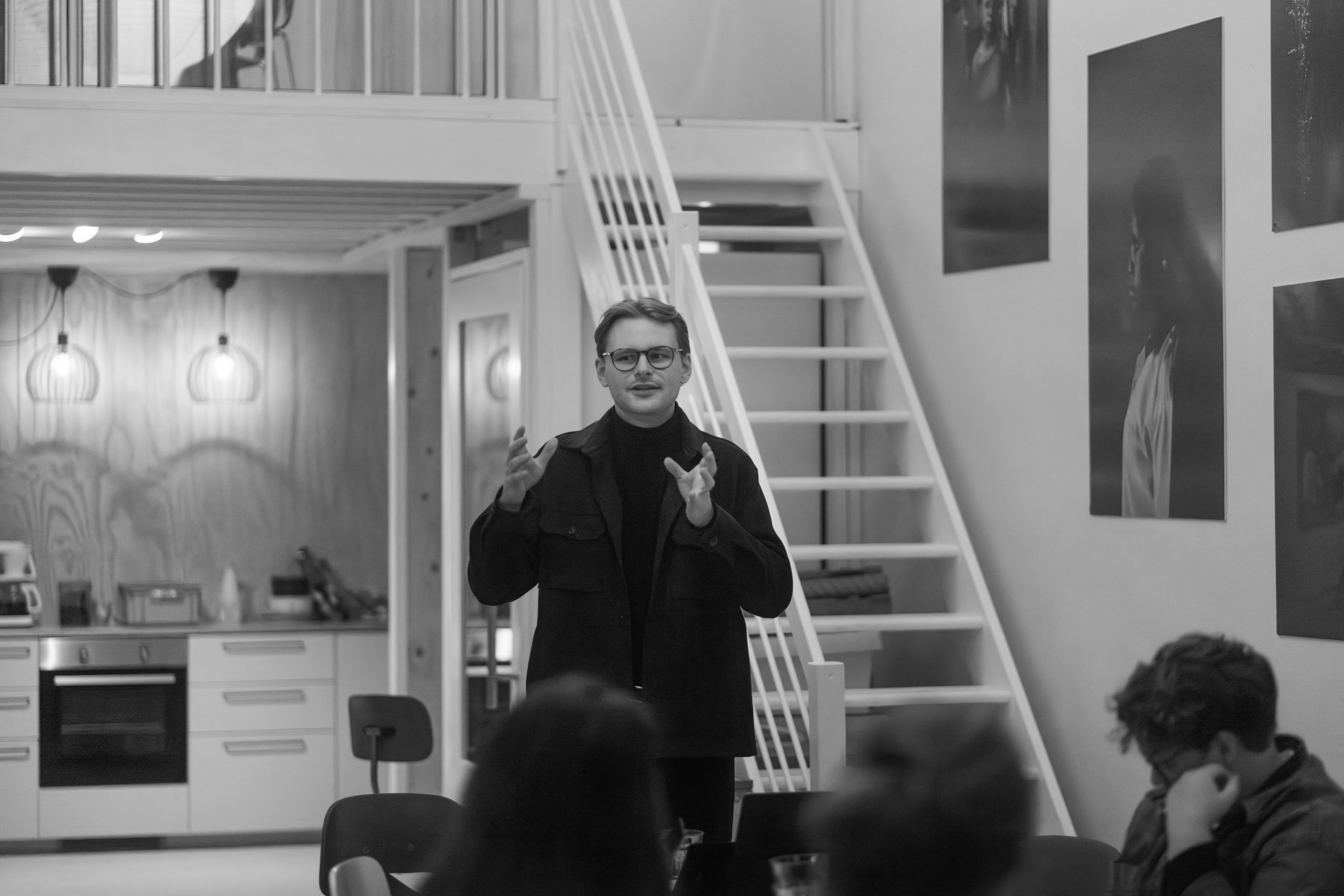
The first lab ran at Demokrati Garage in Copenhagen, marking World Futures Day at a moment when democratic questions were pressing on many people at once. Two hours of immersive discussion moved the group from challenging their own assumptions about how democracy works, through alternative models of governance, into collaborative visioning of democratic life in 2048 and beyond, with a closing turn towards what futures thinking offers policymaking, civic engagement and activism. Spaces were limited and filled quickly.
2) Citizens Reimagined, online and built on what came before
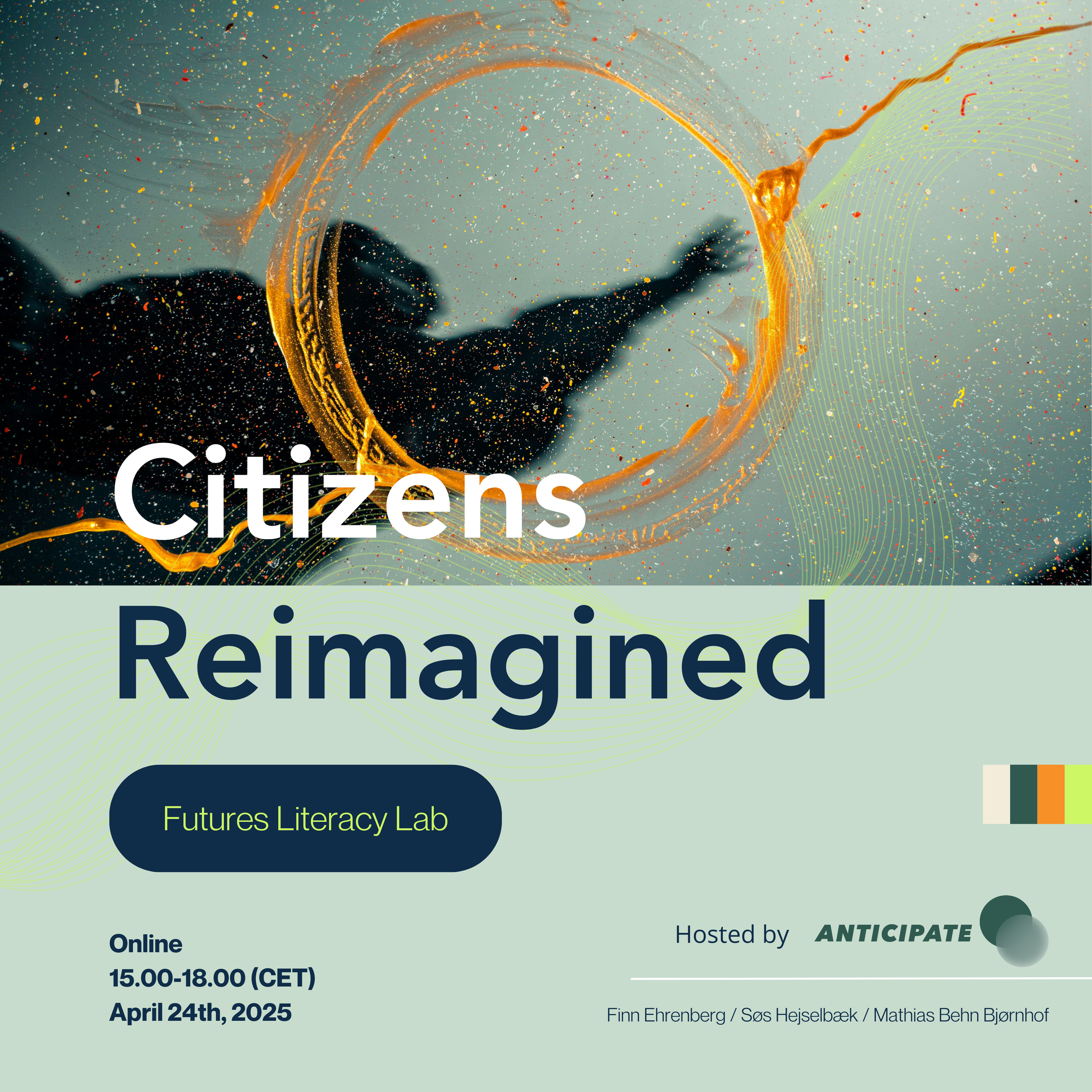
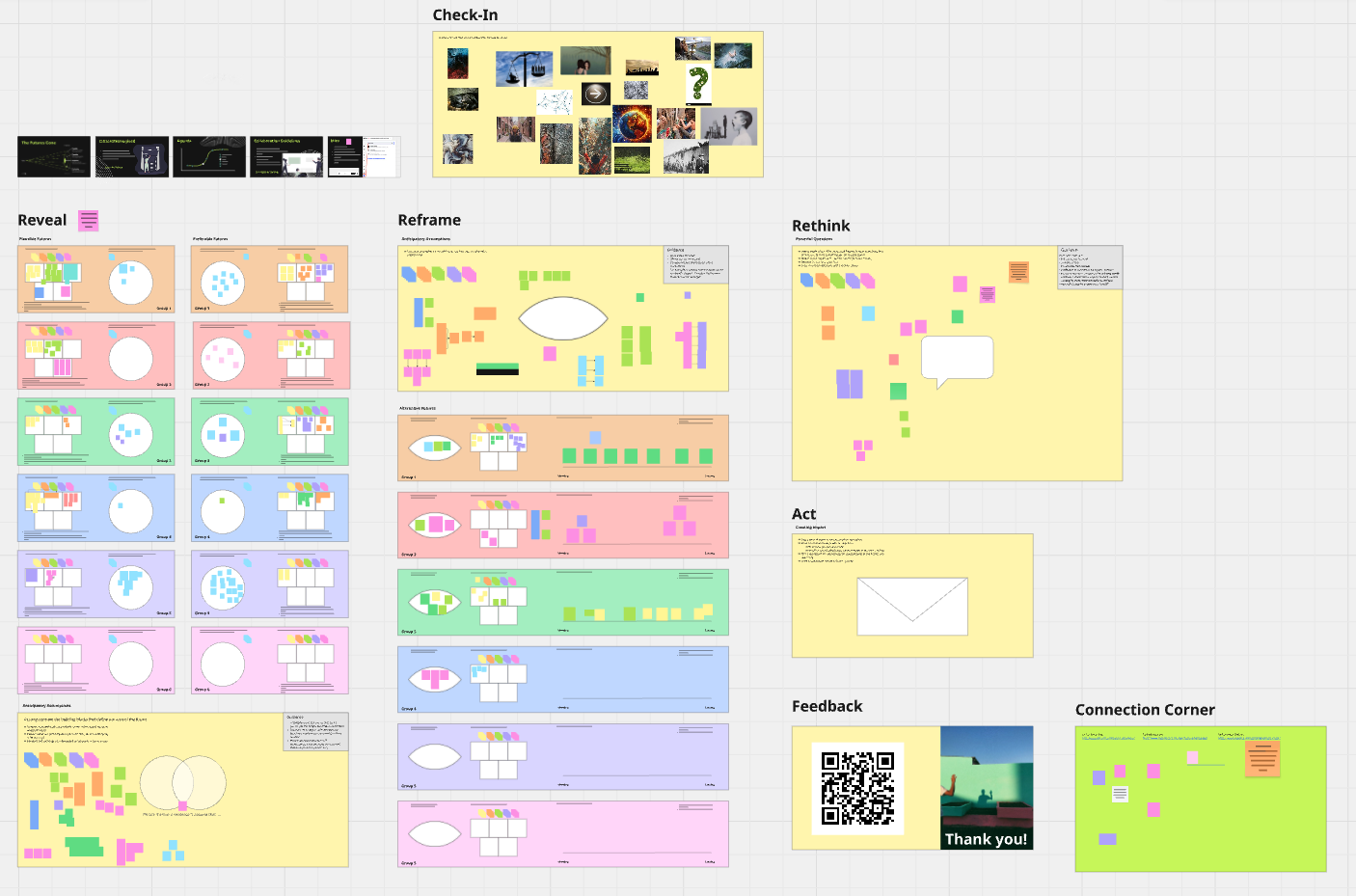
One theme kept returning through the first lab: what about us, the citizens? So the second lab took that question as its starting point. It ran for three hours online, hosted on Butter rather than a standard video call, with creative exercises to train the imagination, guided exploration using futures literacy tools, peer conversations and a collective vision of life in 2048. The framing was deliberately wide, treating citizenship as something people practise through how they care, create, connect and claim space together, rather than a legal status alone. Tickets, pay-what-you-want, went in a few days.
3) A format designed for mixed rooms
Both labs welcomed people with no prior experience of futures work. The design carries the rigour, so participants can arrive with curiosity and still reach a useful place by the end. Keeping entry free, with a pay-what-you-want option supporting the work, is how we put the principle of democratising futures literacy into practice rather than only writing about it.
4) Co-facilitation as part of the method
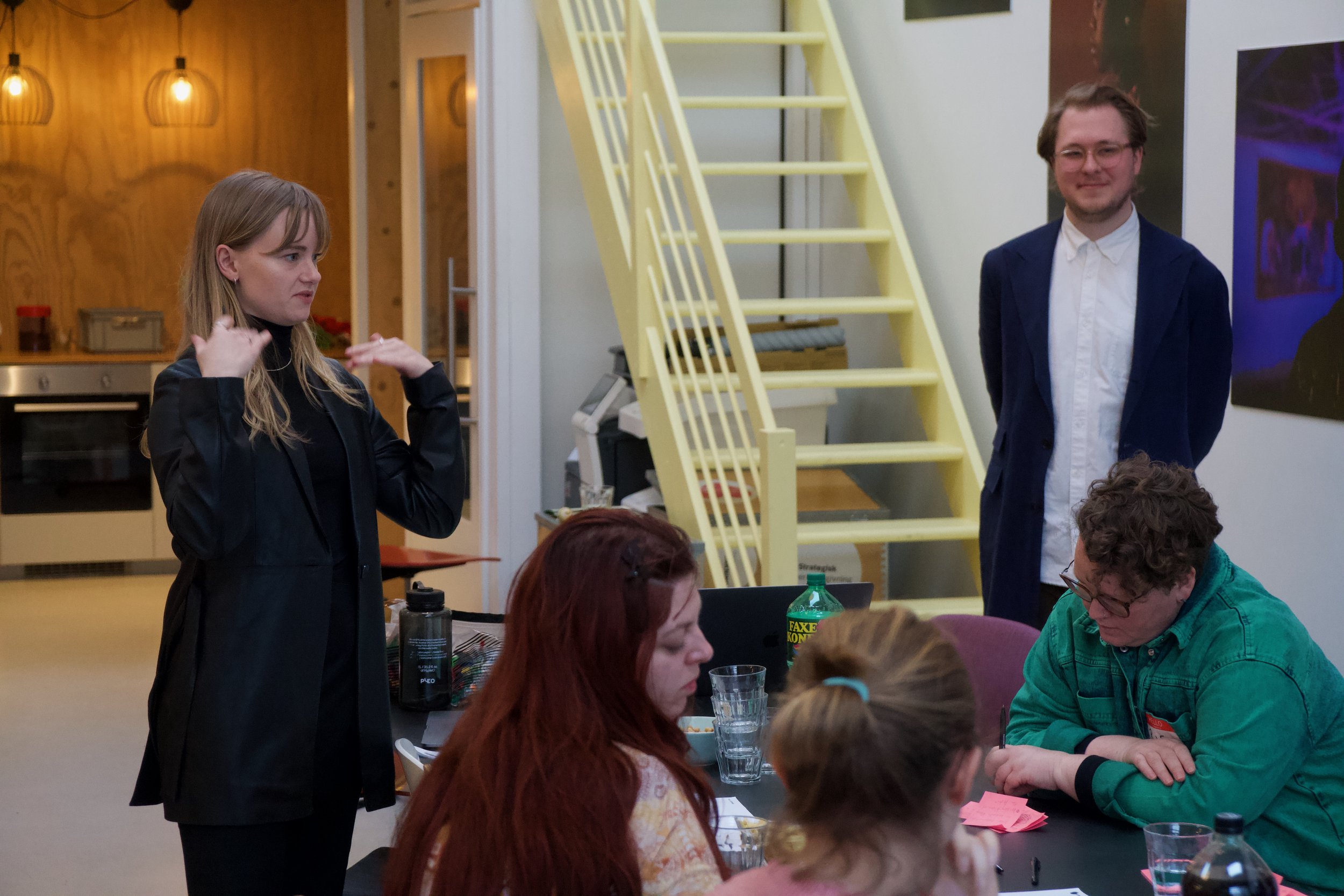
Different facilitation styles in the room widened what participants were willing to say, which matters when the subject is how people relate to power and to each other.
Outcomes
1) A set of principles for a living citizenship
Rather than designing new political systems or utopias, the second lab surfaced practices that would shift citizenship from a top-down contract towards something people keep alive together: local empowerment and community-driven autonomy, a renewal of collectiveness over isolated identity, AI shaped and governed by citizens themselves, value recognised in social and ecological terms alongside the economic, and an acceptance that different places will want different futures.
2) A question carried from one lab into the next
The democracy lab produced the question that became the second lab, which shows the value of running a series. Each session leaves a thread worth pulling, and the group grows into the subject over time.
3) Futures literacy reaching beyond the usual room
Around 40 people, most arriving without foresight training, spent an evening or an afternoon working with assumptions, alternative futures and long horizons. That is capability built in the places where these questions eventually get decided: workplaces, communities and civic life.
4) A visible practice for ANTICIPATE
Hosting open labs on subjects we care about gives people a way to experience how we work before any commercial conversation, and keeps our own thinking on democracy and citizenship in motion.
Get in touch
Step into the futures with our Futures Workshops & Immersions!
Step into the futures with our Futures Workshops & Immersions!



Themes