Futures Thinking for the Next Generation of Designers

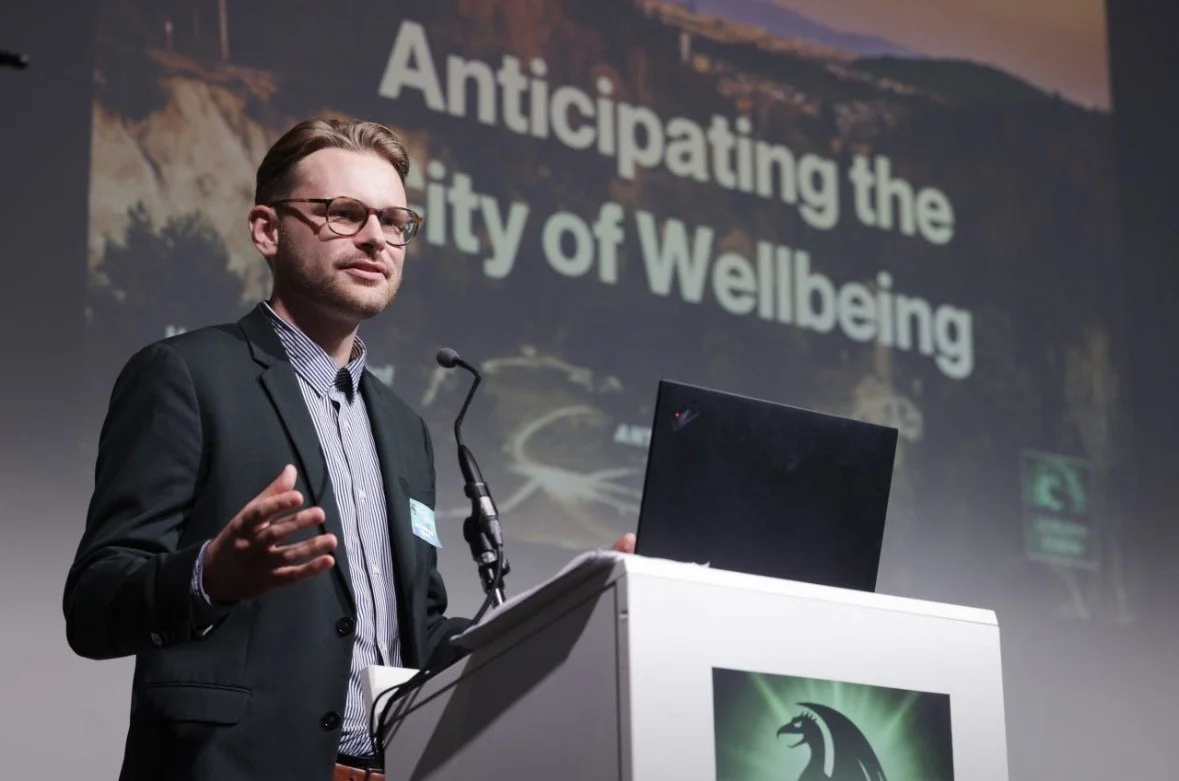
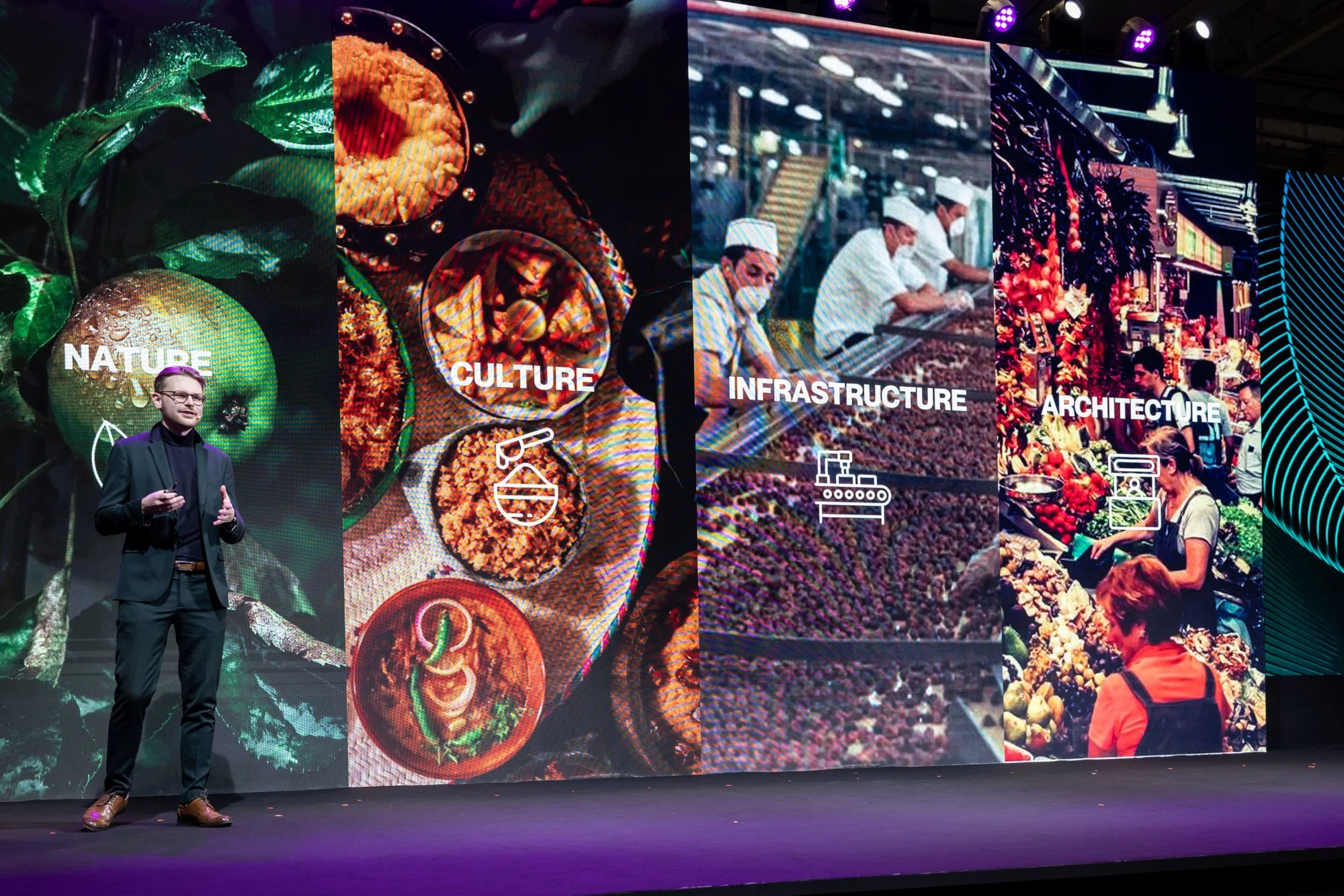
Guest lectures on futures thinking and foresight across Elisava, Universidad de San Andrés, Parsons School of Design, University of the Arts London, Aalborg University Copenhagen, and more.
Introducing design students to futures thinking and strategic foresight, and showing how designers can move beyond responding to today’s needs to actively exploring, questioning, and giving form to different futures.
Challenge
Design is inherently futures-facing. Every product, service, system, space, or communication that gets designed contains assumptions about how people will live, what they will value, which technologies will exist, and what problems will matter. Yet design education often starts from the present: existing users, current needs, known constraints, and problems we can already describe.
Across guest lectures with students at Elisava, Universidad de San Andrés, Parsons School of Design, University of the Arts London, and Aalborg University Copenhagen, the aim was to introduce another layer to the designer’s toolkit:
What changes when we treat the future itself as part of the design context?
Rather than training students to become professional futurists in a single session, the lectures offered a practical taster of foresight, enough to challenge familiar assumptions, introduce key concepts and methods, and show how futures thinking can expand design practice.
Approach
Across the guest lectures, we used a common foundation while adapting the emphasis to the particular design programme and course context. Some sessions leaned more into sustainability and systems change, others into strategic foresight, speculative design, or scanning and scenarios, but the intention was consistent: give students a practical introduction to how futures thinking can complement design practice.
We started with the core principles of foresight: the future is plural rather than predetermined, foresight is not prediction, uncertainty can be explored rather than eliminated, and imagination becomes more useful when it is combined with structured inquiry. A recurring theme was that our assumptions about the future quietly shape what we design in the present — and that foresight gives us ways to make those assumptions visible and challenge them.
From there, students were introduced to some of the building blocks of applied foresight: signals of change, broader trends and systems dynamics, uncertainty, alternative futures, and scenarios. We used examples and case studies from ANTICIPATE’s work to show how these methods move from abstract thinking into real questions around strategy, innovation, sustainability, technology, and societal change.
The final layer connected foresight directly back to design. We explored how designers can use futures not only to respond to current needs, but to question dominant narratives, imagine different contexts, and make possibilities tangible through concepts, narratives, experiences, and prototypes. In the sustainability-focused material, this connection was framed very directly as design as formgivning — “giving form” — and therefore also as a practice capable of giving form to futures.
The sessions were deliberately introductory rather than method-heavy. The aim was to give students enough language, examples, and provocation to start seeing foresight as something they could bring into their own design practice.
Outcomes
1) Expanding the designer’s brief beyond the present
Students were encouraged to question the implicit future embedded in any design brief. Instead of only asking “What do people need now?”, foresight opens additional questions: What conditions might change? Which needs could emerge? Which assumptions may no longer hold? And what kinds of futures does this design make more or less possible?
2) Connecting imagination with greater rigour
Design students are already trained to imagine. Foresight adds structure to that capability. Signals, uncertainties, megatrends, and scenarios help imagination move beyond either unconstrained speculation or extrapolation of what already exists, creating a stronger foundation for speculative and futures-facing design.
This relationship was made explicit through the principle that foresight both begins and ends with imagination, while still engaging seriously with uncertainty and action.
3) Making futures thinking tangible through real cases
The lectures showed that foresight is not confined to dedicated futures teams. Students encountered examples of how the practice connects to innovation, strategy, sustainability, organisational change, technology, and public challenges, providing different routes for bringing future-oriented thinking into their own design careers.
4) Positioning designers as active participants in shaping futures
A recurring message across the lectures was that futures are not simply environments designers eventually encounter. Designs themselves shape behaviours, systems, expectations, and possibilities.
That makes foresight especially relevant to design, since designers can become more conscious of the futures their work helps enable.
Get in touch
Get inspiring insights through our Talks & Thought Leadership!
Get inspiring insights through our Talks & Thought Leadership!

Themes