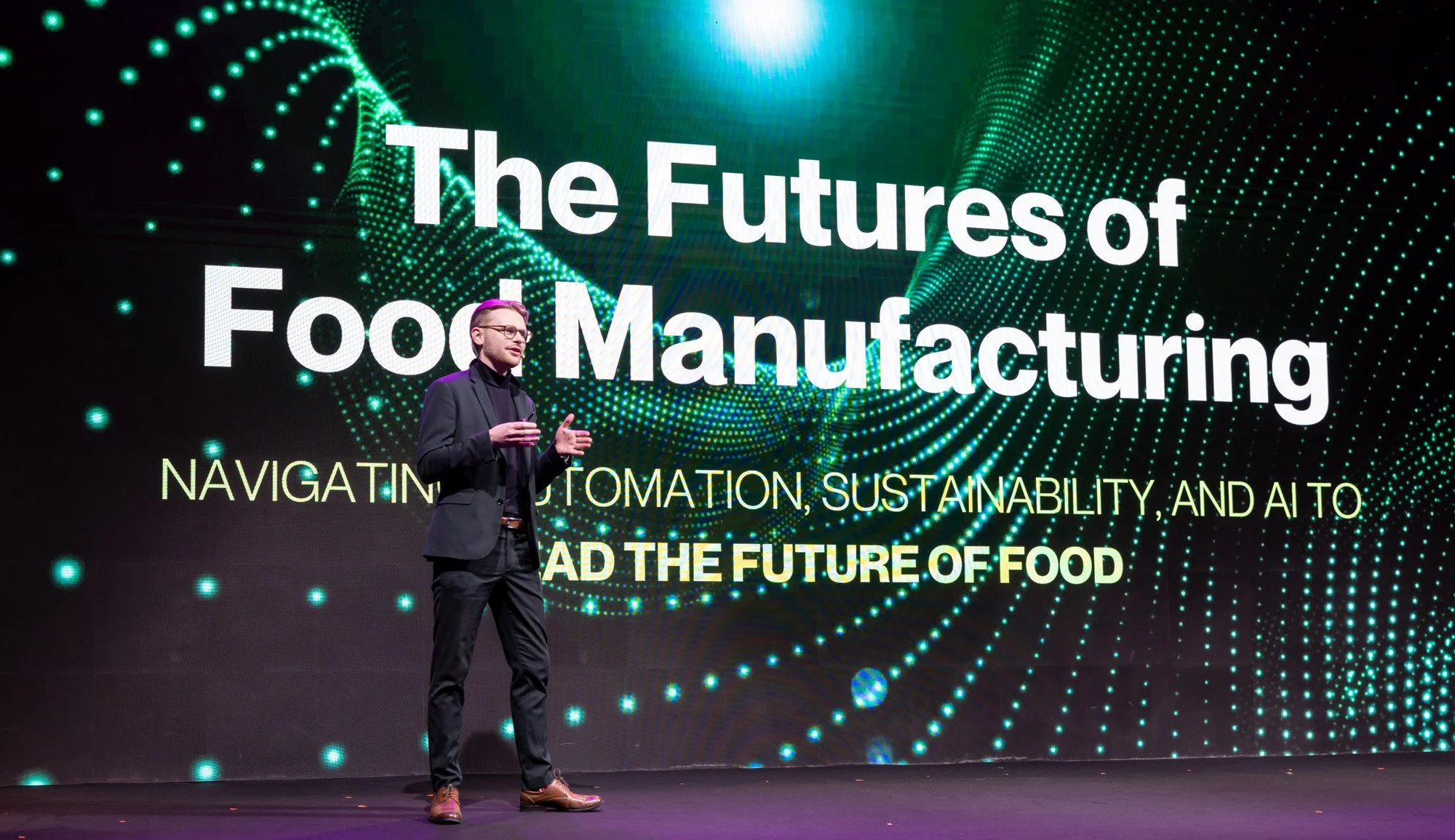
Futures of Food Manufacturing: Navigating AI, Automation & Sustainability
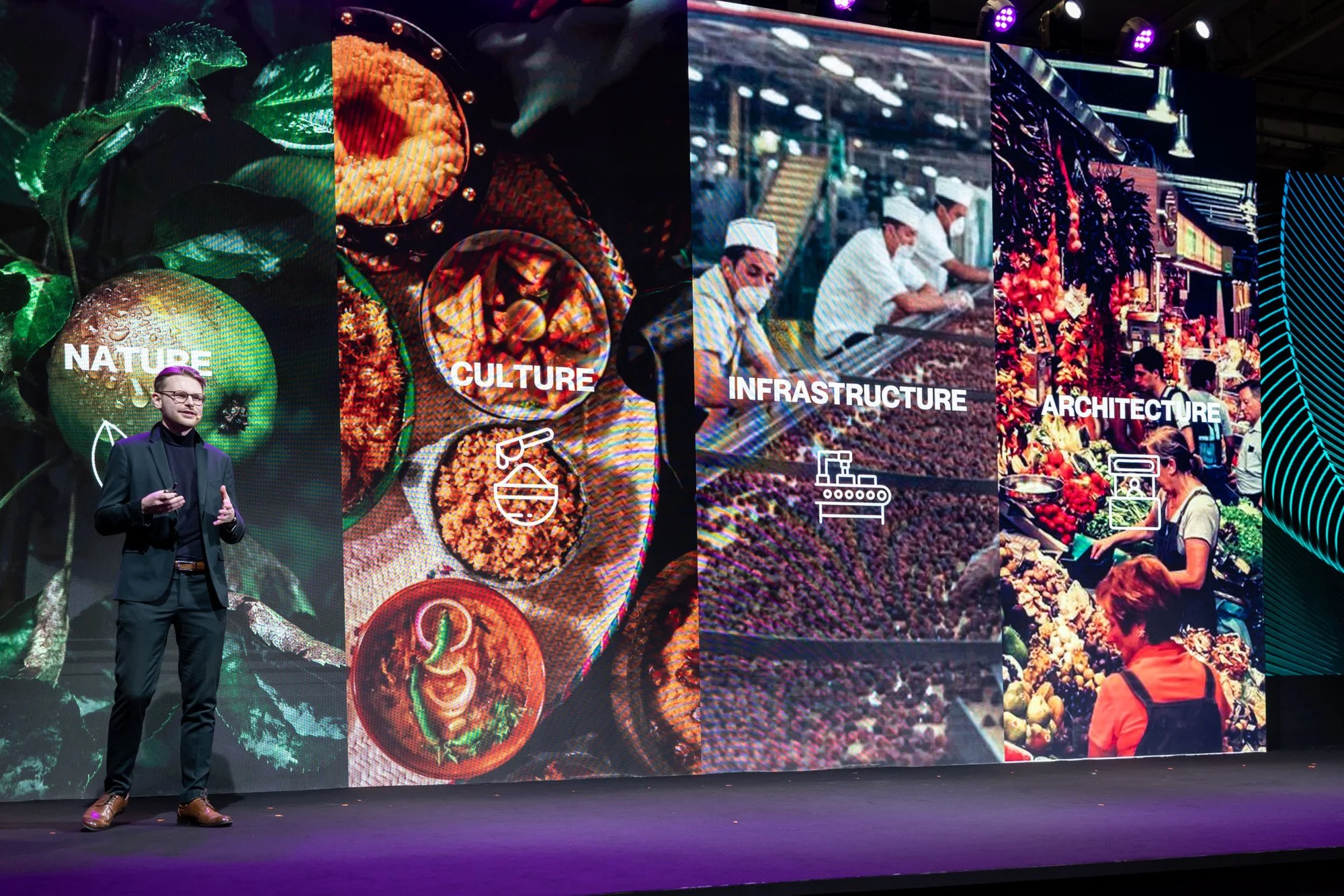
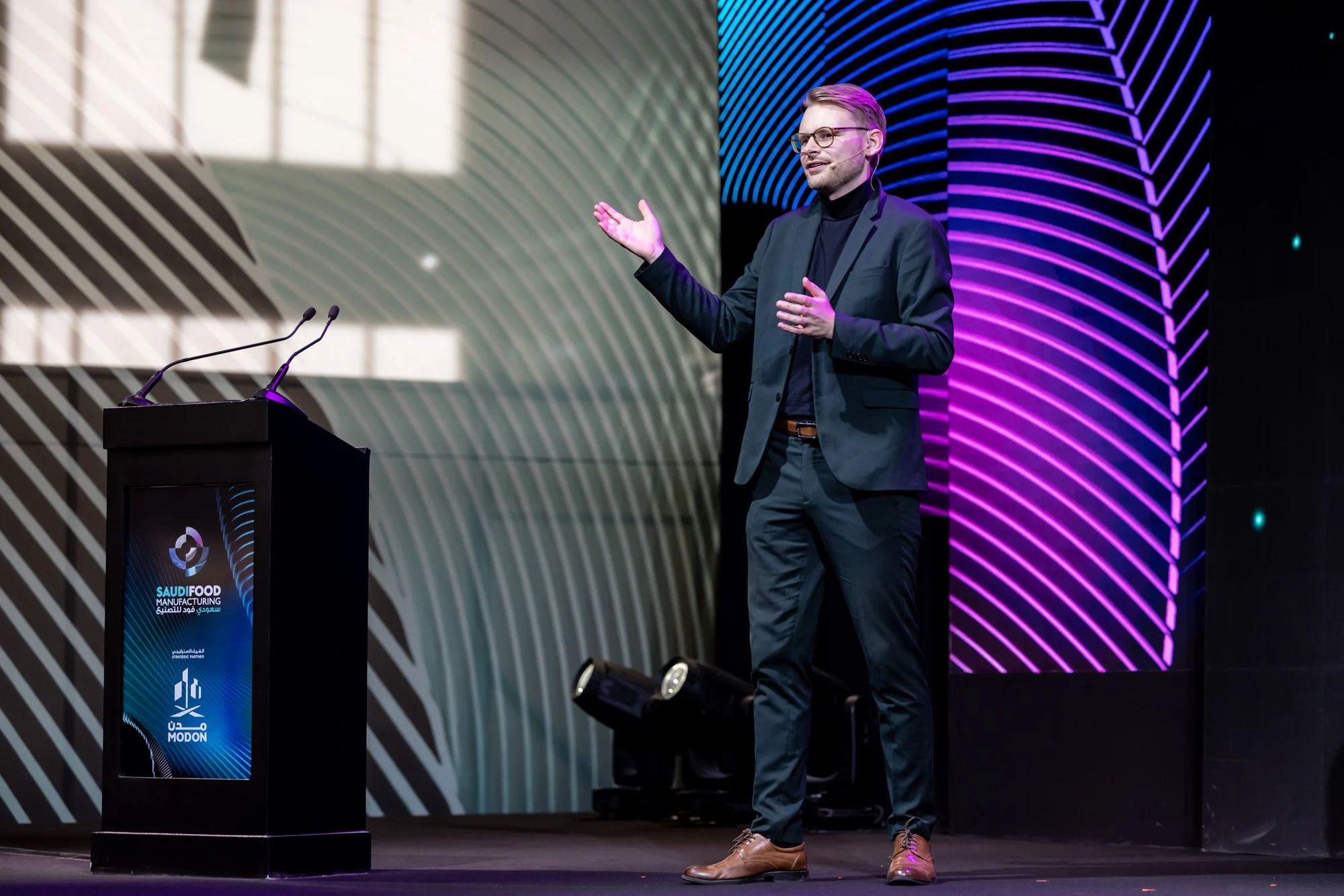
Keynote at Food Forward Summit 2025
A main-stage keynote translating big shifts into strategic choices for the next era of food manufacturing.
Challenge
Food manufacturing is entering a decade where incremental improvement won’t be enough. The sector is being pulled in multiple directions at once: volatile supply chains, resource constraints, shifting consumer expectations, tighter sustainability demands, and accelerating technology adoption.
The summit wanted a keynote that could hold this complexity without getting lost in hype, and help senior leaders see the strategic implications of three forces that are now converging fast:
- AI changing how decisions get made
- Automation changing how production gets executed
- Sustainability changing what “value” and “performance” even mean
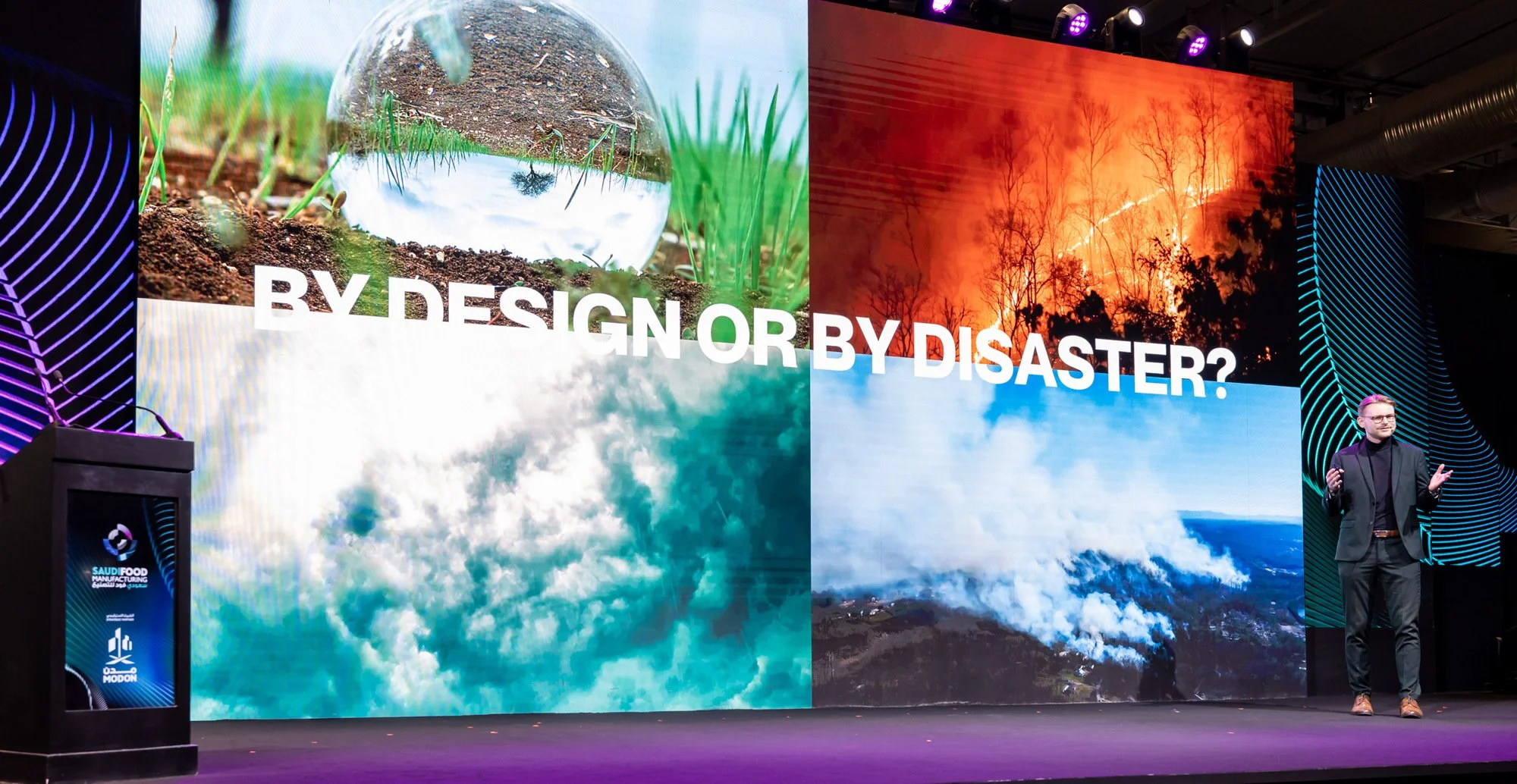
The deeper question was not whether these shifts will happen, but what kind of food system they will produce, and what choices the industry needs to make now to avoid simply scaling a model that is already under strain.
Approach
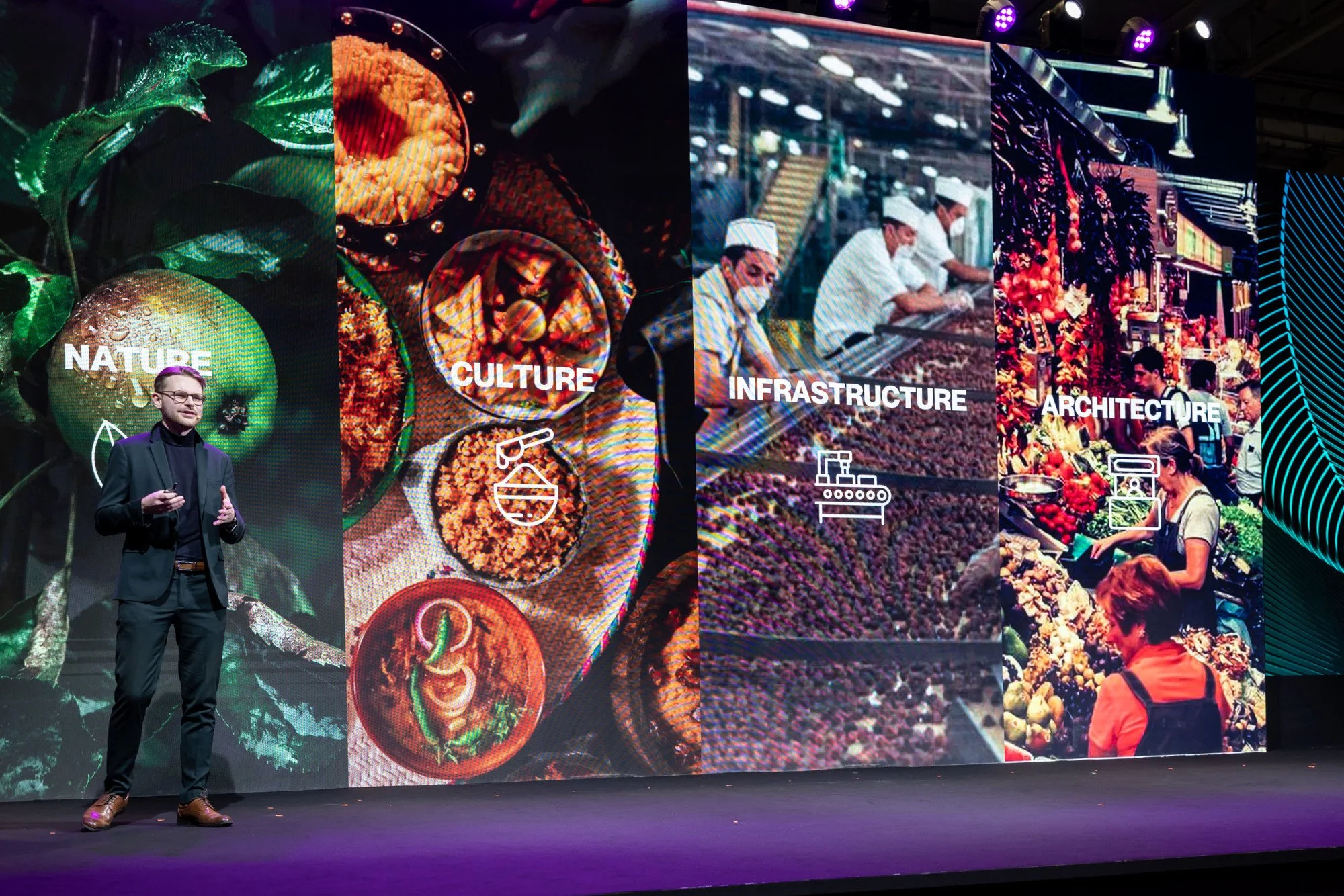
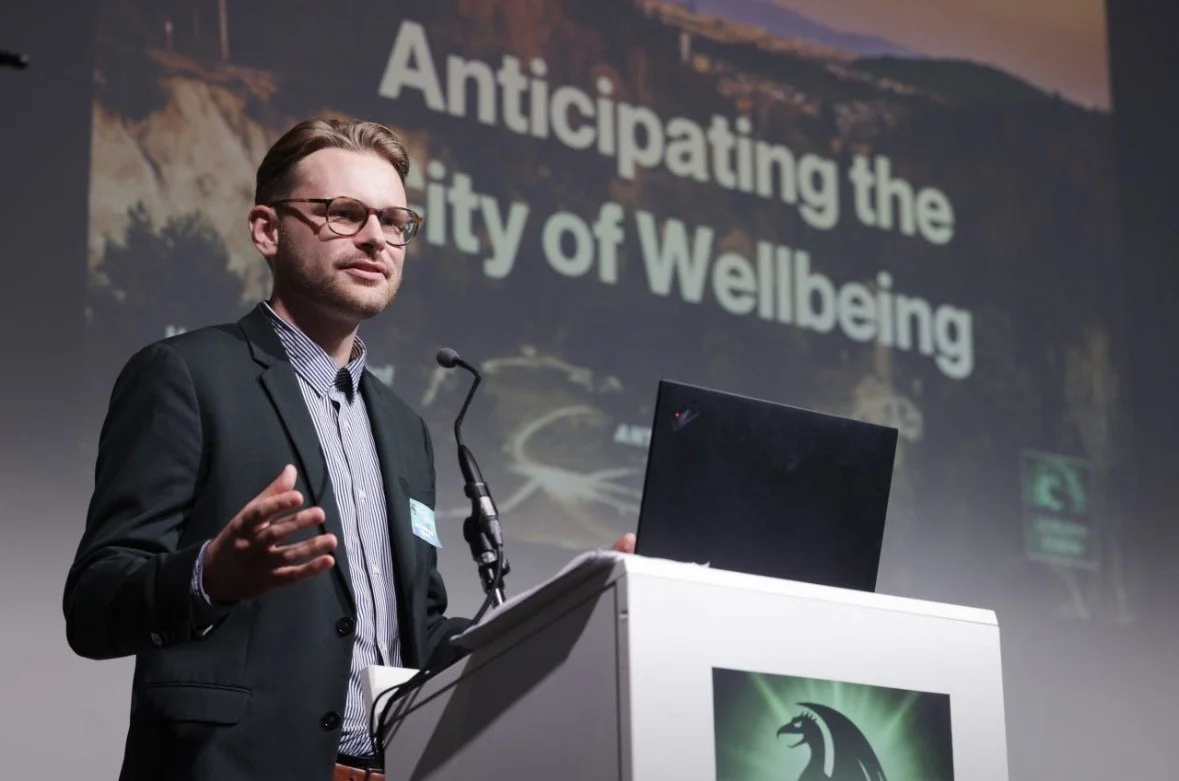
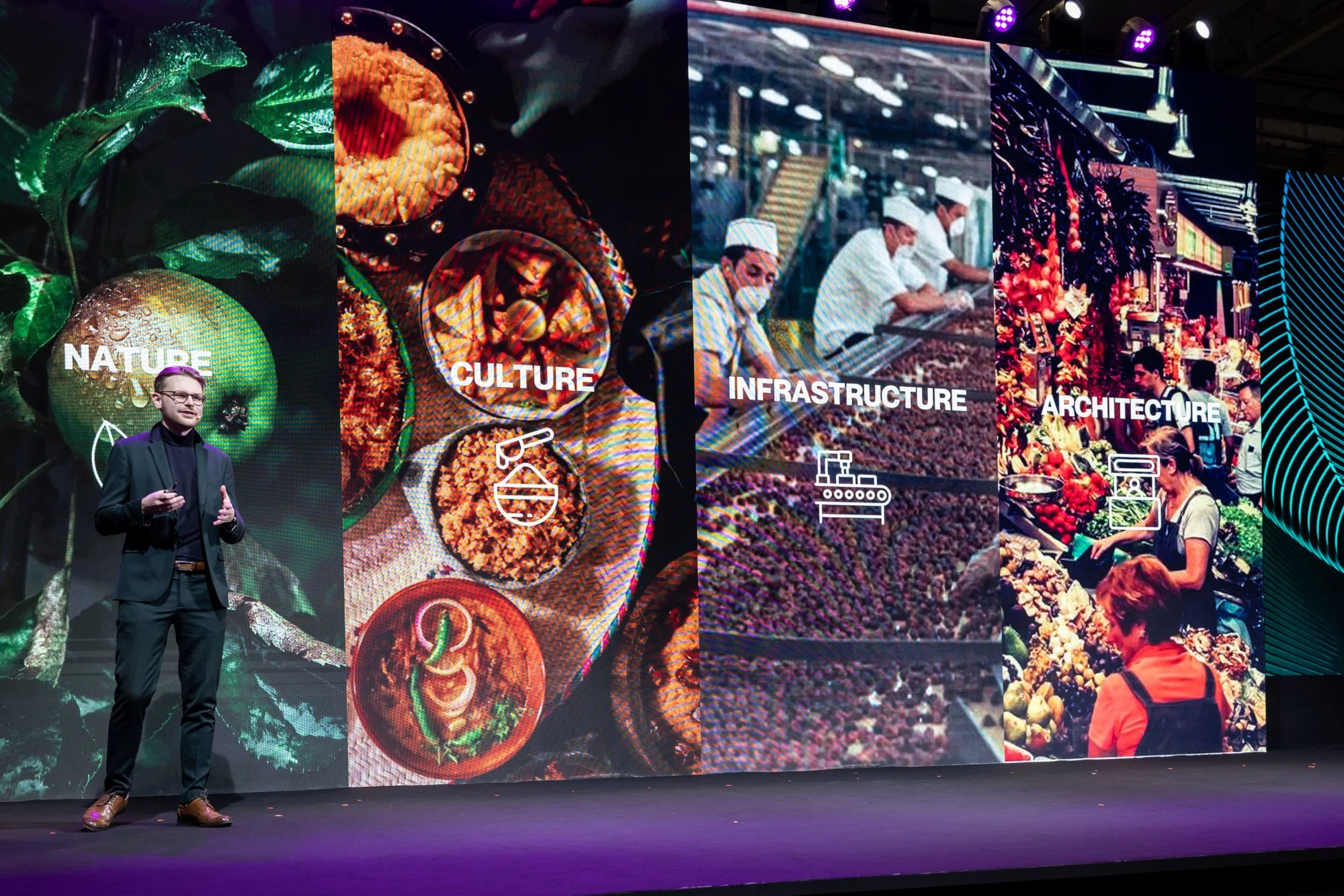
Mathias Behn Bjørnhof (Futurist & Director) delivered a keynote built for an executive audience, combining vivid examples, and a forward-looking narrative grounded in practical trade-offs.
The talk was structured around three roles:
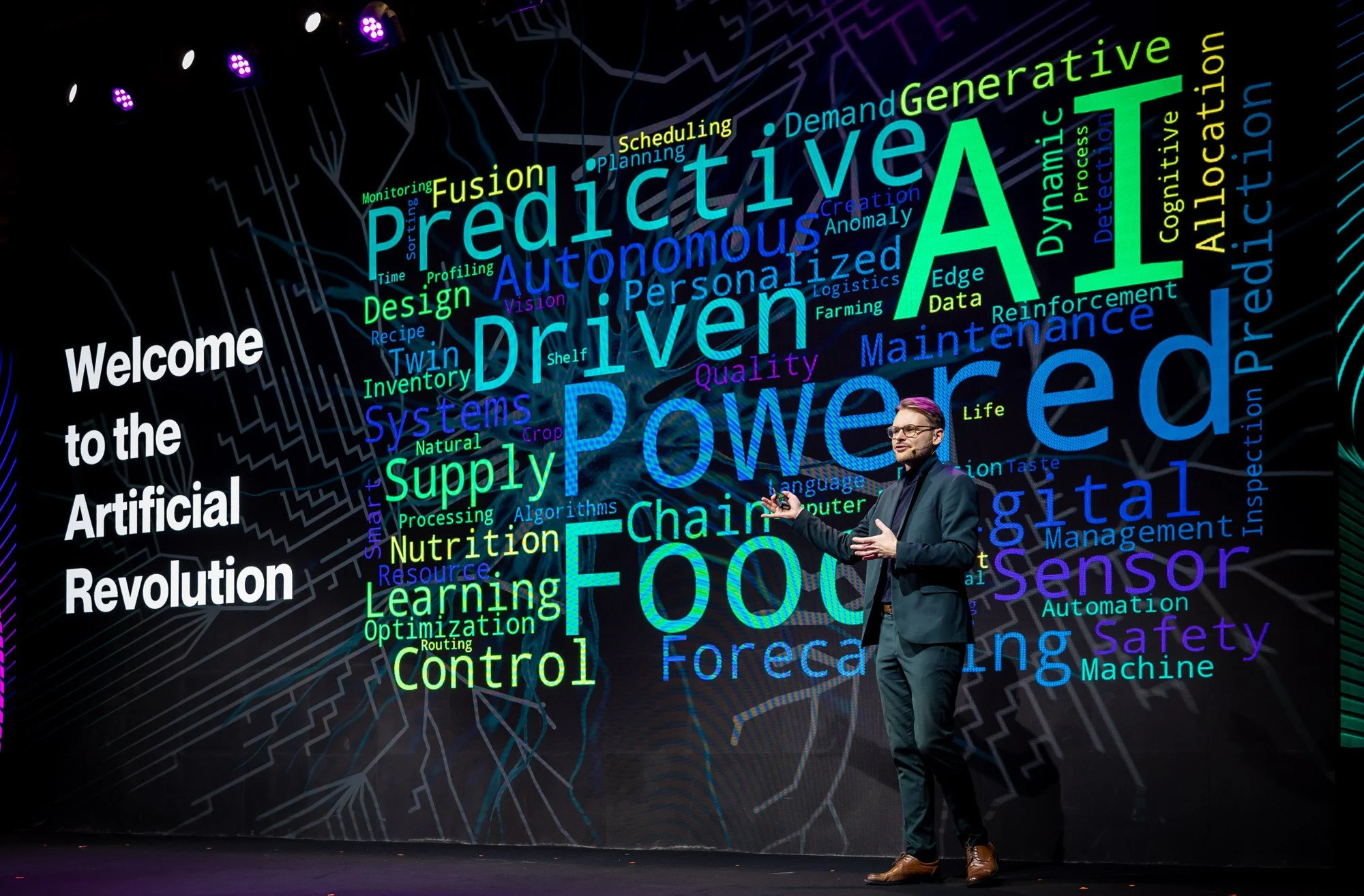
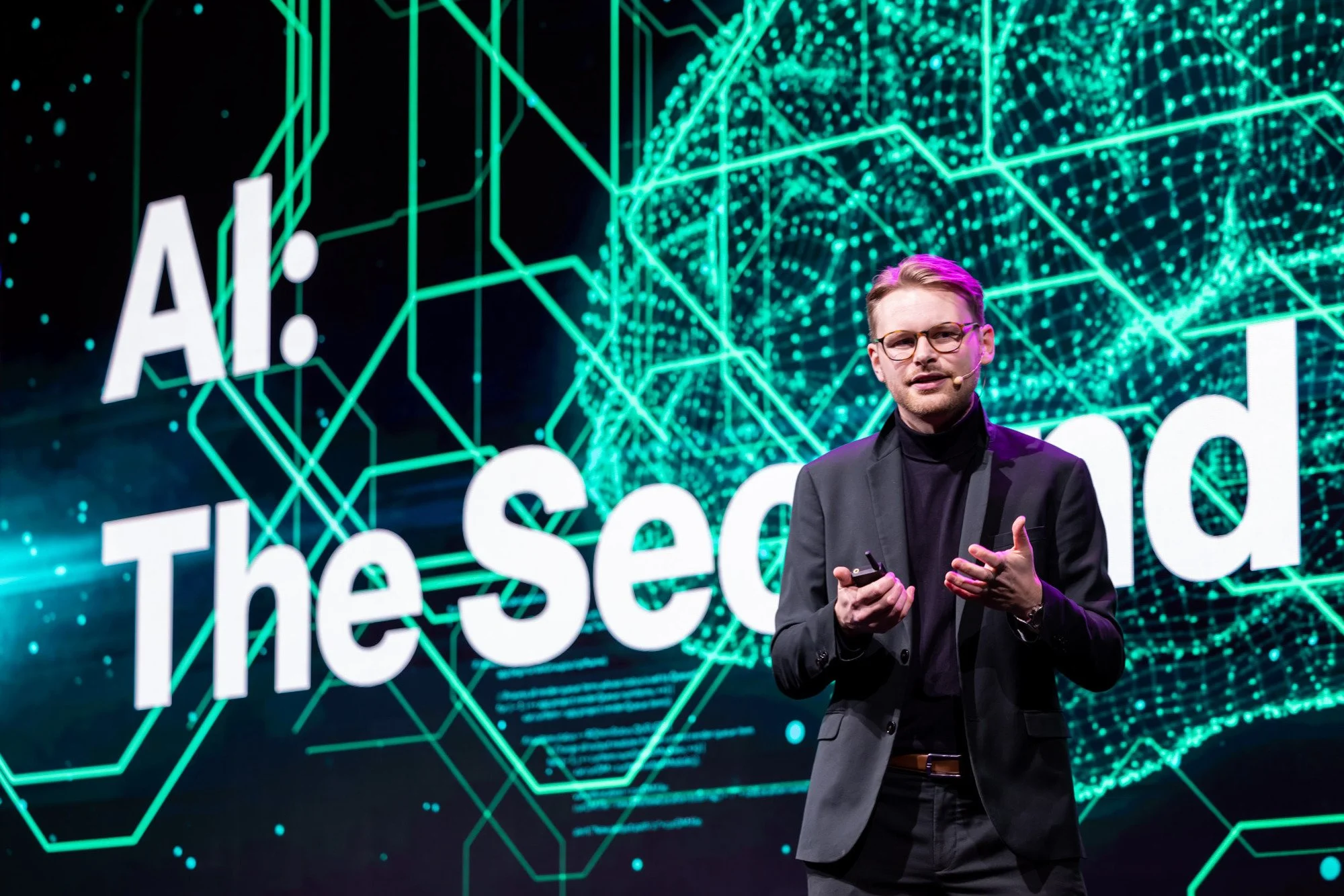
AI as the “second brain” — expanding sensing, prediction, quality control, and decision intelligence across the value chain
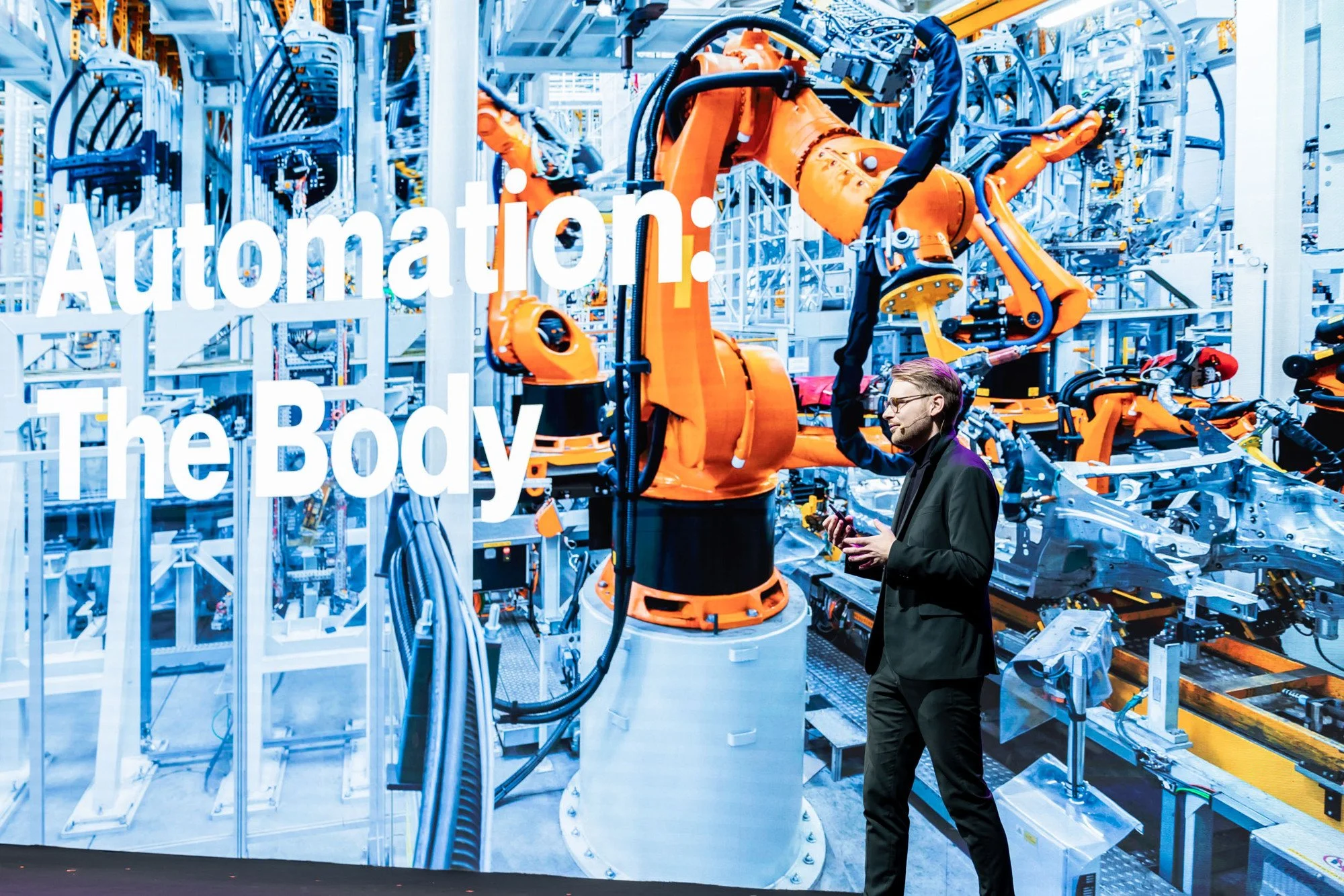
Automation as the “body” — enabling precision, consistency, speed, and resilience in operations, while reshaping workforce roles and capability needs
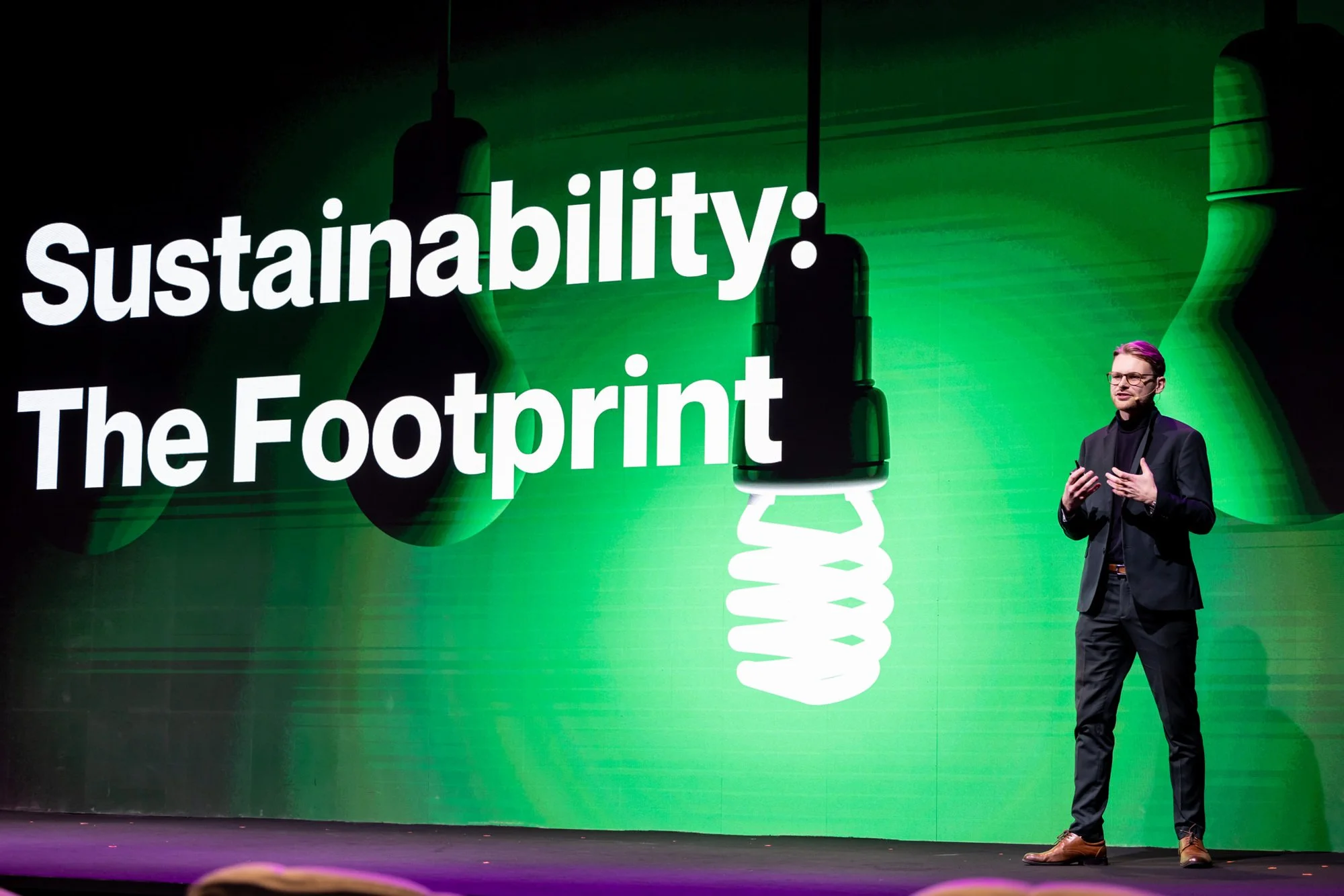
Sustainability as the “footprint” — moving from compliance thinking to innovation thinking, where circularity, waste reduction, and resource efficiency become strategic differentiators
Rather than treating these as separate topics, the keynote positioned them as a single strategic convergence — and challenged the audience to shift mindset from isolated pilots to integrated transformation.
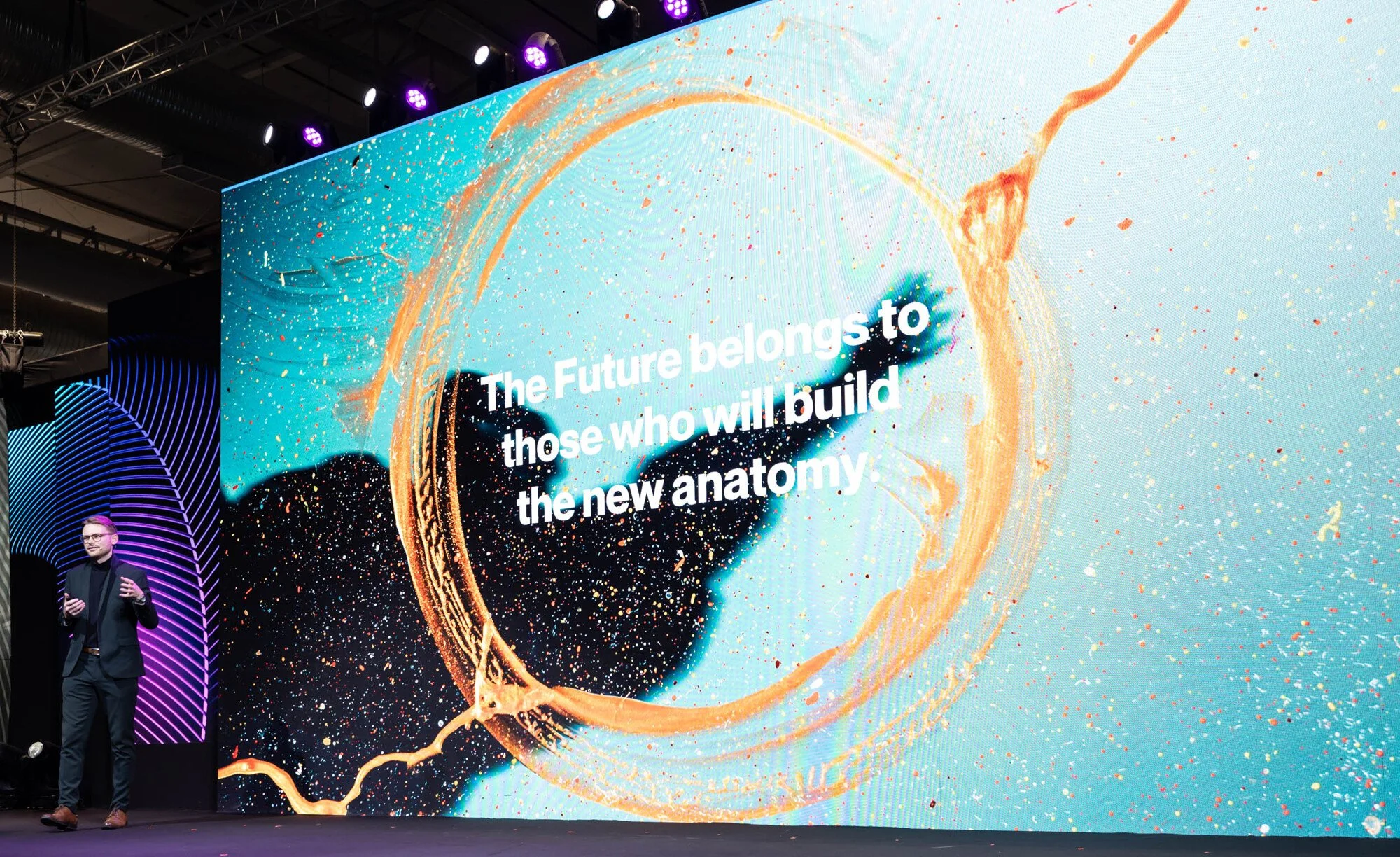
The closing section offered a plausible, concrete look ahead toward the mid-2030s: factories designed for adaptability, less waste, higher transparency, and a new relationship between production, nutrition, and planetary limits, paired with a clear message that none of it is guaranteed.
Outcomes
1) A shared strategic frame for a complex transition
Participants left with a clear way to interpret AI, automation, and sustainability as an interconnected leadership agenda, not three parallel initiatives.
2) Sharper questions for leadership decisions
The talk surfaced where the real tensions sit: efficiency vs resilience, automation vs workforce redesign, sustainability as cost vs sustainability as innovation — and what leaders need to decide to move beyond incrementalism.
3) Momentum for action, not just inspiration
By grounding the narrative in implications and choices, the keynote helped shift the conversation from “what’s coming” to “what we do now” — in technology strategy, operating models, and sustainability investment.
Get in touch
Get inspiring insights through our Talks & Thought Leadership!
Get inspiring insights through our Talks & Thought Leadership!

Themes