Panel moderated at TechBBQ (Forest Stage)
A main stage conversation on what happens when AI shifts from “tool” to “co-founder”, and what that means for how we build companies, develop talent, and define human value at work.
Challenge
In the AI hype cycle, it’s easy to default to extremes: either “AI changes everything overnight” or “this is just another productivity tool.” The TechBBQ audience needed something more useful, a conversation that could hold the ambiguity and still land in concrete implications.
The provocation for the panel was deliberately meta: When will we see the first billion-dollar solo act? Not as a prediction game, but as a way to surface the deeper questions underneath: how AI reshapes team size, roles, learning pathways, trust, and the hidden costs of scaling without people.
Approach
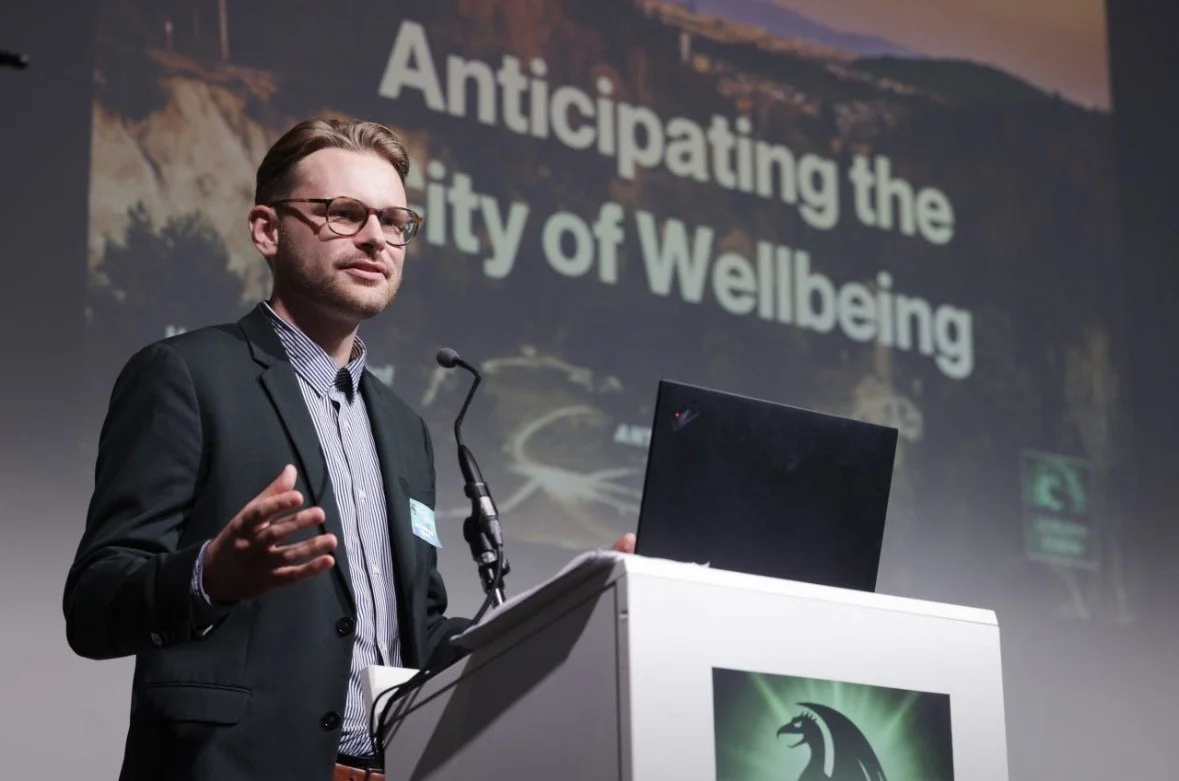
As moderator, director Mathias Behn Bjørnhof designed and led the panel as a structured dialogue, grounded in real founder and operator experience.
The panel brought together three perspectives across tech leadership, venture-building, and AI-first company building:
Meri Williams (CTO & Advisor, Pleo)
Sara Landfors (Co-Founder & CEO, Normain)
Petter Made (Partner, EWOR; Co-Founder, SumUp)
The discussion moved through four arcs:
From hype to hands-on: where AI is genuinely accelerating work — and where it creates clean-up, fragility, or “cognitive debt.”
The skills of the one-person company: what becomes more valuable when output is cheap (judgment, intent, context, taste, relationships).
AI as co-founder: which roles founders may not hire for — and where humans remain non-negotiable.
Who the future of work is for: how we develop junior talent and build inclusive pathways when “entry-level work” changes shape.
Outcomes
1) A sharper, more grounded view of AI-first company building
Rather than treating the “solo unicorn” as inevitable or impossible, the panel clarified where lean models can work — and where trust, resilience, and complexity still demand teams.
2) A leadership-level conversation on talent and capability
The session brought a hard question to the front: how to train and nurture early-career talent when AI absorbs parts of what used to be the learning curve — without hollowing out the pipeline.
Get in touch
Get inspiring insights through our Talks & Thought Leadership!
Get inspiring insights through our Talks & Thought Leadership!

Themes