The Hard Part of Foresight
Four in ten of the world's largest companies now have a foresight function. Whether it changes what they decide is a separate question, and the evidence there is much thinner than the adoption figures.

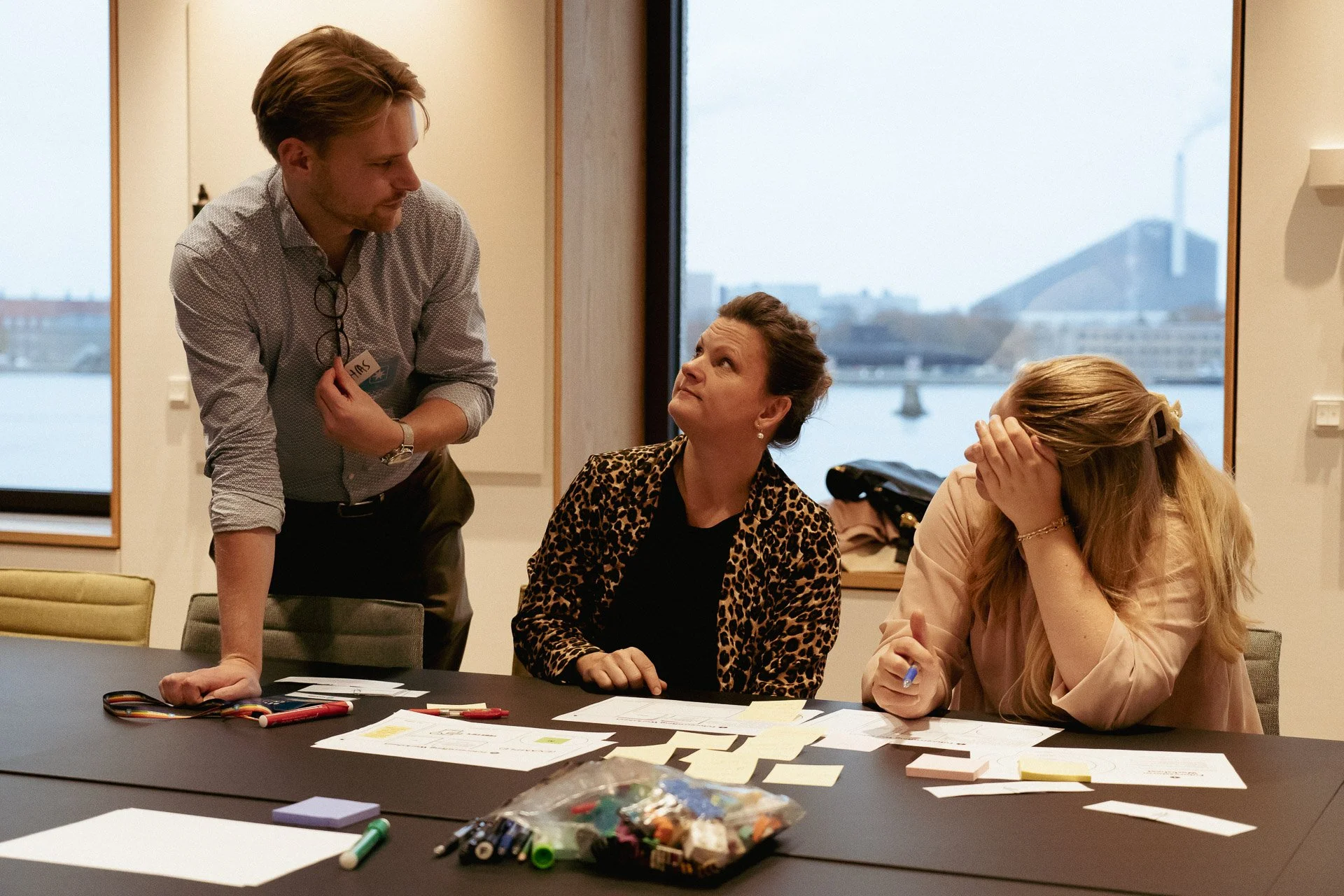
Photo by Tseinn Wong on Unsplash
Having a futures capability is no longer that unusual. The Bavarian Foresight-Institute surveyed 400 senior executives at Forbes Global 2000 companies last year and found that 42% run a dedicated foresight unit with its own budget and its own people. Another 36% have foresight embedded in a function that already existed, and only about 4% report nothing structured at all, which means the argument about whether large companies should do this has more or less been settled in our favour.
Then the same research team asked a harder question of the same dataset. Do these activities change decisions? Their answer, published in Futures, is a careful one. Internal foresight has "a significant and positive effect on strategic conversations within a firm." But the authors could not confirm that those conversations challenge the status quo, or that the foresight work was helpful in the context of decision-making at all.
Better conversation, then, reliably enough to measure, and on the question of whether decisions actually change the researchers declined to make a claim either way.
I have been running these processes long enough that the result was unsurprising, though it still stung a bit to see it stated that plainly. It matches what happens in the room. The scan lands well, the scenarios are good, everyone is switched on for two days, and then the quarter resumes and the work sits there in perfectly good condition without anything happening to it.
Foresight is something you do, not something you have
Riel Miller spent years at UNESCO sharpening this argument into something more precise. Futures literacy, in his words, "is a capability. A futures literate person has acquired the skills needed to decide why and how to use their imagination to introduce the non-existent future into the present."
There is no forecast in that sentence. No scenario set, no report. The unit of value is a skill someone has acquired and is exercising, not an artefact sitting in a shared drive.
Miller makes the distinction sharper by splitting anticipation in two. There is anticipation-for-the-future, where you treat a particular future as a goal and bet on it — targets, plans, most scenario work in its ordinary corporate use. And there is anticipation-for-emergence, where what you imagine does not have to be probable or even desirable, because the point is to see the present differently rather than to place a bet. Both are legitimate. They do different jobs. The second one gets far less use, which is a decent explanation for how much change arrives from an angle nobody had a picture of.
UNESCO has built a method around this, the Futures Literacy Laboratory, and it is a different shape entirely from a normal workshop. You surface the future you already assume, without being told what it is. Then you get deliberately destabilised by a reframing future built on different assumptions. Then you look at the comparison and examine your own anticipatory assumptions in the light of it. More than 115 of these labs have run across some 50 countries. The output is not a document. The output is a room full of people who can now notice when they are assuming something.
Practice more important than possession
The single best piece of quantitative evidence that foresight pays is Rohrbeck and Kum's longitudinal study, published in Technological Forecasting & Social Change in 2018. They assessed 83 European multinationals in 2008 and then looked at how those firms had performed by 2015. The firms they classified as vigilant averaged 16% EBITDA profitability against an industry average of 12%, and 75% market capitalisation growth over that period against a sample average of 25%.
Those numbers deserve the circulation they get. What makes the study useful here, though, is the design underneath them.
Rohrbeck did not measure whether a company had a foresight unit. He measured future preparedness — an assessment of how well the practice was actually being done, across the quality of information used, the sophistication of methods, the people involved, the networks reached into, and how far any of it was integrated with the rest of the organisation. A firm with a large foresight team and weak integration scores badly on that index. A firm with three people who are properly plugged into how decisions get made scores well.
And there is a category in his data that I think about more than the headline figures. He calls them the neurotic firms. They scan intensively, they produce a lot, and they act on very little. Their market capitalisation growth over the seven years was −6%.
Scanning hard and acting on nothing did worse than the average. The argument in a single data point, and it comes from the study most often used to make the case for foresight.
The systematic literature review by Marinković and colleagues, in the Journal of Business Research in 2022, names the same problem in more general terms. They describe a decoupling between the two halves of corporate foresight: detecting discontinuities in the environment, and deciding what the organisation should do about them. Two capabilities, both real, not connected to each other. They also note that where foresight is not a management priority it "lacks the required entitlement, causing ineffectiveness," and that informal foresight outcomes tend to dilute over time under ordinary organisational inertia.
These are capable organisations, running capable processes, producing work that is often very good, and then not converting it. Which is what makes the problem interesting rather than embarrassing.
Why conversion is so hard
Part of it is structural, e.g. that the foresight function sits outside the decision cycle, reports on a different rhythm, and has no seat at the moment money gets allocated. That is fixable, and mostly it is a design problem rather than a mystery.
The other part is that human decision-making has a strong default setting, and long-horizon work runs against it.
Samuelson and Zeckhauser demonstrated this in 1988, in a paper that combined laboratory experiments with real choices made by Harvard faculty about health plans and retirement programmes. Their observation: "Most real decisions, unlike those of economics texts, have a status quo alternative — that is, doing nothing or maintaining one's current or previous decision." And people stick with it disproportionately. A pre-registered replication in 2021 found strong support in three of the four original scenarios, including the budget allocation and investment cases, which happen to be exactly the kind of choice a foresight process is trying to influence.
Alongside that sits the tendency to test what you already expect to be true, first demonstrated by Peter Wason in 1960 and reviewed comprehensively by Nickerson in 1998. This one is more contested than it looks — Klayman and Ha argued in 1987 that a positive test strategy is often a perfectly sensible default under uncertainty rather than a flaw in reasoning, which I think is right. Either way the practical implication for us is the same. If a process does not deliberately design against the pull toward evidence that confirms the current plan, it will drift there on its own, and nobody in the room will notice it happening.
Which is another way of saying the same thing. The value is in the doing. A capability that is not being actively exercised against its own default settings decays into a capability that agrees with you.
Governments run the same experiment, at a larger scale
The public sector runs the same experiment more visibly, because the institutions are public and somebody audits them.
Finland set up a Committee for the Future in 1993 and it is still going, which makes it the oldest continuously running body of its kind. Seventeen MPs, a standing committee of parliament, with the Prime Minister as its cabinet counterpart. Each electoral term the government submits a Report on the Future, and the committee prepares parliament's response to it; the current Orpo government's report, with a twenty-year horizon, went to parliament in September 2025. The thing that makes it work, by its own account, is the power to set its own agenda. It is not unique — Bezold's 2026 survey in the Journal of Futures Studies counts permanent futures committees in Brazil, Chile, Iceland, Lithuania, the Philippines and Uruguay, among others — but it is the most institutionalised loop between a foresight body and an actual legislature that exists.
Wales went further than anyone. The Well-being of Future Generations (Wales) Act 2015 placed a statutory duty on 44 public bodies to apply five ways of working — long term, prevention, integration, collaboration, involvement — toward seven national well-being goals, and created a Future Generations Commissioner to hold them to it. Sophie Howe held the post first; Derek Walker has held it since early 2023. When the Act passed it was described around the world as the most ambitious piece of long-horizon legislation on any statute book, and that description was fair.
Eleven years in, the auditors have been direct.
Audit Wales looked at the first round of implementation and reported that public bodies' well-being objectives "largely resemble the corporate objectives they would have set prior to 2017." Bodies may well have felt they were applying the five ways of working. But "it was not always clear how the process was different or what changed as a result." In April 2025, the Auditor General's ten-year assessment put it directly: the Act "is not driving the system-wide change that was intended." And in March 2026 the Senedd's Equality and Social Justice Committee published Fit for the Future?, finding that public bodies "are still reaching for short-term fixes when the whole point of this legislation was to break that cycle," and that the Act lacks the power to hold them to account.
Stokes and Smyth argue, I think correctly, that judging the Act purely on enforceability misses what it has done to the texture of public conversation in Wales, and the Auditor General himself notes real examples of decisions being made differently. Wales has changed the texture of public argument in a way that shows up nowhere in an audit. The instructive part is that even this — a Commissioner, a statutory duty, eleven years — still finds the conversion hard.
The UN version of this is sharper still.
In September 2024, at the Summit of the Future, member states adopted the Declaration on Future Generations — a preamble, guiding principles, and eleven actions to embed long-term thinking across the multilateral system, including explicit commitments to strategic foresight. The first instrument of its kind. Paragraph 32(a) took note of the Secretary-General's proposal to appoint a Special Envoy for Future Generations to support implementation.
Terms of reference and a budget were completed by July 2025. In June 2025 the budgetary committee declined to fund the post. It was left out of the 2026 programme budget, and the UN's own tracker now records the appointment as on hold. The declaration exists. The person whose job it would have been to implement it does not.
Daniella Tilbury, reviewing this in August 2026, wrote two sentences I keep returning to.
““Securing agreement on a principle is often considerably easier than changing the institutional arrangements needed to deliver it.”
”Without responsibility, capacity and resources, even landmark commitments can remain exactly that — commitments.””
A related pattern runs alongside it. France's Council for the Rights of Future Generations is gone. Israel's Commission for Future Generations was abolished in 2006. Brazil's futures committee was extinguished in 2023, and Argentina's did not survive a change of government. Michael Rose's comparative work across these bodies reaches an uncomfortable conclusion: they tend to be most viable when they are neither too weak to matter nor strong enough to threaten anyone.
Institutions can be deleted with a signature. A practice that is embedded in how a few hundred people actually make choices is much harder to remove, because there is nothing central to abolish.
Not everything is stalling, incidentally. The European Commission presented its first Intergenerational Fairness Strategy in March 2026, with an intergenerational fairness index, a youth check on policymaking, and a package explicitly aimed at building futures literacy inside public administrations. Jordan established a National Council for Future Technology. Ireland is debating a proposal titled Beyond a Future Generations Commissioner — the argument being that appointing the Commissioner is the smaller half of the job.The thinking: pockets of the future in the present
The thinking: pockets of the future in the present
So what does the doing look like, concretely?
Start with attention, because it costs nothing and almost nobody does it systematically. In the Three Horizons literature there is an instruction to go and find what Curry and Hodgson called pockets of the future embedded in the present. Go and look. Find the three organisations already operating the way the rest of the sector might operate in a decade, and go and talk to them.
The practices that convert insight into decisions are mostly unglamorous in the same way. Run the scenarios against decisions you are currently making rather than against a generic strategy. Put someone in the room who owns a budget. Give the process an output that has to be answered, a recommendation with a name attached to it. Revisit the scan on a schedule, so that a signal moving is something the organisation notices rather than something it discovers two years later. And return to the anticipatory assumptions underneath the plan often enough that they stay visible.
How we work the transform step
Our ACT Foresight Framework runs Anticipate, Create, Transform. The first two are recognisable enough, i.e. scanning and scenario work. Transform is the part that often gets trimmed when a budget tightens, and we have lost tenders to firms who priced it at zero.
The thing we push hardest on is the handover. By the end of an engagement somebody inside the organisation should own the scanning, so know how to run it, have it in their calendar, be the person who notices when a signal starts moving. We say this in the first meeting, and it costs us retainer work, and I would still defend it longer than anything else we do. A capability that only functions while we are in the building belongs to us, and Miller's point about futures literacy applies to organisations the same way it applies to people. The room should be able to do this without us in it.
What I did not expect when we started is that the clients who stayed longest turned out to be the ones we made least necessary. They come back with harder problems instead of the same one.
Second thing, and it sounds administrative until you try it: before any scanning begins we want to know which meeting the work is landing in, and on what date. A board session, a budget round, a strategy refresh. Something real, with a date. That one constraint sets the horizon, how much resolution the scenarios need, who has to be in the room, and what the output has to look like for somebody to use it. Work with nowhere to land turns into a document, and a document is the thing we are trying to avoid producing.
The prototyping matters for a related reason. A written scenario gets filed. A scenario somebody can pick up and walk through gets argued with, and the argument is the useful part, when a leadership team pushes back hard on a prototype, somebody in that room now holds a position, which is further than most reports ever travel.
We also put the follow-up sessions in the contract. Three months and nine, agreed at the start, looking at what has shifted inside the organisation since. Which decisions this touched, which signals moved, where we were wrong. Booking them up front sounds like a small thing. It is the difference between a check-in happening and a check-in having to be re-sold to a busy person six months later.
All of it rests on something no method supplies, which is somebody senior deciding early that the work is going to bind them. We ask for that in writing. When a client cannot name a decision the work has to serve, we have usually been asked for reassurance, and it is better for everyone to find that out in week one.
Which gives you a different way to judge a foresight partner. The scenarios are the easy part — two good days with the right people will produce scenarios, and plenty of firms do it well. The harder question is what happens in month six.
Rohrbeck's vigilant firms were not vigilant because they had a department. They were vigilant because the practice was wired into how the place ran. The 42% who now have a unit have finished the easy half of the job, and given the choice I would take the smaller organisation doing the hard half properly over the large one with an excellent team producing reports nobody has to answer.
The present moment used to be the unimaginable future, and someone created it, mostly not by having a view about where things were heading, but by doing something that turned out to matter.
Originally published in 2024 as “The Hidden Power of Foresight”, revised in September 2026.
Sources
Audit Wales (2020). So, what's different? Findings from the Auditor General's Sustainable Development Principle Examinations. https://wao.gov.uk/sites/default/files/Well-being-of-Future-Generations-report-eng_11.pdf
Audit Wales (2025). No Time to Lose: lessons from our work under the Well-being of Future Generations Act. https://www.audit.wales/publication/no-time-lose-lessons-our-work-under-well-being-future-generations-act
Bezold, C. (2026). "Parliaments and Foresight: Scanning and Reflections on Parliamentary Futures Work." Journal of Futures Studies 30(3). https://jfsdigital.org/2026-2/vol-30-no-3-march-2026/parliaments-and-foresight-scanning-and-reflections-on-parliamentary-futures-work/
Curry, A. & Hodgson, A. (2008). "Seeing in Multiple Horizons: Connecting Futures to Strategy." Journal of Futures Studies 13(1), 1–20.
European Commission (2026). Intergenerational Fairness Strategy, presented 5 March 2026. https://cyprus.representation.ec.europa.eu/news/commission-presents-first-ever-strategy-intergenerational-fairness-2026-03-05_en
Klayman, J. & Ha, Y.-W. (1987). "Confirmation, disconfirmation, and information in hypothesis testing." Psychological Review 94(2), 211–228. https://pages.ucsd.edu/~mckenzie/KlaymanHaPsychReview1987.pdf
Marinković, M., Al-Tabbaa, O., Khan, Z. & Wu, J. (2022). "Corporate foresight: A systematic literature review and future research trajectories." Journal of Business Research 144, 289–311. DOI: 10.1016/j.jbusres.2022.01.097
Miller, R. (ed.) (2018). Transforming the Future: Anticipation in the 21st Century. UNESCO / Routledge. https://library.oapen.org/handle/20.500.12657/30271
Nickerson, R.S. (1998). "Confirmation bias: A ubiquitous phenomenon in many guises." Review of General Psychology 2(2), 175–220. https://pages.ucsd.edu/~cmckenzie/nickersonConfirmationBias.pdf
OECD (2025). Building Anticipatory Capacity with Strategic Foresight in Government. https://www.oecd.org/en/publications/building-anticipatory-capacity-with-strategic-foresight-in-government_d7eb0bb6-en.html
Parliament of Finland. Committee for the Future. https://www.eduskunta.fi/EN/valiokunnat/tulevaisuusvaliokunta
Prime Minister's Office, Finland. Government Report on the Future. https://valtioneuvosto.fi/en/foresight-activities-and-work-on-the-future/government-report-on-the-future
publicpolicy.ie (2025). Beyond a Future Generations Commissioner: Building Ireland's Foresight Ecosystem. https://publicpolicy.ie/papers/beyond-a-future-generations-commissioner-building-irelands-foresight-ecosystem/
Rohrbeck, R. & Kum, M.E. (2018). "Corporate foresight and its impact on firm performance: A longitudinal analysis." Technological Forecasting & Social Change 129, 105–116. https://pure.au.dk/ws/files/179651094/Rohrbeck_Corporate_foresight.pdf
Rose, M. (2024). "Can we represent future generations in myopic democracies?" Policy Studies. https://fis.leuphana.de/en/publications/can-we-represent-future-generations-in-myopic-democracies-analyzi/
Samuelson, W. & Zeckhauser, R. (1988). "Status quo bias in decision making." Journal of Risk and Uncertainty 1(1), 7–59. https://scholar.harvard.edu/files/rzeckhauser/files/status_quo_bias_in_decision_making.pdf
Schropp, T.C., Schwarz, J.O. & Buder, F. (2024). "Corporate foresight in light of the COVID-19 pandemic — The crisis as a driver?" Futures & Foresight Science 6(2). DOI: 10.1002/ffo2.178
Schwarz, J.O. & Kleine, K. (2025). The State of Corporate Foresight: Global Study on the Application of Corporate Foresight. Bavarian Foresight-Institute / NIM. https://www.weforum.org/stories/2025/08/corporate-foresight-multinationals-improvement/
Schwarz, J.O., Schropp, T.C., Wach, B. & Buder, F. (2025). "Do internal foresight activities add value to decision-making?" Futures. DOI: 10.1016/j.futures.2025.103548. https://papers.ssrn.com/sol3/papers.cfm?abstract_id=4657563
Senedd Equality and Social Justice Committee (2026). Fit for the Future?, published 16 March 2026. https://senedd.wales/senedd-now/news/landmark-future-generations-act-failing-to-deliver-the-change-it-promised/
Sharpe, B., Hodgson, A., Leicester, G., Lyon, A. & Fazey, I. (2016). "Three horizons: a pathways practice for transformation." Ecology and Society 21(2):47. https://www.ecologyandsociety.org/vol21/iss2/art47/
Stokes, E. & Smyth, C. (2024). "Hope-Bearing Legislation? The Well-being of Future Generations (Wales) Act 2015." Transnational Environmental Law 13(3). DOI: 10.1017/S2047102524000219
Tilbury, D. (2026). Future Generations in Global Governance: A 2026 Progress Check. Stakeholder Forum for a Sustainable Future. https://stakeholderforum.org/wp-content/uploads/2026/08/Future-Generations-in-Global-Governance-A-2026-Progress-Check-Tilbury-August-2026.pdf
UNESCO (2023). Futures Literacy Laboratory Playbook. https://unesdoc.unesco.org/ark:/48223/pf0000385485
United Nations (2024). Pact for the Future and Declaration on Future Generations, adopted September 2024. https://www.un.org/pact-for-the-future/
United Nations. Implementation tracker, paragraph 32(a): Special Envoy for Future Generations. https://www.un.org/pact-for-the-future/en/paragraph-32a
Wason, P.C. (1960). "On the failure to eliminate hypotheses in a conceptual task." Quarterly Journal of Experimental Psychology 12(3), 129–140.
Well-being of Future Generations (Wales) Act 2015 (anaw 2015 c. 2). https://www.legislation.gov.uk/anaw/2015/2
Xiao, Q., Lam, C.S., Piara, M. & Feldman, G. (2021). "Revisiting status quo bias: Replication of Samuelson and Zeckhauser (1988)." Meta-Psychology 5. DOI: 10.15626/MP.2020.2470