Shaping a New Master’s in Democracy Innovation

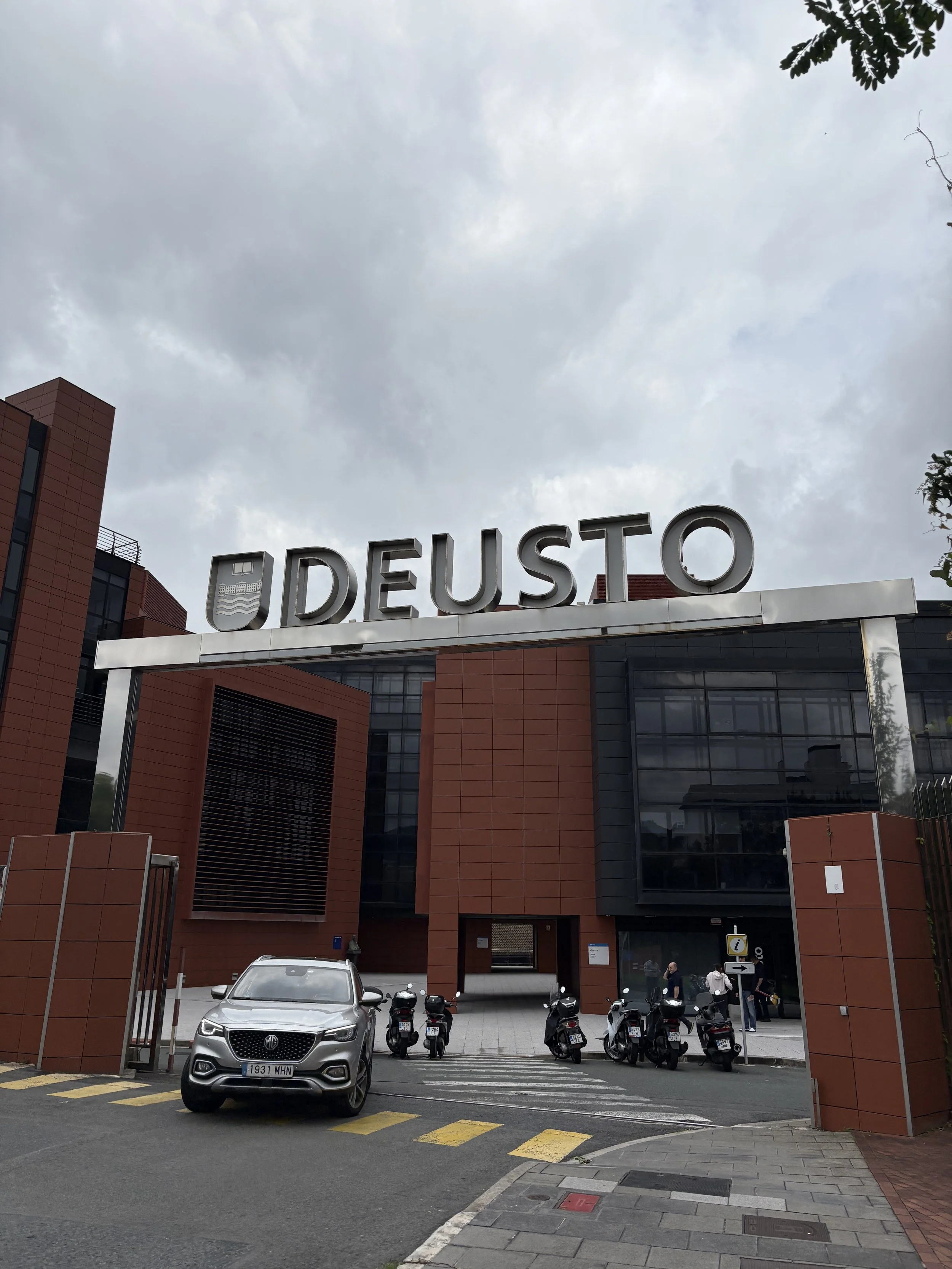
Foresight Lab & Futurist-as-a-Service for University of Deusto
Co-developing and guest lecturing in a new master’s program on democracy, public institutions and political innovation, and returning to run a futures-focused lecture and lab on democracy and long-term innovation.
Challenge
Democracy is being asked to evolve under pressure: rising misinformation, declining trust, disengaged citizens, and democratic backsliding are no longer fringe issues. they are shaping the operating context for public institutions and civic innovation. At the same time, many approaches to “political innovation” stay trapped in short cycles and reactive problem-solving, leaving little room to explore what democracy could become, and what it would take to shape it deliberately.
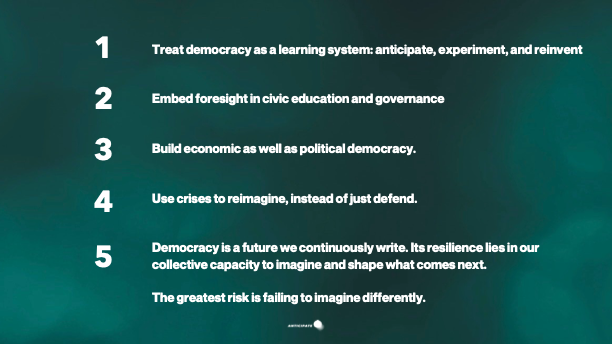
The University of Deusto set out to build a new master’s program that could help students and practitioners engage democracy as something we continuously design and redesign, grounded in civic tradition, but equipped for emerging challenges and longer-term transformation.
Approach
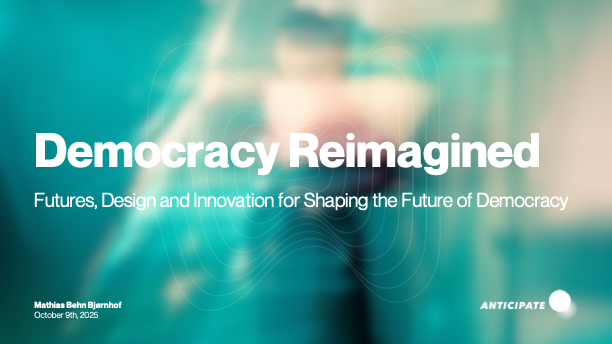
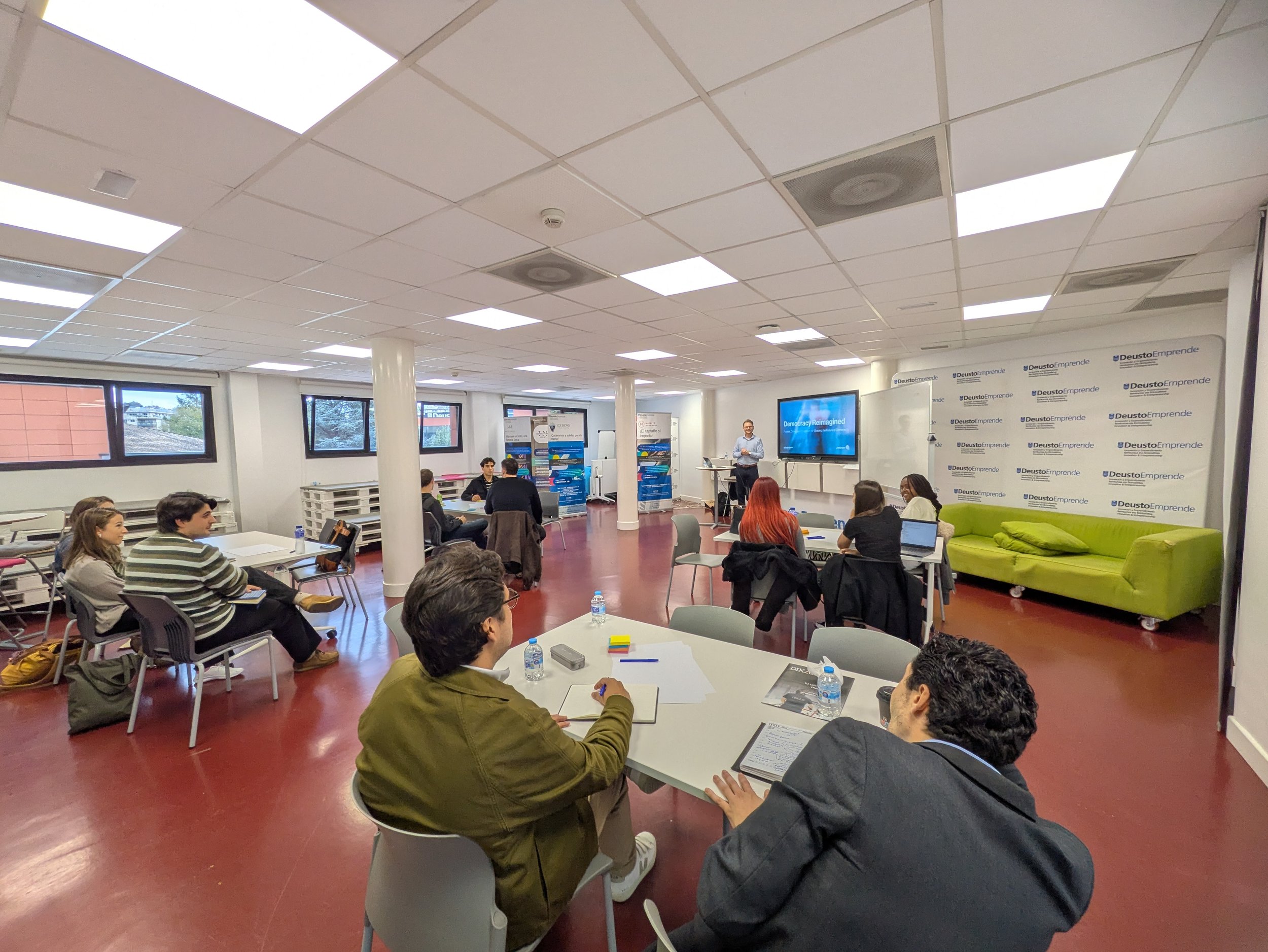
ANTICIPATE contributed to shaping the program’s foundation and embedding futures thinking as a practical capability for democratic innovation. We returned to deliver “Democracy Reimagined: Futures, Design and Innovation for Shaping the Future of Democracy”, a combined lecture and lab format designed to build futures literacy and agency.
The session bridgefutures thinking and design practice through a clear learning arc (captured in the “(Futures) Double Diamond”): explore and frame alternative futures, then develop and transform insights into prototypes and decisions.
Key elements included:
Futures literacy framing: why futures thinking matters for democracy, and how it supports better decisions today under uncertainty.
Futuresstorming: participants scanned for signals, drivers, and legacies shaping democracy, then clustered them into catalysts for change (based on the Futures Triangle logic).
Worldbuilding with alternative futures: teams worked with three contrasting 2035 directions (e.g., “Fortress Europe,” “Eurosion,” and “Democratic Renaissance”) to stretch assumptions and explore implications.
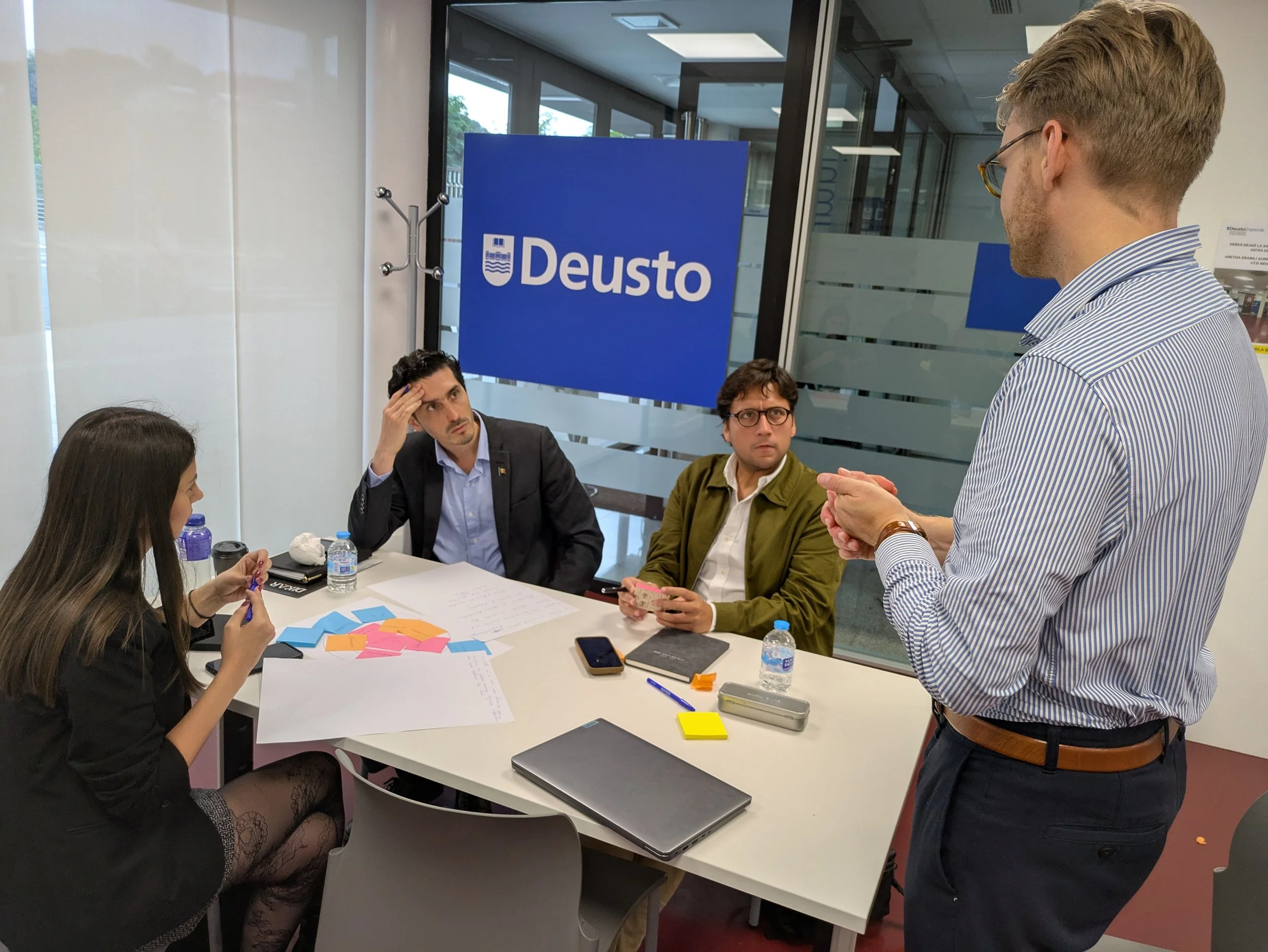
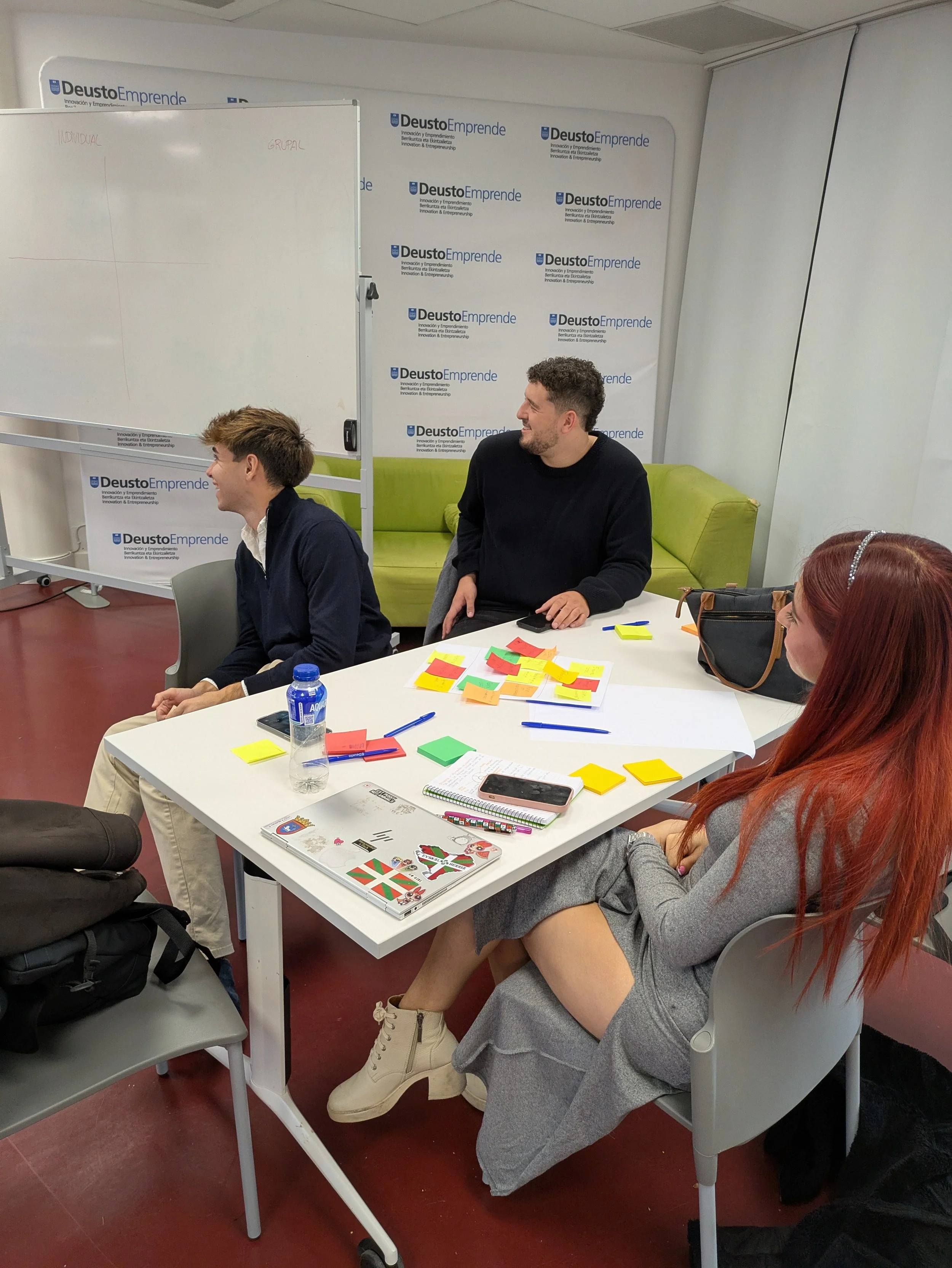
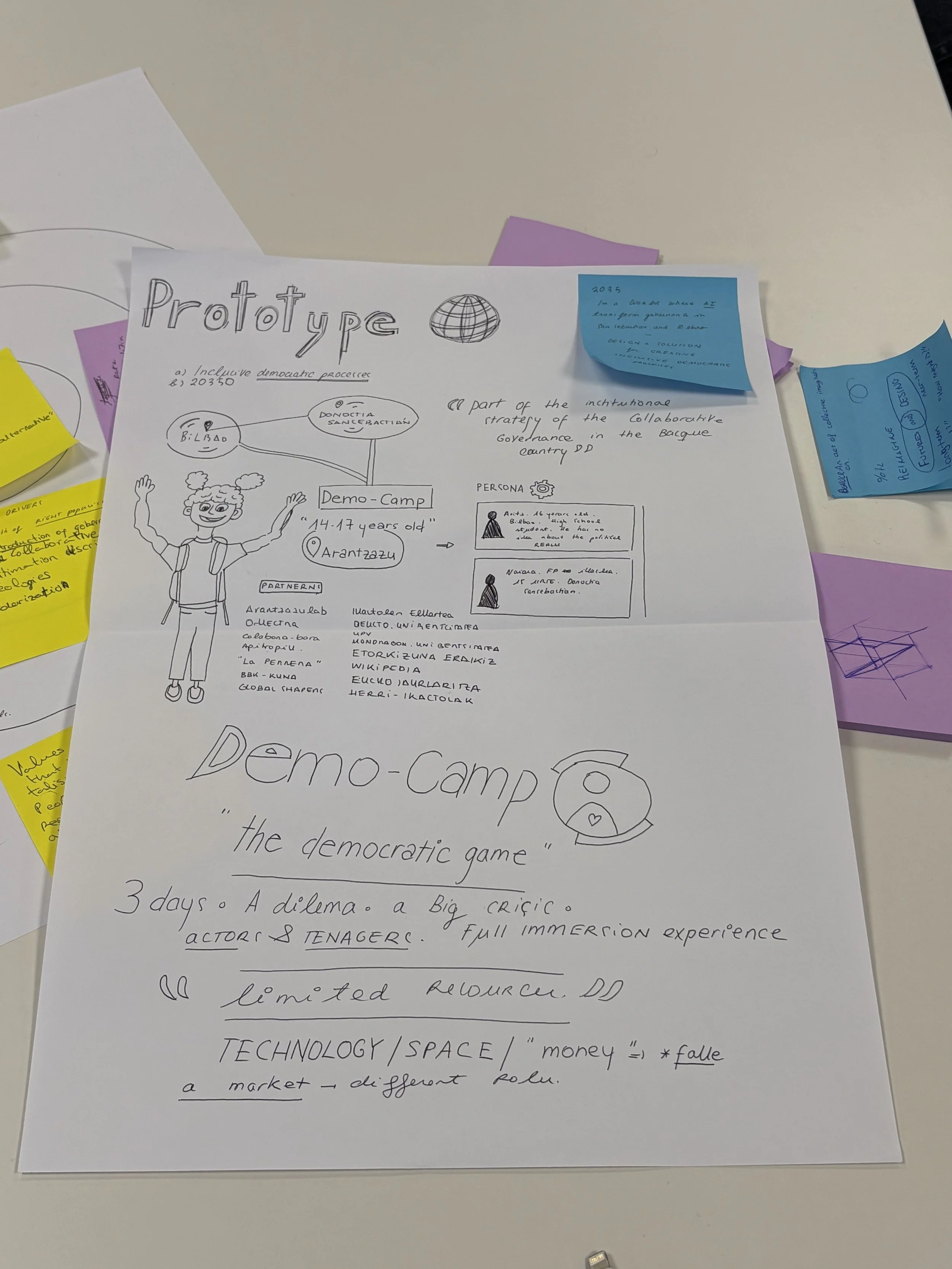
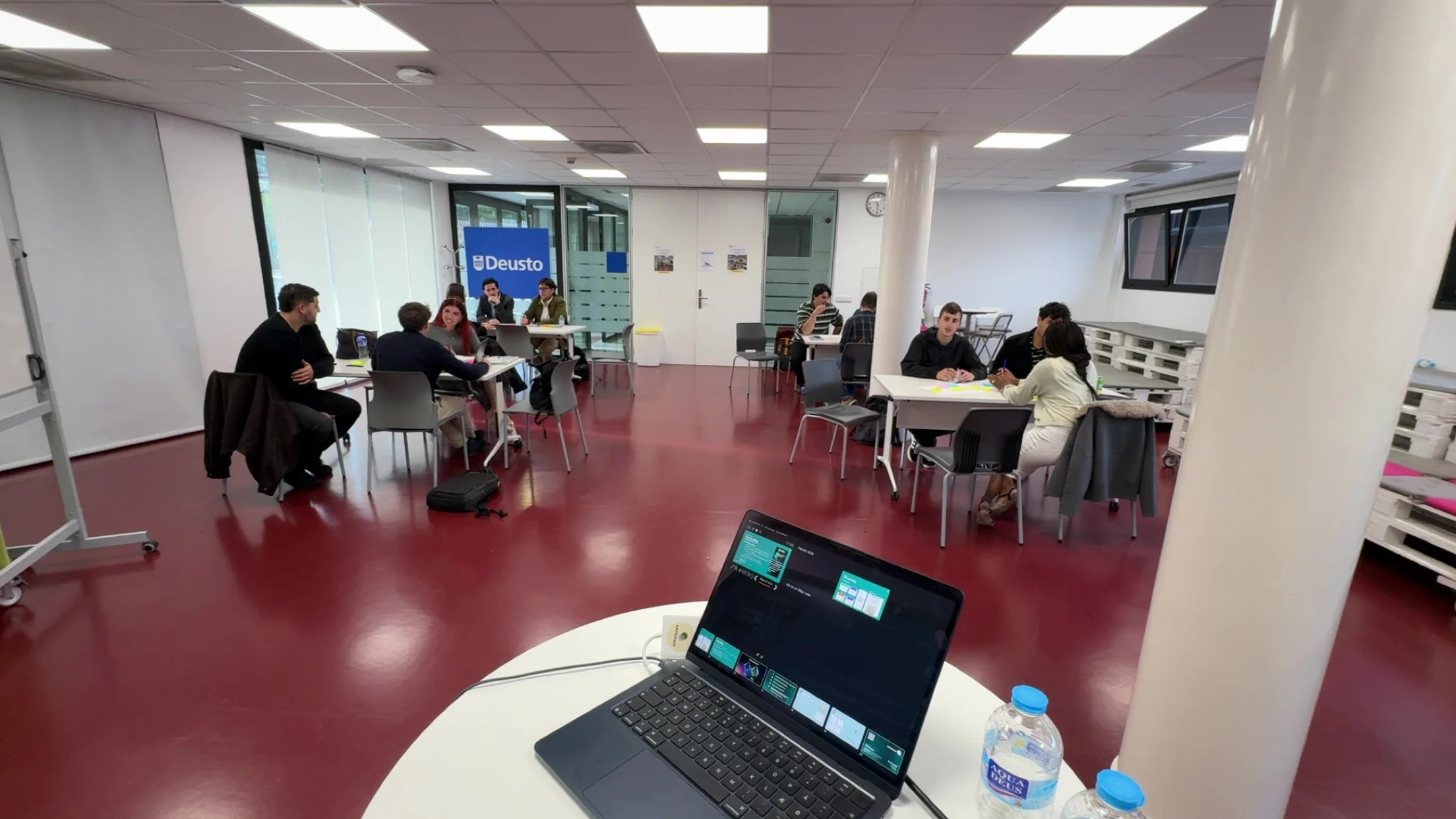
Futurecrafting lab: groups used a structured scenario prompt (time period, catalyst, context, challenge) to prototype democratic solutions — with optional use of AI tools to generate or refine artefacts and descriptions.
Futures Fair: rapid pitches plus peer probing questions to stress-test values, inclusion, failure modes, and how ideas could translate into action.
Outcomes
1) Futures thinking embedded in democratic innovation learning
The program gained a concrete way to connect democratic challenges to longer-term dynamics, and to train students to work with uncertainty without defaulting to short-term fixes.
2) Students practiced agency through prototyping
Rather than stopping at critique, participants turned future conditions into tangible interventions — testing assumptions, surfacing trade-offs, and exploring who benefits or is excluded when solutions scale.
3) A bridge between local civic tradition and global foresight dialogue
The format connected democracy as lived practice (values, participation, responsibility) with global patterns and emerging signals — strengthening the ability to translate between context-specific realities and broader systemic shifts.
Get in touch
Learn how to work with futures and foresight through our ANTICIPATE Academy!
Learn how to work with futures and foresight through our ANTICIPATE Academy!



Themes