
ACT Futures Mosaic
An atlas of imagined futures
A moving, growing, collaborative futures
design installation
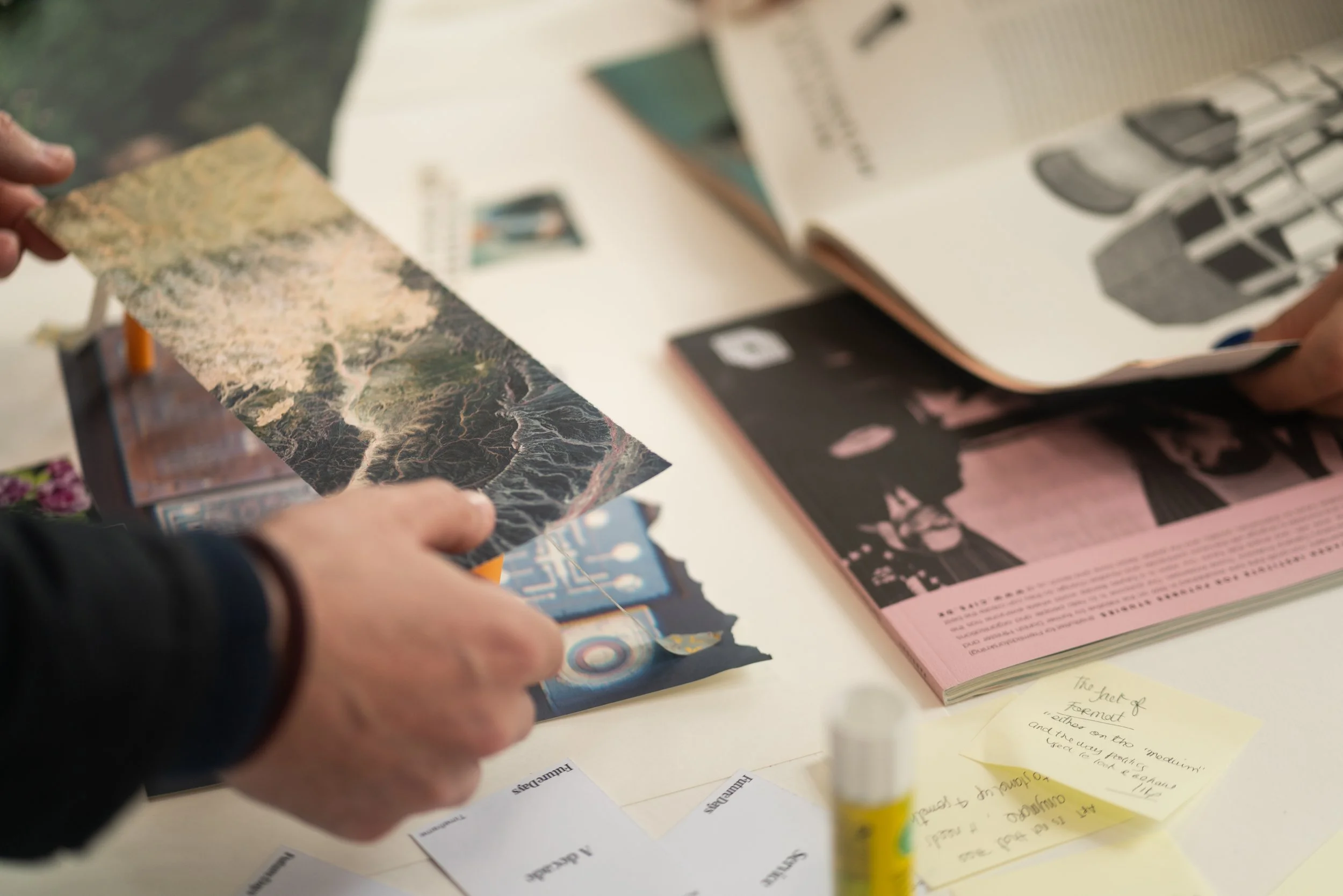
Powered by the ACT Foresight Framework, the lab invites participants to explore a shared societal theme or concept through signals of change, emerging tensions, and creative-making.
In each city, participants create speculative artefacts as individual tiles. Together, these tiles form a local city mosaic: a collective portrait of how that place imagines the future. As the project moves from city to city, each local mosaic becomes part of a global mosaic, creating a living atlas of futures shaped by people, places, and perspectives.
Theme
Exchange
City
Copenhagen
Mosaic
0001
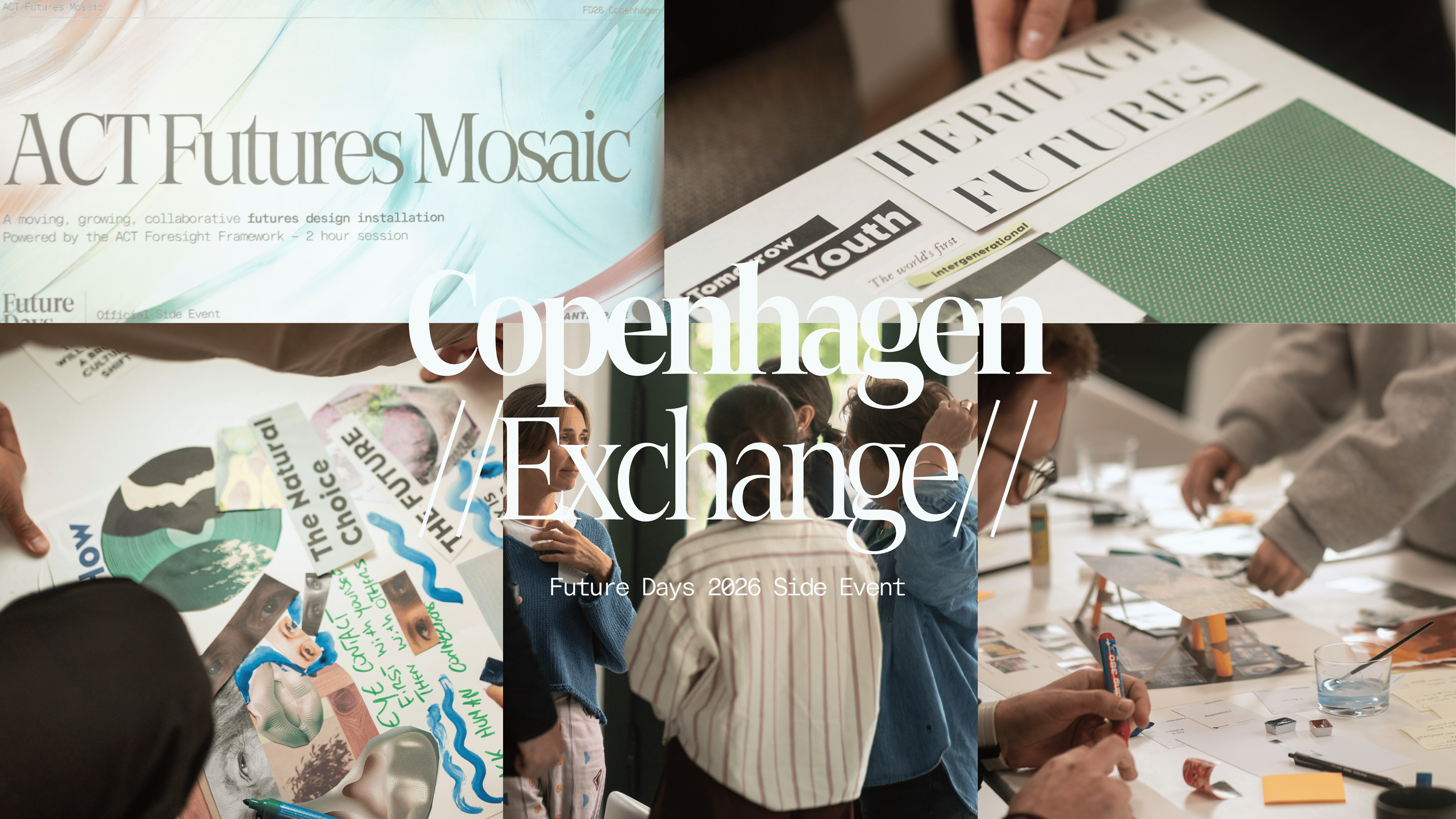
The pilot edition of the ACT Futures Mosaic came to life in Copenhagen during Future Days 2026 as the first tile in a travelling futures design installation.
Centred on the theme of exchange, the session invited participants to look beyond money and explore how value moves between people, economy, nature, art, politics and technology. Through conversation, they surfaced tensions, contradictions and possibilities around care, attention, trust, knowledge, culture, labour and more. From there, participants moved quickly from reflection to creation.
Using randomised constraints such as timeframe, context and exchange coordinates, they imagined and built future artefacts in the form of speculative institutions, products, services, rituals, practices and other tangible expressions of possible futures.
The room filled with future fragments. Some explored new forms of accountability and governance. Others imagined different ways of relating across languages, species, generations and communities. Each artefact became part of the first ACT Futures Mosaic, marking the beginning of a growing installation that will continue to gather collective imagination and insights from cities around the world.
Which city should host the next edition of the ACT Futures Mosaic?
City
Lisbon
Theme
Mobility
Mosaic
0002
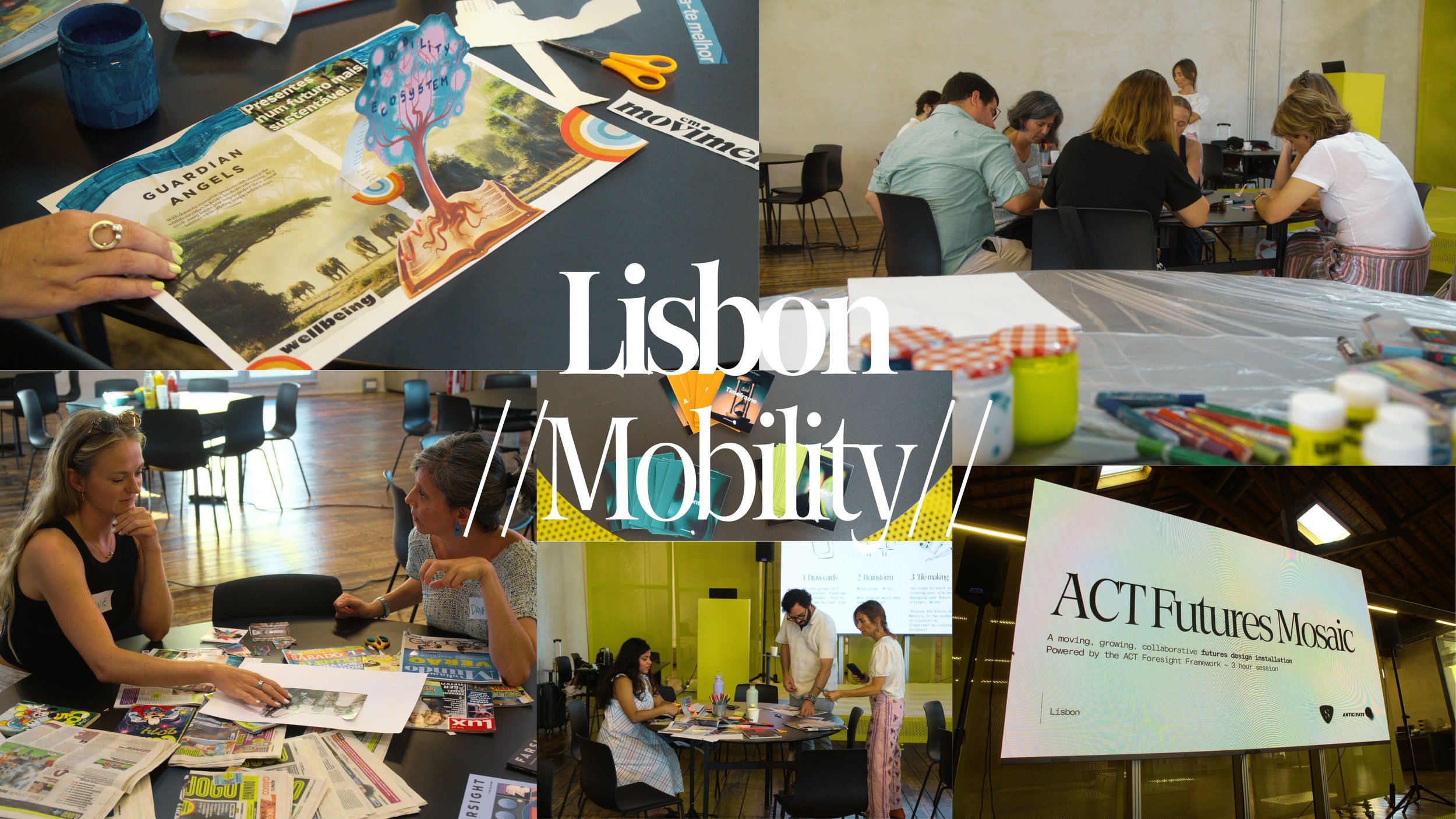
The second edition of the ACT Futures Mosaic unfolded in Lisbon, where mobility became the starting point for a wider exploration of how people move through communities, workplaces, landscapes and systems of change.
Co-hosted with Salinas80 as part of its Minimal Cycles portfolio, the intimate session created space for a focused and honest exchange. Rather than limiting mobility to transport, participants explored questions of belonging, opportunity, participation, technology and our ability to remain connected to people and place.
The first group imagined a “glocal” community in the near future. As lifestyles become increasingly mobile and nomadic, they proposed shared physical spaces that could anchor global values in local relationships. Their artefact explored new forms of community living, ownership and collaboration, asking how people might find belonging without giving up movement or flexibility.
Looking a generation ahead, the second group explored the future workplace through a dedicated space where young people and decision-makers could meet face-to-face to negotiate the conditions of working life. Their proposal combined a workplace council with a participatory design process, giving younger generations a meaningful role in decisions about time, money, communication, physical environments and organisational change.
The third group shifted the conversation from mobility to ability. Using the metaphor of landscapes and roots, they imagined an interface ten years from now that would help people embrace new technologies and forms of movement without losing their connection to nature, community and place. Their artefact asked whether progress could be measured not by how quickly or freely we move, but by our ability to remain present, sustain relationships and adapt at different speeds.
Together, the three artefacts expanded mobility beyond getting from one place to another. They explored how people might move without becoming unrooted, participate without being excluded and embrace innovation without abandoning tradition. Captured visually in dialogue with Lisbon’s tradition of the azulejo, they now form the second piece of the ACT Futures Mosaic: a growing archive of questions, tensions and possibilities contributed by different cities and communities.