Futures of Youth 2036 (Impact Foresight Project)

Strategic foresight + strategy process with Ungdomsbureauet (pro-bono)
This is our Impact Foresight Project: one full foresight + strategy process delivered pro bono, designed to be decision-relevant for a mission-driven organisation and openly shared so others can learn from the craft. Often our work is under NDA. This time everything is in the open.
Why we did this (and why we did it openly)
ANTICIPATE was built with a strong commitment to democratise futures thinking. That commitment stems from a practical frustration: foresight still too often feels like a closed room: expensive, jargon-heavy, or trapped in “right vs wrong” debates that don’t help people facing real uncertainty.
So we created a small experiment with a big intention:
Run a high-quality but lightweight foresight + strategy process with one impact-driven organisation.
Build it around participation with real influence
Make the work usable
Share the process and learning publicly, so others can reuse it.
At the centre sits a simple belief: if futures thinking is as useful as we and others claim, it should be easier to access, and it should be practiced more openly, with real participation and follow-through.
Partner and focus
We selected Ungdomsbureauet as the partner for the first Impact Foresight Project and co-designed a strategic foresight process titled:
Futures of Youth 2036 (Fremtidens Ungdomsliv 2036)
The purpose was clear from the start: help Ungdomsbureauet understand what is shaping young people’s lives, engagement, and sense of agency towards 2036, and translate that into a clearer strategic direction.
This work treated “youth futures” as more than a youth topic. It is a societal topic: trust, wellbeing, technology, education, identity, and participation are all changing at once, and they shape the conditions under which youth agency becomes possible.
Challenge
Ungdomsbureauet works in a field where urgency is constant. Youth life is shifting quickly, and so are the systems around it. The strategic challenge was to build a stronger outside-in understanding of what’s changing, and then make decisions under uncertainty that still protect the organisation’s mission.
The process asked, explicitly:
What changes can we already begin to feel?
What might they mean for young people towards 2036?
Which possible futures do we need to be ready for?
What do they call for from Ungdomsbureauet as an organisation?
And it treated foresight as a working space, “a shared space for lifting our gaze,” building language, and making futures more concrete and actionable.
Design principles
The project was built on four principles that shaped every decision in facilitation, participation, and synthesis:
Participation with real influence and learning
Youth and stakeholder perspectives were included because they shape the content and direction, not to “tick a box”. The process also functioned as a learning space for futures thinking (signals, uncertainties, scenarios, strategic choices).Rooted in strengths, open to emergence
The work builds on Ungdomsbureauet’s strengths (culture, imagination, creativity, ownership) while still being sharp enough to challenge assumptions and habits that might otherwise become fixed.Clear value for participants
Participants should feel they get something back: new perspective, clearer understanding of what is shifting, and a space to think more long-term.From societal shifts to organisational action
The process was designed as a movement: explore change → explore possible futures → translate into strategic direction and action.
Participation model
We designed a participation setup that balanced coherence with diversity:
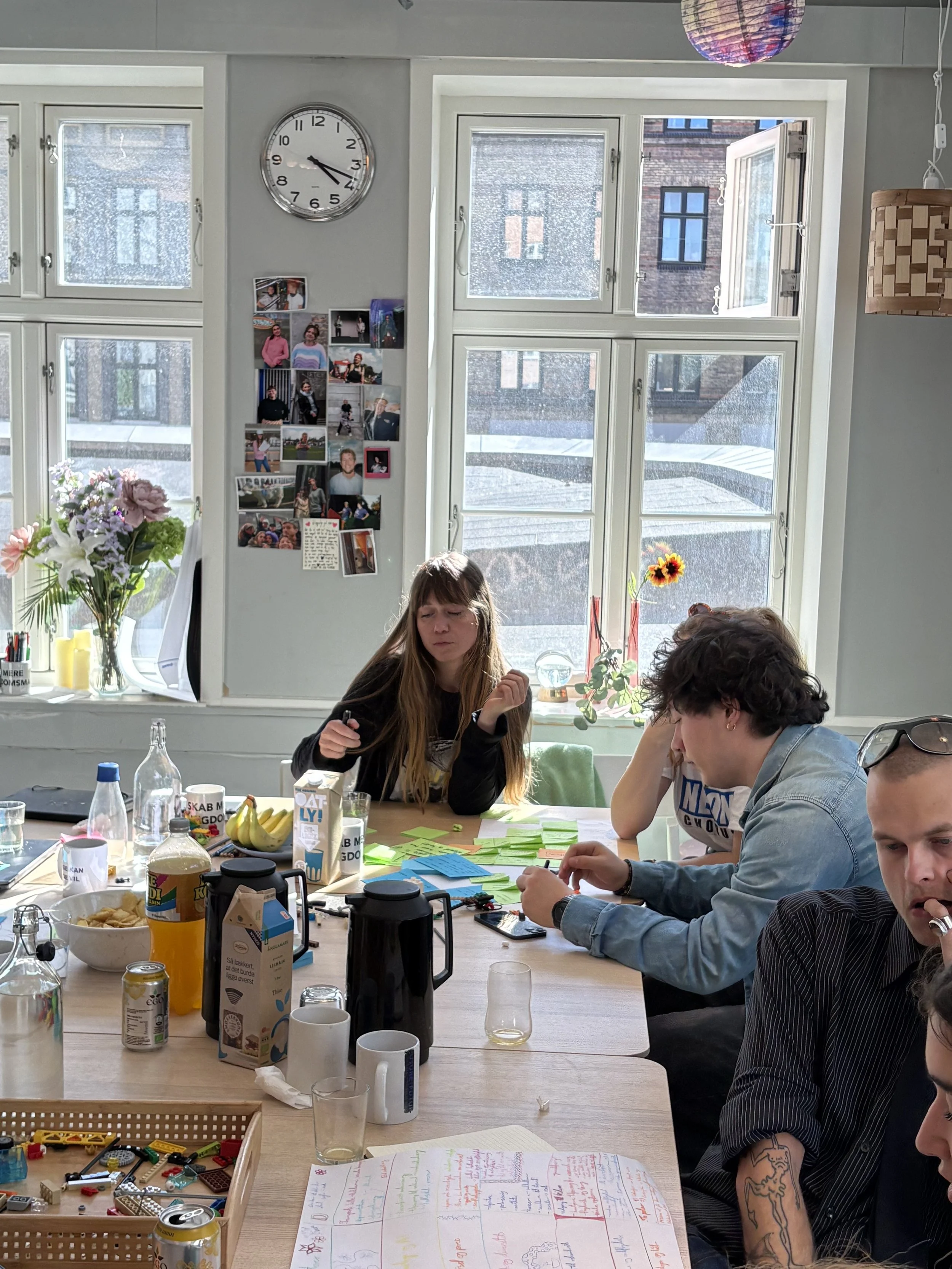
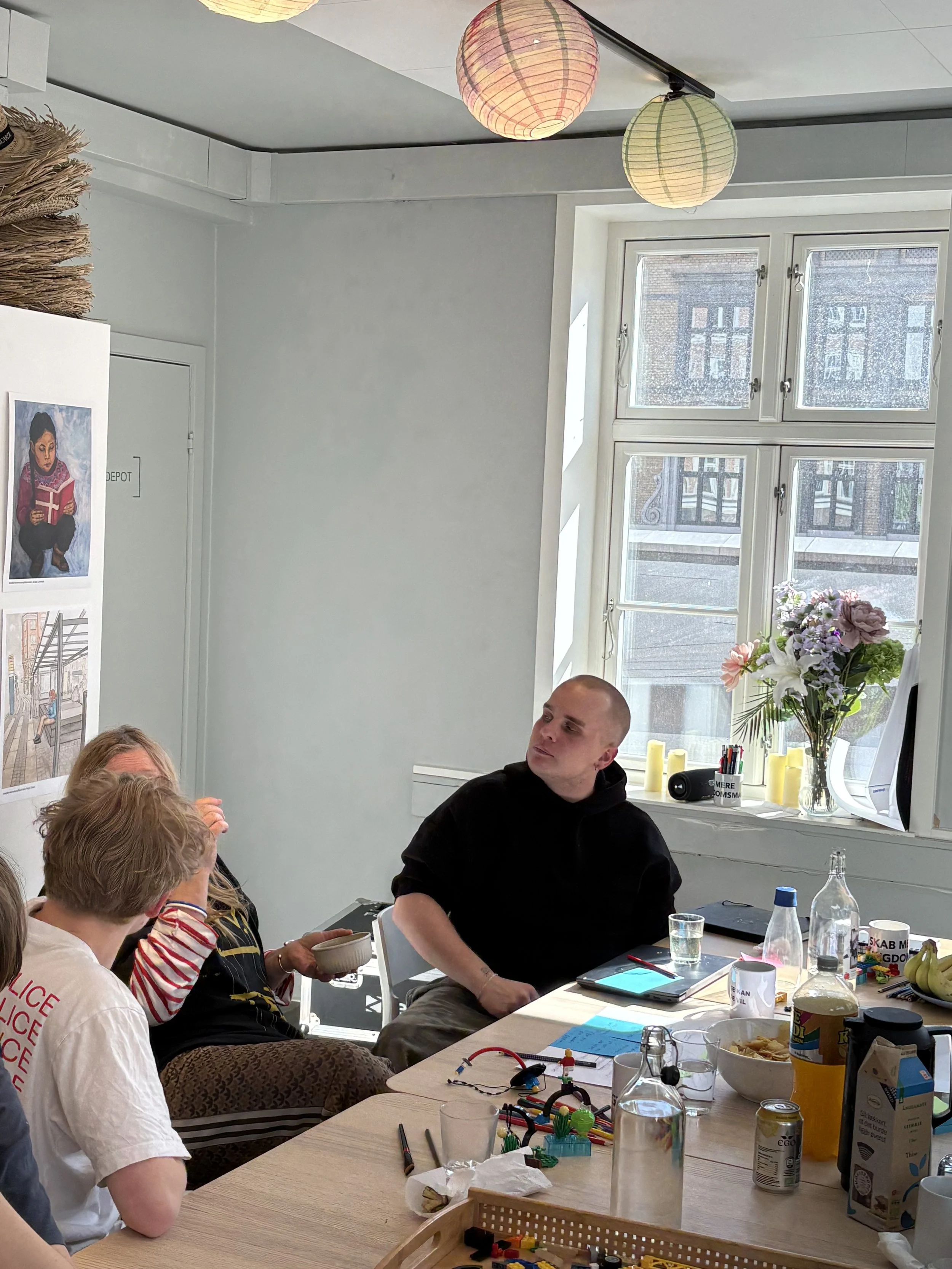
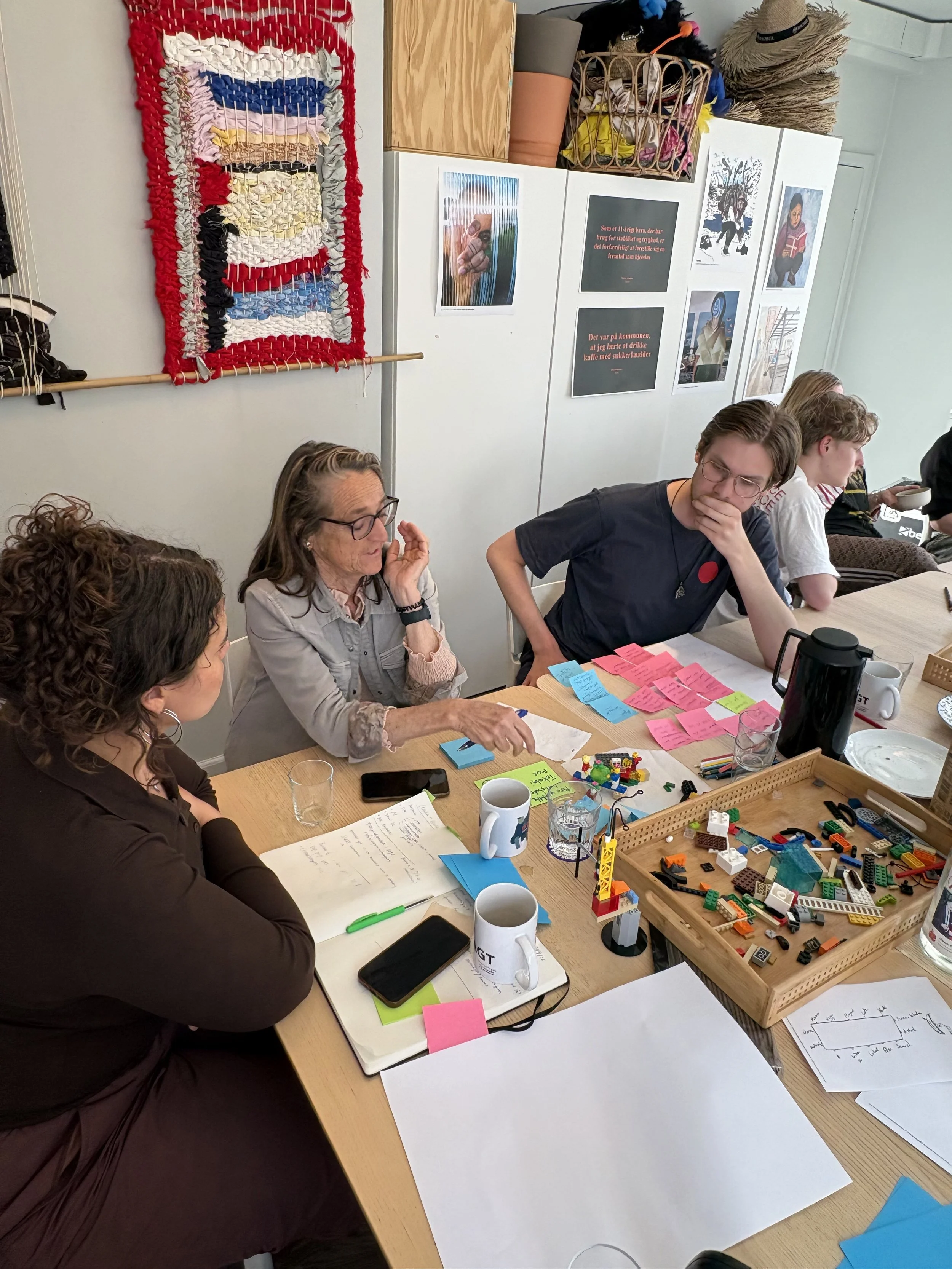
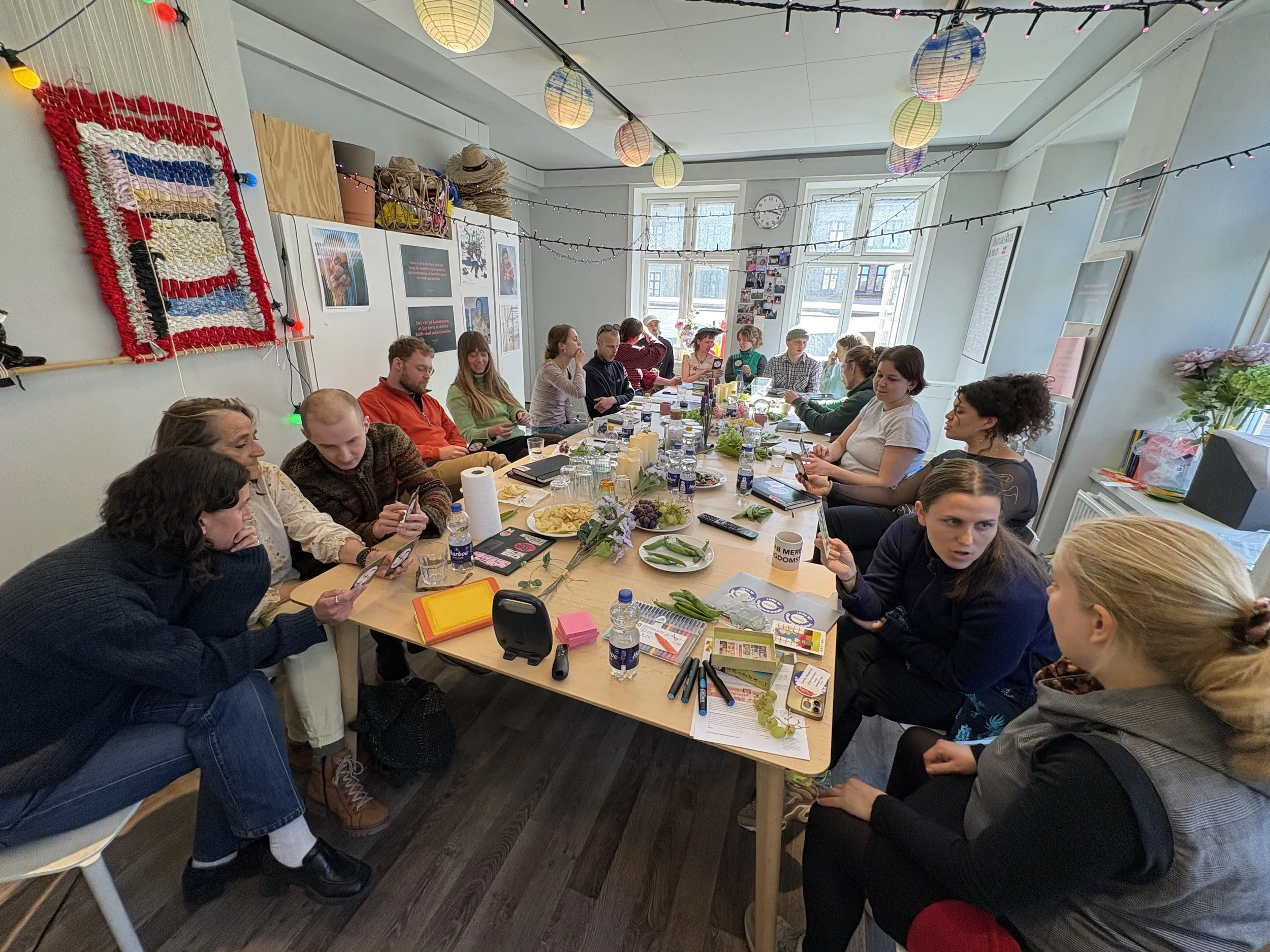
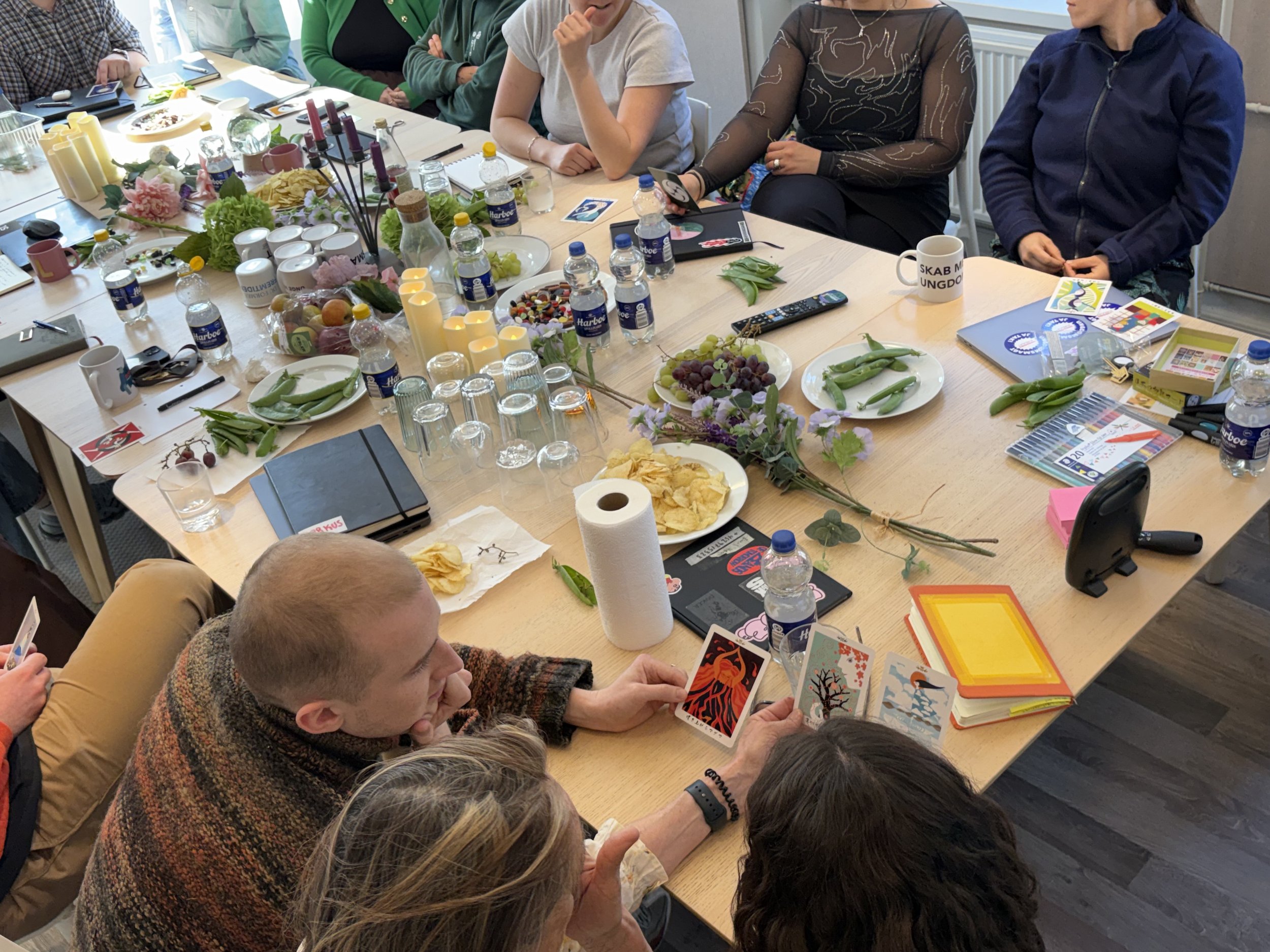
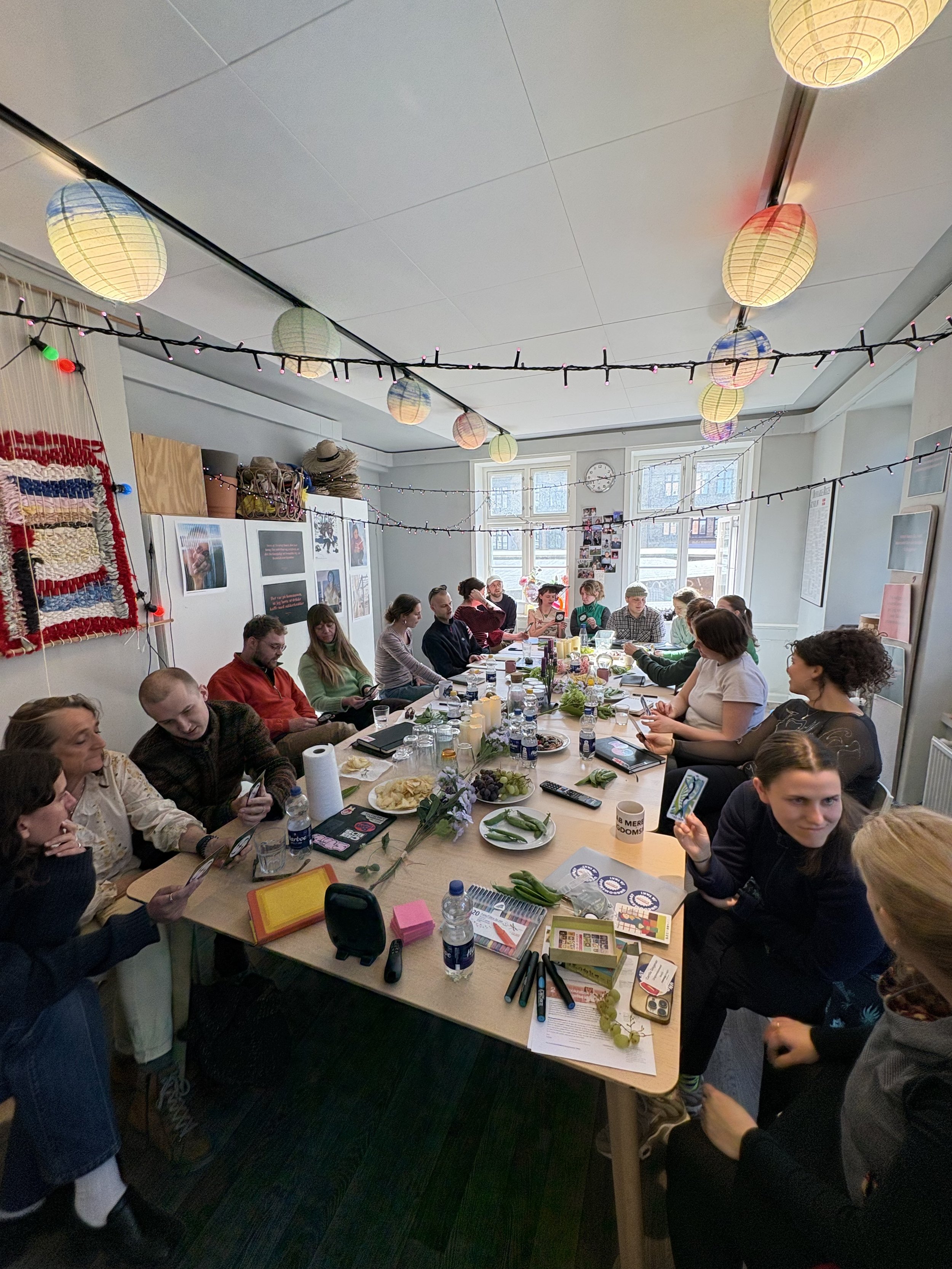
A core group followed the process end-to-end to ensure ownership and decision power: 5 staff from Ungdomsbureauet + 3–5 young people from UB’s network + 1 board member + 1 external partner.
The process was also opened through additional touchpoints such as an open scanning exercise, input to scenarios via a shared board, and further idea qualification later on.
The goal was to combine strategic continuity with genuine pluralism: different lived experiences, different assumptions, and different hopes and worries about what youth life could become.
Process
The project followed a disciplined but lightweight rhythm. Instead of “one big workshop,” it used a chain of briefs and workshops, each building on the previous step:
Futures Brief (before Workshop 1)
Before asking the group to generate anything, we created a Futures Brief: a first look at the changes that may shape young people’s lives, engagement, and sense of agency. The brief is explicit about the direction of travel:
Youth life becomes more complex and digitally filtered
But also more unevenly distributed
Shaped by systemic conditions young people do not control.
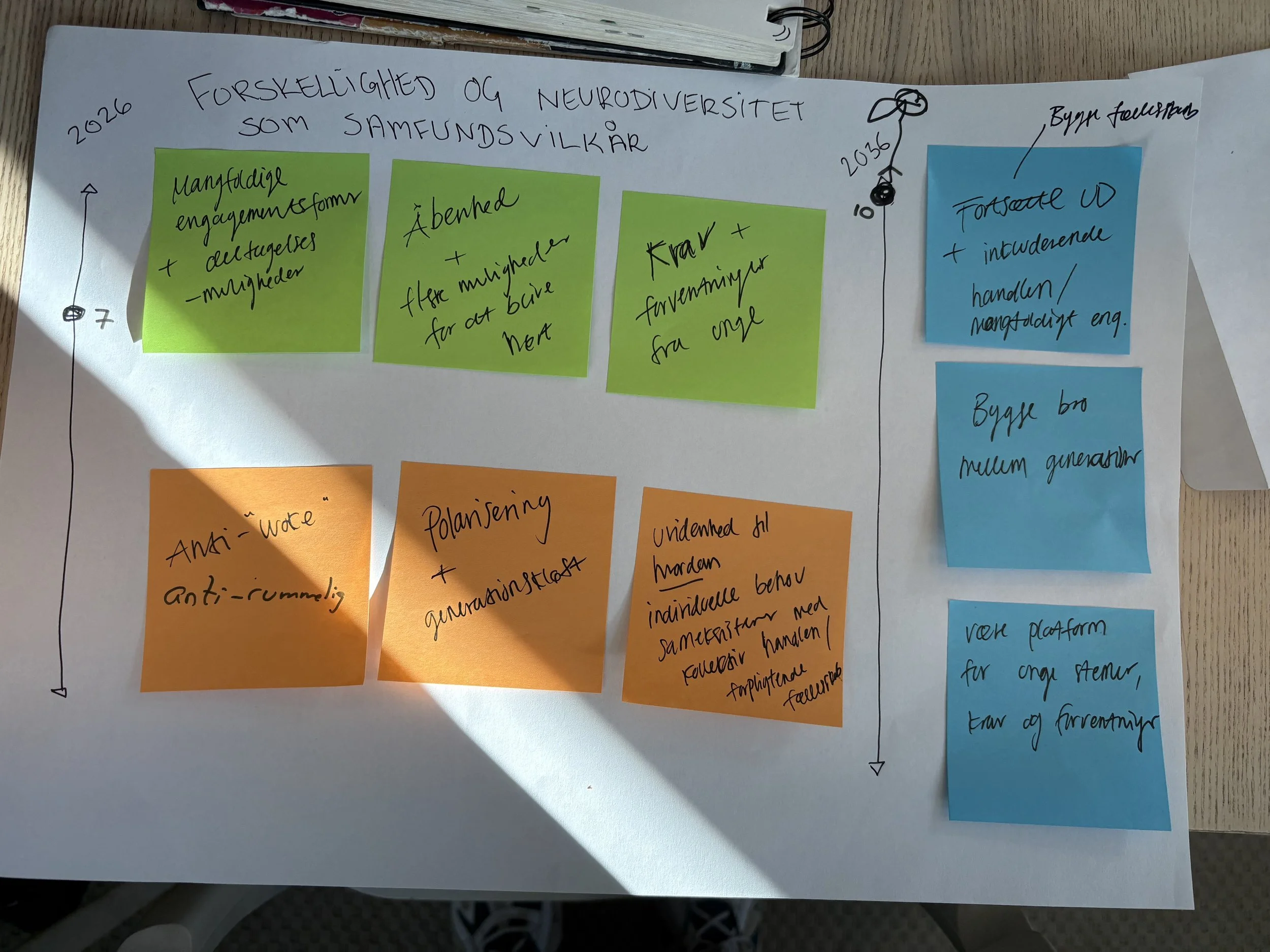
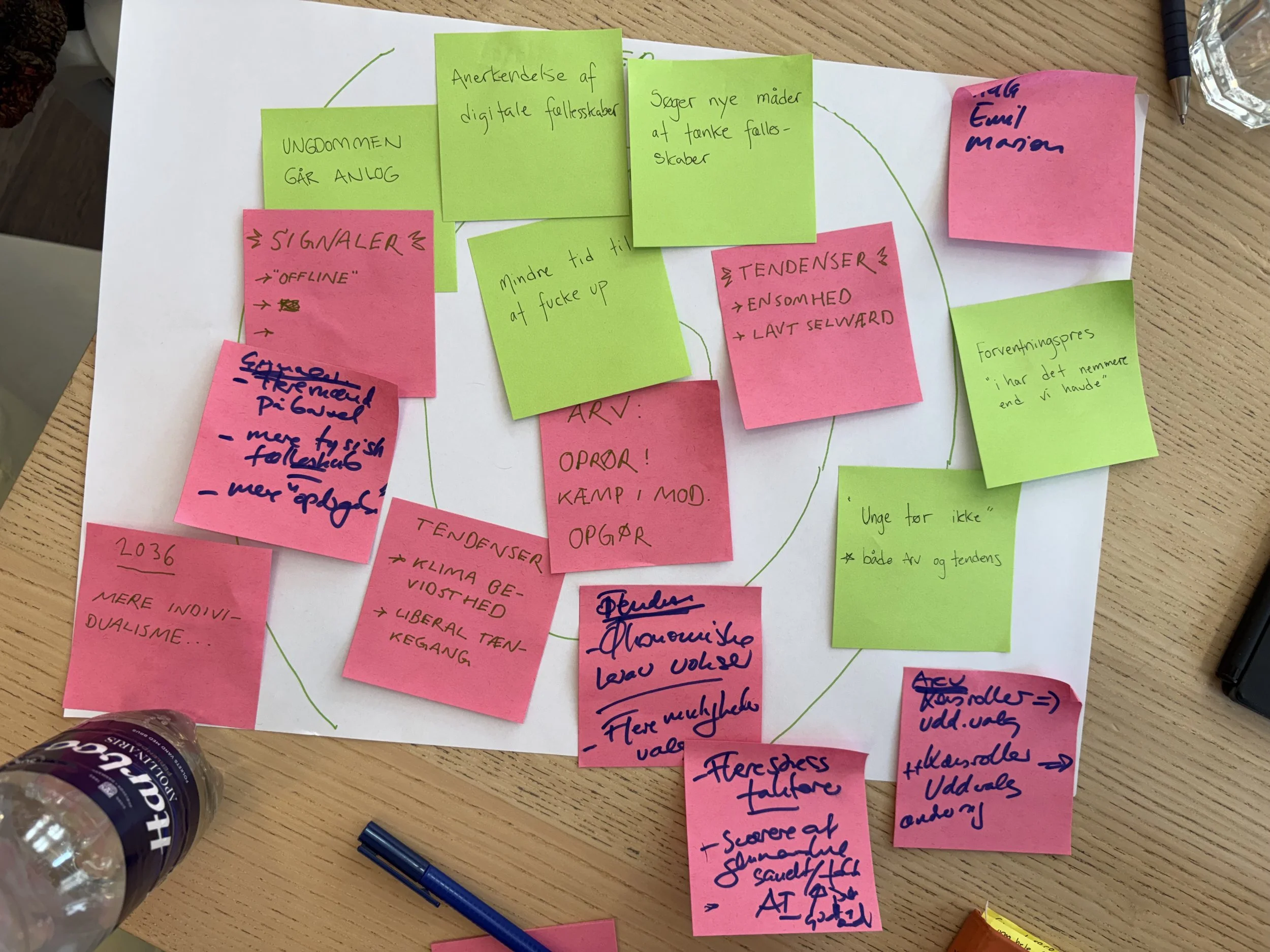
Workshop 1: Scanning
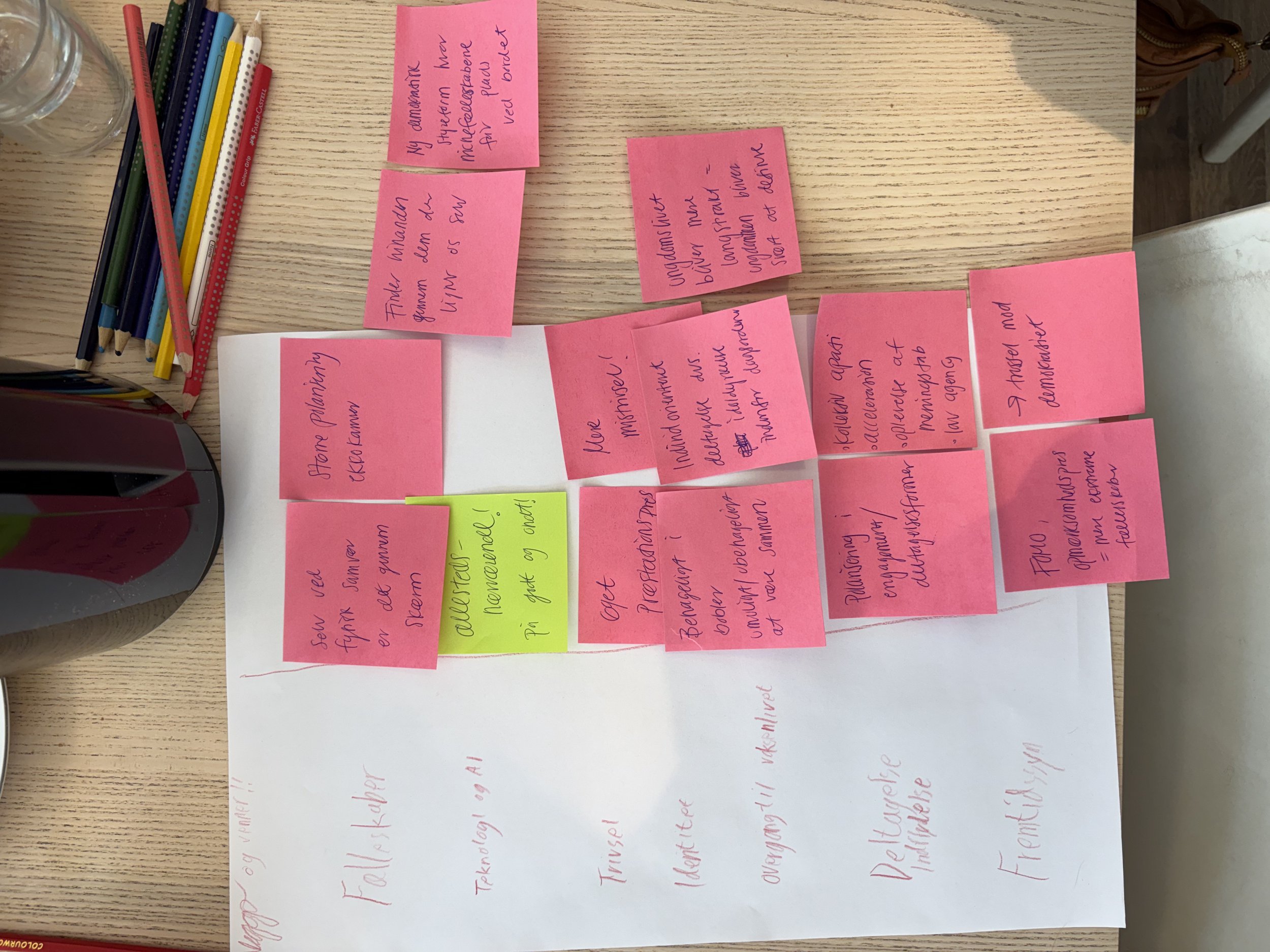
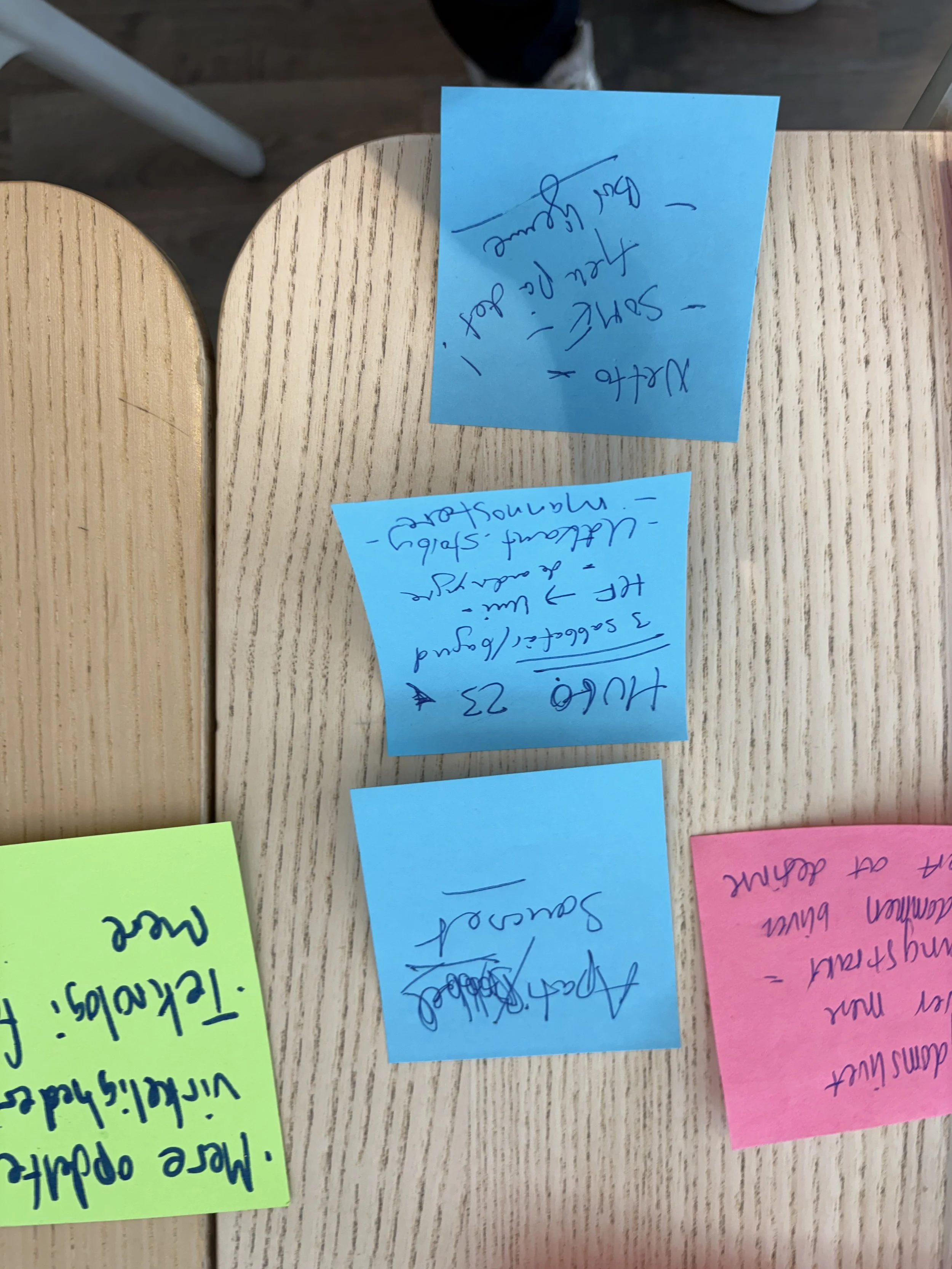
Workshop 1’s purpose was to expand, challenge, and enrich the Futures Brief with lived experience and practical knowledge, and to capture additional signals and patterns that aren’t visible in desk research alone.
This is also where “open process” matters in practice: the intent was to widen participation beyond who is in the room, using additional touchpoints such as an open scanning exercise and shared input boards.
The output of this phase was the raw material for sensemaking: what tensions kept returning, what contradictions mattered, and what uncertainties were decisive for scenario building.
Sensemaking Brief (between Workshop 1 and 2)
After Workshop 1, we synthesised the Futures Brief and workshop input into a Sensemaking Brief, explicitly described as “from trends to direction.”
The Sensemaking Brief sharpens the work into key uncertainties. It makes clear that what matters is not only individual developments, but the tensions underneath them: youth life becoming more complex, digitally shaped, and influenced by external conditions, while young people still seek belonging, meaning, and agency in new ways.
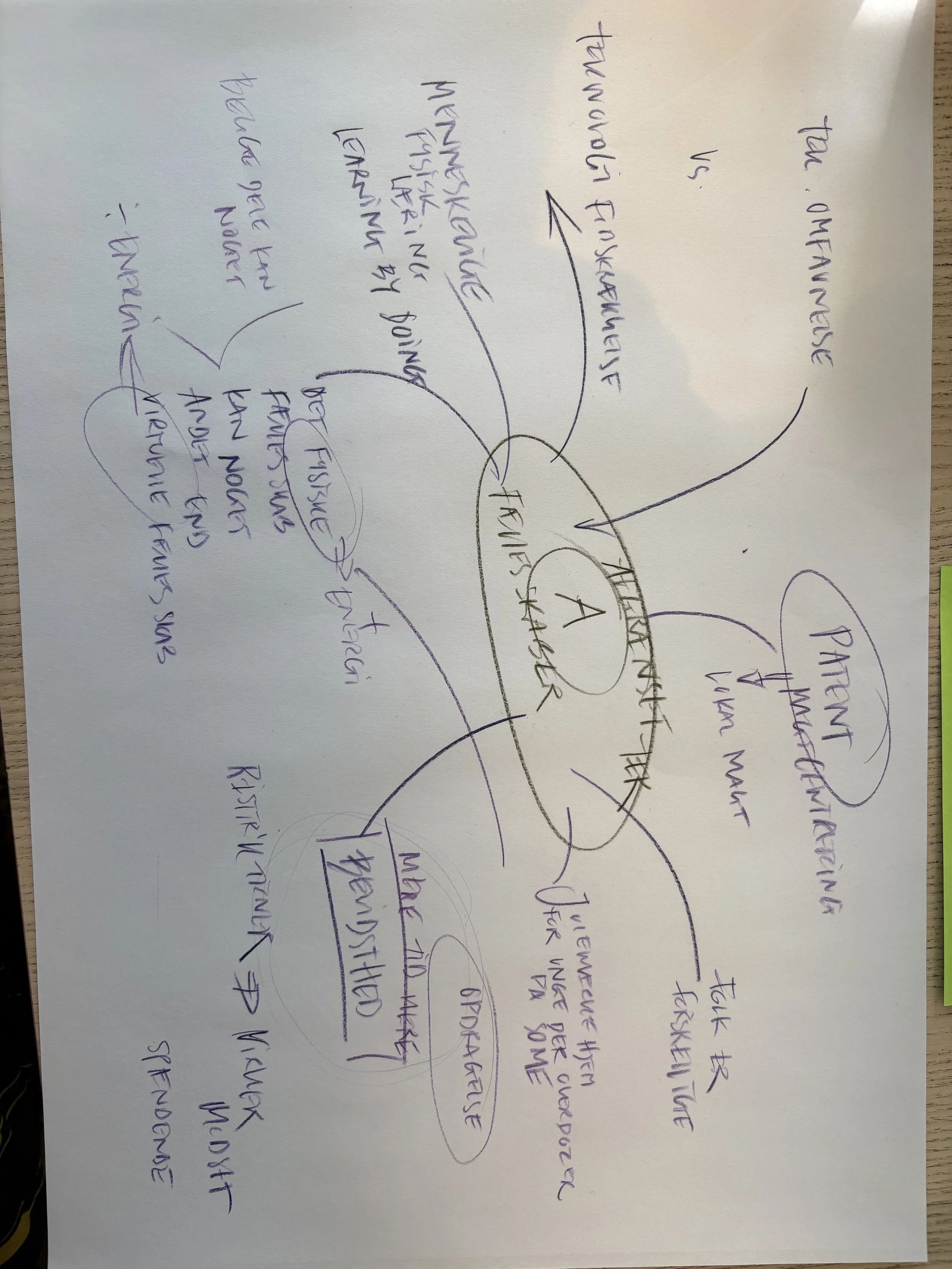
The Sensemaking Brief lays out ten uncertainties, each framed as a question with two polarities (e.g., community cohesion vs divided realities; bounded tech vs pervasive tech; supportive transition to adulthood vs pressured transition).
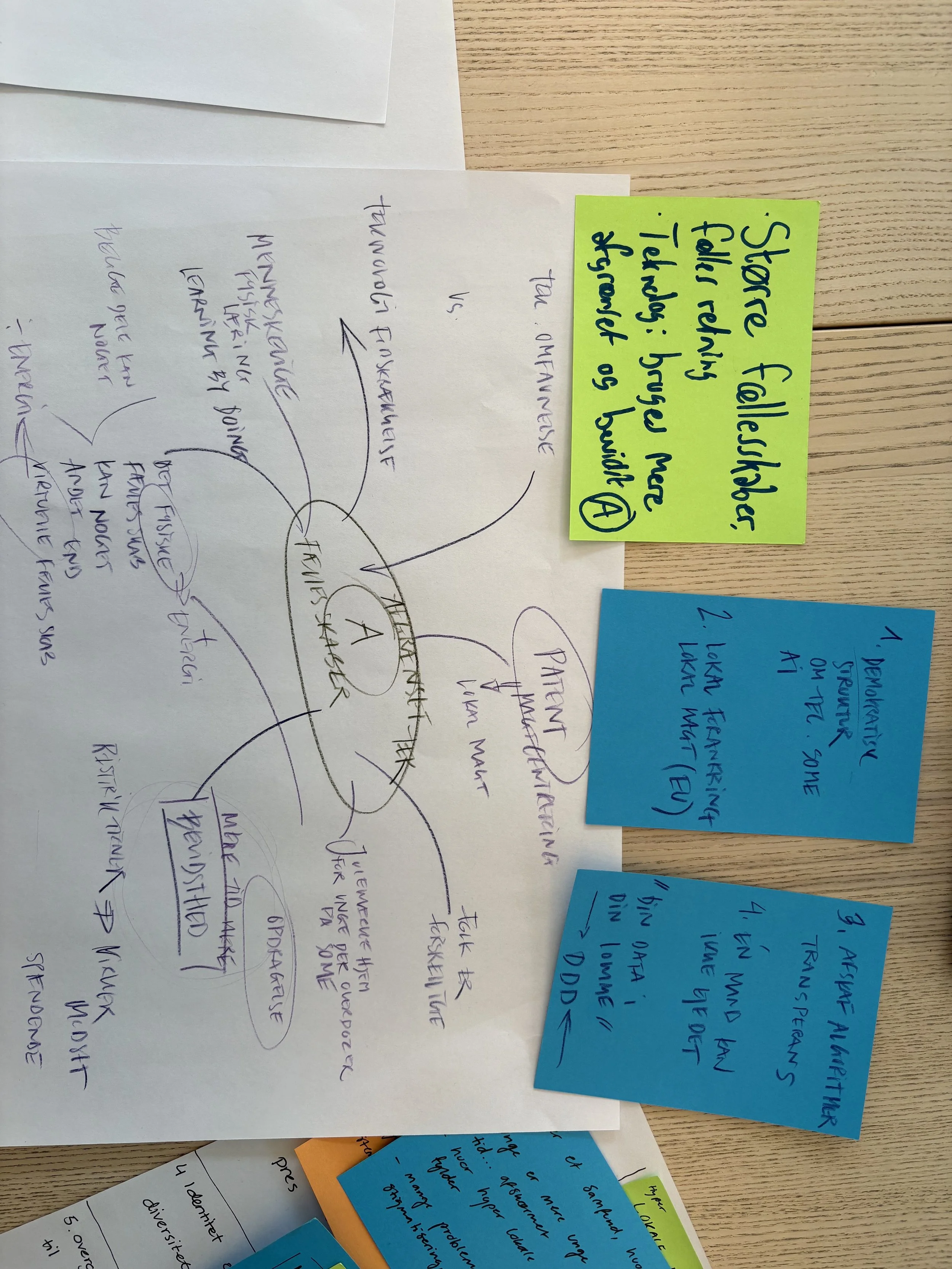
From these, two uncertainties became the guiding axes for the scenario space:
Community: bigger communities and shared direction ↔ more divided lives and different realities
Technology: more bounded and consciously used ↔ shaping more and more of everyday life
Workshop 2: Scenarios
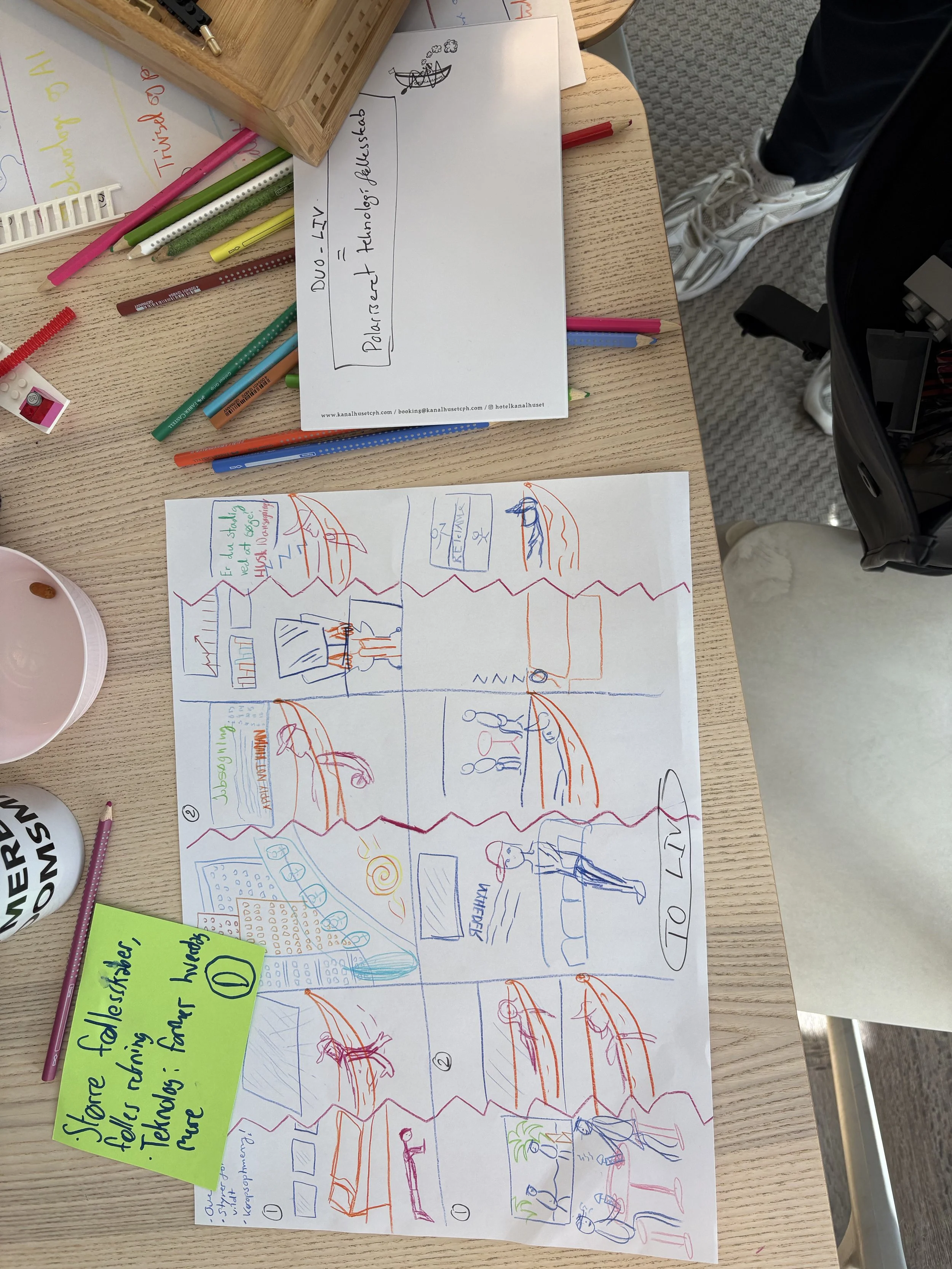
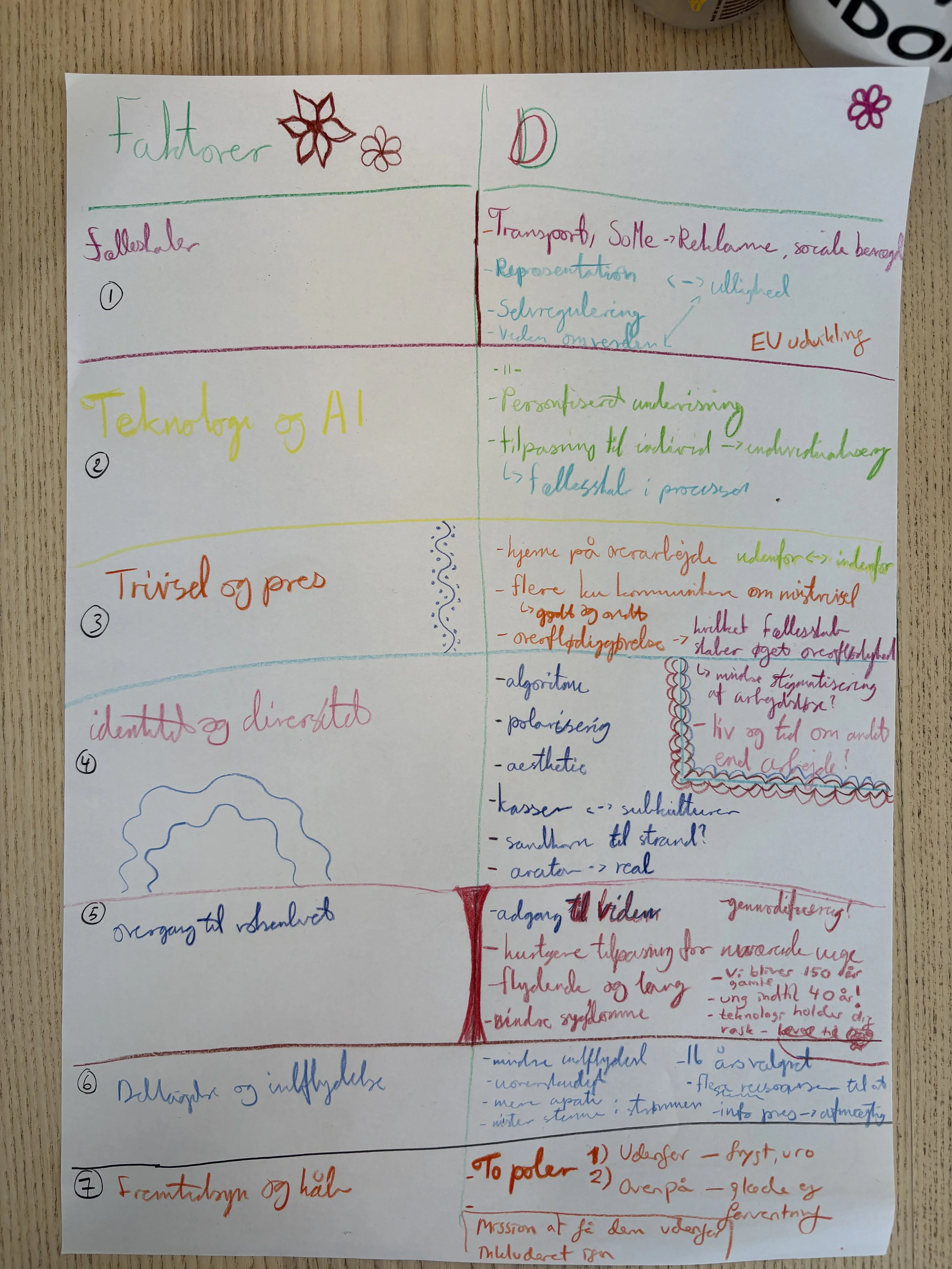
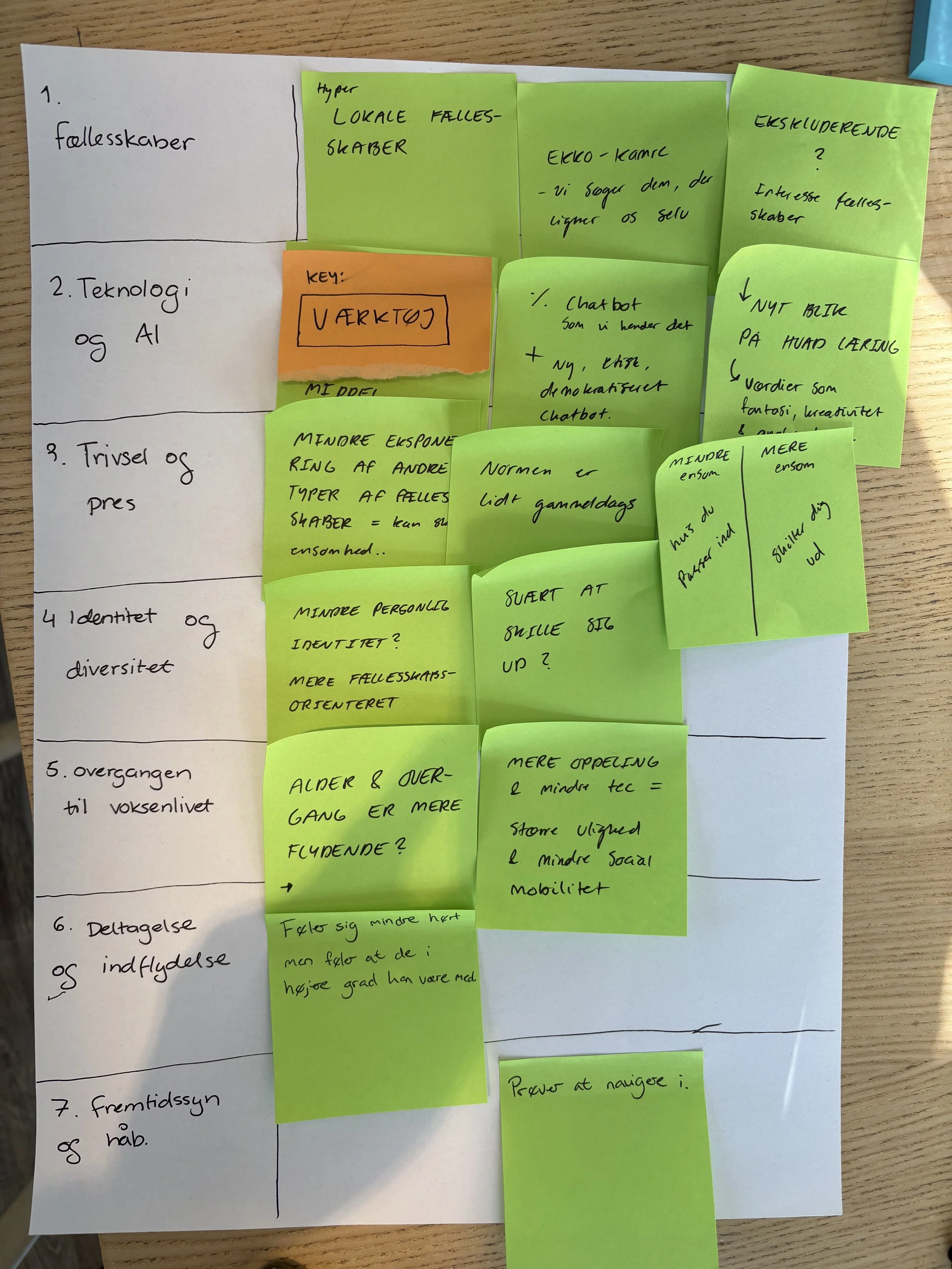
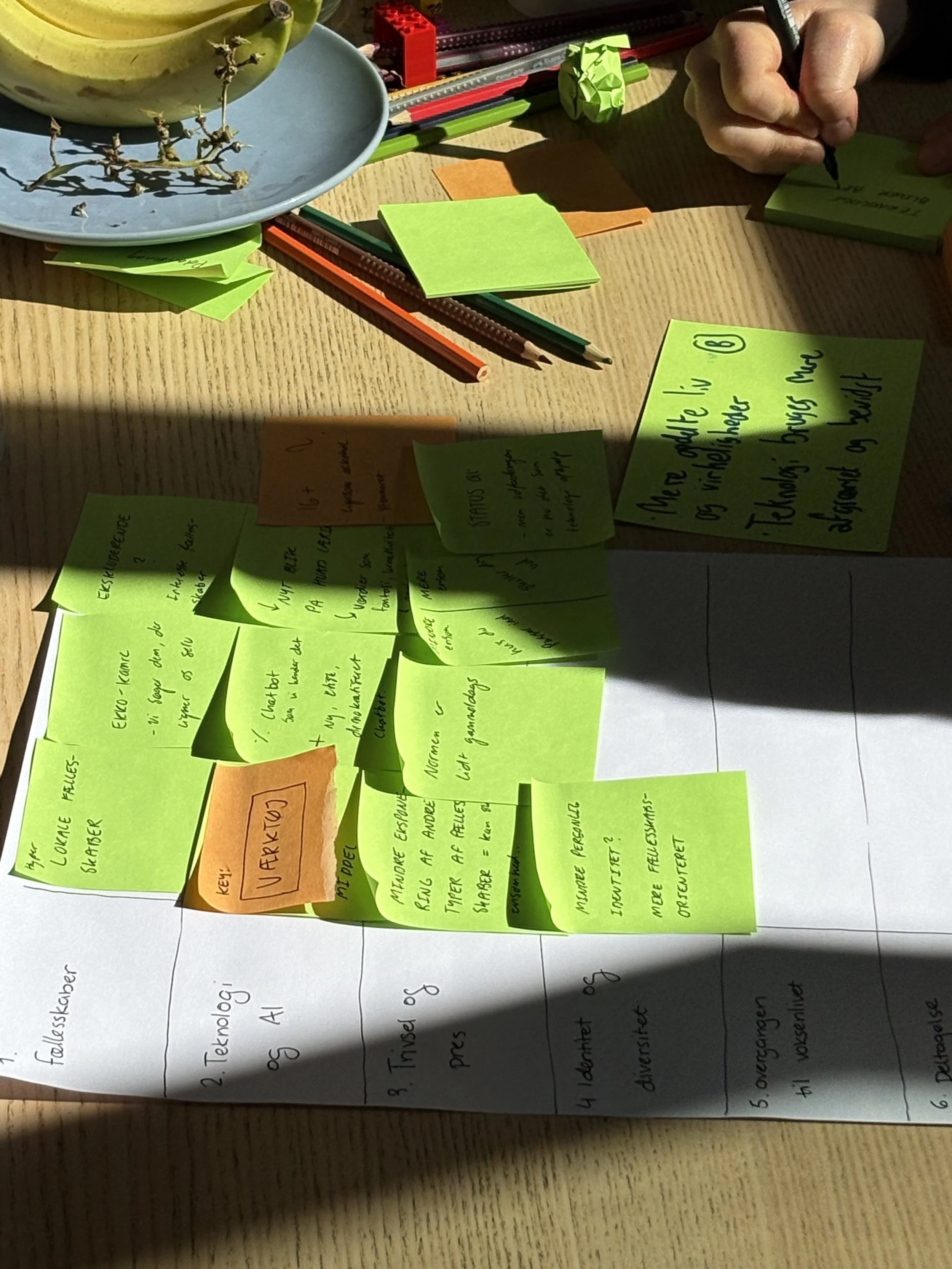
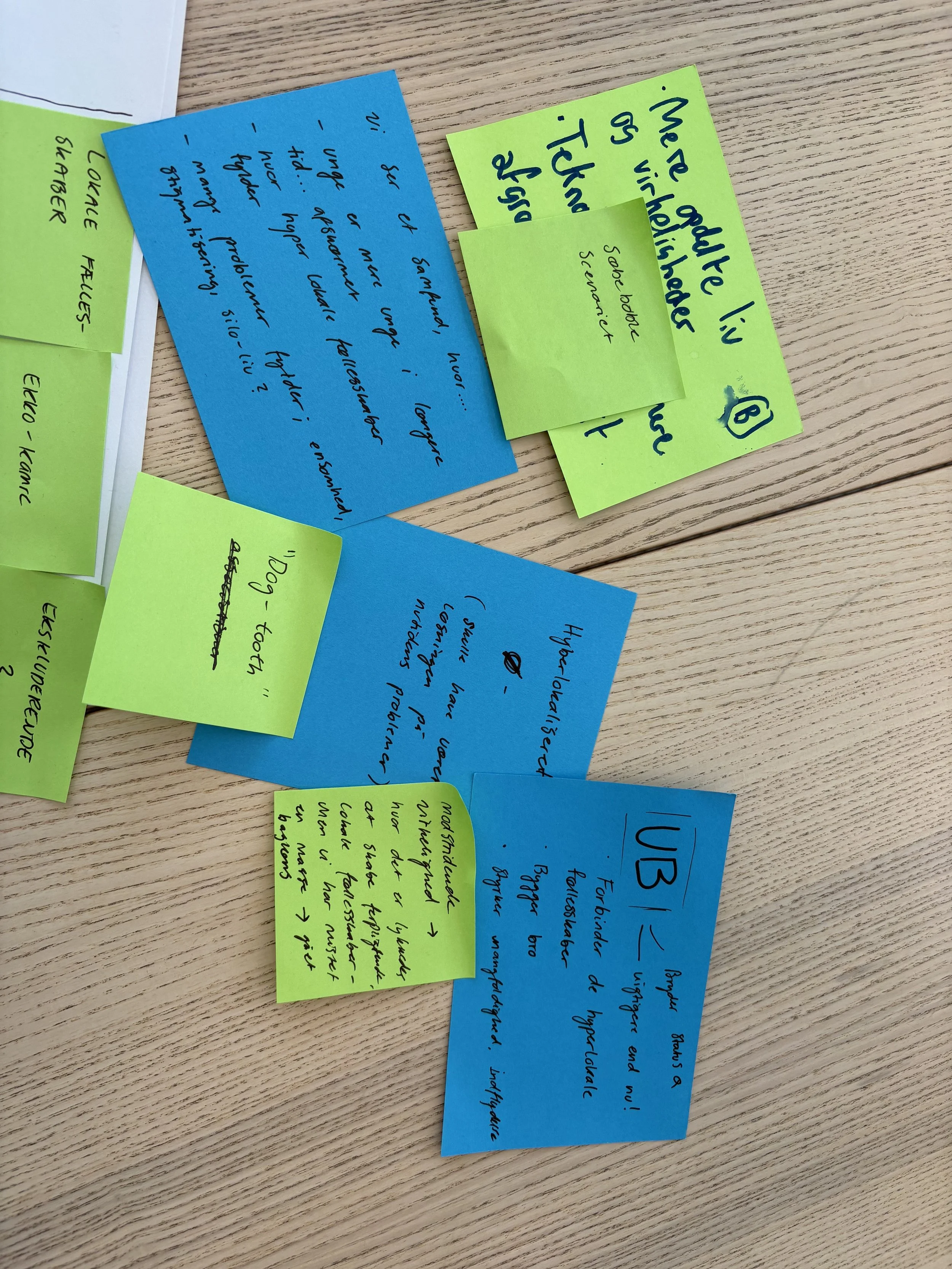
Workshop 2 turned the uncertainties into four scenario worlds, using scenario grids to force specificity across themes such as community, technology, wellbeing, identity, participation, and the transition to adulthood.
Scenarios are a shared basis for reflection and decision-making, a way to explore what Ungdomsbureauet needs to understand, strengthen, and act on.
Scenarios Brief (between Workshop 2 and 3)
The four scenarios were named:
A: The Steering Wheel. After platform fatigue, young people seek communities they can actually feel; technology remains present but used with clearer boundaries and stronger judgement. This scenario includes the idea of young people expecting control over their digital identity (“your data in your pocket”) and building participation through physical presence and shared responsibility.
B: The Glossy Picture. Youth life looks healthier on the surface (less screens, calmer schools, stronger local communities), but the “good life” is unevenly distributed. When tech steps back, inequalities in family networks, local access, and social capital become more visible.
C: The Echo Chamber. Young people retreats into smaller, self-selected worlds; digital micro-communities can carry care, humour, and meaning, but shared reference points weaken and the larger systems feel distant and hard to influence.
D: The Fast Lane. A dual scenario describing a clearer split in pace, ambition, and energy with fast, optimised lives for some and slower, home-based lives for others.
Workshop 3: Strategy
TBD
Strategy Brief (after Workshop 3)
TBD
Outcomes
Because the entire project is open, it serves two purposes at once:
1) A real strategic input for a real organisation
The process is designed to lead to:
A sharper picture of what’s changing
Scenarios that widen strategic thinking
A shared direction for positioning
Prioritised strategic tracks and concrete ideas to carry forward.
2) A transparent view of what “doing foresight” actually looks like
For others running strategy work (in civil society, municipalities, foundations, or public institutions), this case shows:
How a short Futures Brief improves participation quality
How to move from trends → uncertainties → scenario logic
How to design participation with real influence
How to keep foresight lightweight without making it shallow
Get in touch
Unlock the power of forward-thinking with scenario planning and strategic foresight!
Unlock the power of forward-thinking with scenario planning and strategic foresight!


Themes